List of articles from – 2/2026

Historical water reservoirs – splash dams in the Low Tatras (Slovakia)

The paper analyses the development of historical water reservoirs (splash dams) in the Low Tatras region based on the interpretation of maps from the mid-19th century to the present. In the past, splash dams served as part of the system for floating timber down the Hron and Váh rivers. They represented a key hydro-technical element that significantly influenced the hydrological regime of rivers and the formation of the mountain landscape. The identification of historical splash dams was based on the analysis of maps of the 2nd Military Mapping (1836–1852), which were compared with current map data (ZBGIS, Orthophotomap of the Slovak Republic) and verified by field research.
Fauna of water mites (Acari, Hydrachnidia) in the stony littoral of water supply reservoirs in the Czech Republic

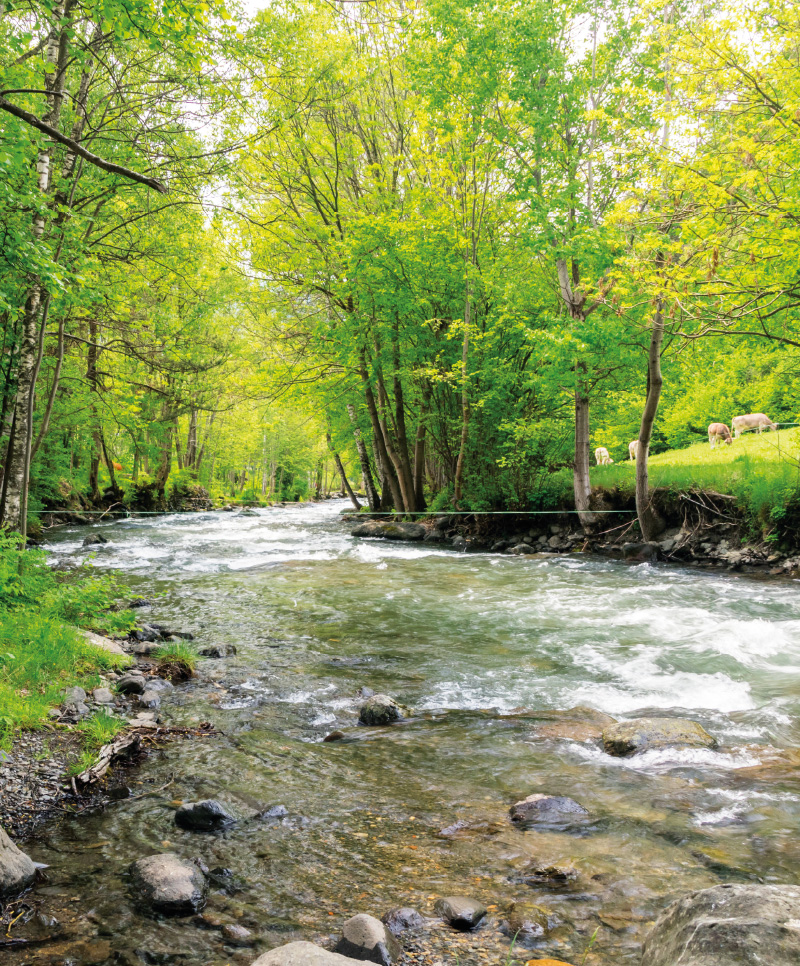
The article presents the results of a survey of the water mite fauna in 45 dam reservoirs in the Czech Republic that are sources of drinking wa-ter. In 37 reservoirs, the average seasonal concentration of chlorophyll a in water were lower than 20 µg/L, which indicates that most of these reservoirs have an oligotrophic to slightly mesotrophic character. Samples were taken with a hand plankton net in the stony littoral at a depth of 0.5–1.0 m at all localities; therefore, it is possible to compare findings from individual localities, although they do not represent quantitative data of water mites related to unit area or water volume. In total 1,356 water mites (849 adults, 507 nymphs) were caught and 34 species were recorded. Twelve species occurred in more than 15 % of the investigated reservoirs and accounted for 87.4 % of all individuals caught. These species show great locomotive activity, they are adapted for swimming/floating, and they commonly occur in the littoral fauna of European lakes.

Czech Land Use and CN analyzer: an open tool for generating CN layers and calculating direct runoff from design rainfall in QGIS

The SCS–CN method is one of the most widely used hydrological methods in the Czech Republic for estimating direct runoff from precipitation events in small catchments. Its practical application is sensitive to the quality and consistency of input data, in particular land use (LU), soil char-acteristics defined by the hydrological soil group (HSG), and appropriately specified design rainfall. The tool, designed to utilise open data in the Czech Republic as a plug-in for the QGIS GIS platform, automates the preparation of input data and the subsequent SCS–CN analysis. Land use is derived from ZABAGED data in combination with LPIS data. HSG and design rainfall are obtained via download services provided at rain.fsv.cvut.cz.

Landscape changes in the upper part of the Výrovka river basin from a water management perspective

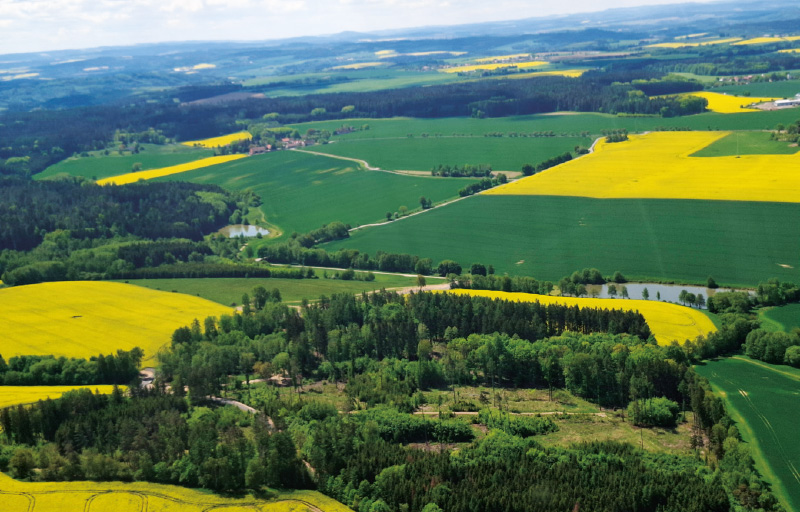
This article presents landscape changes in the upper part of the Výrovka river basin using a comparison of historical and current maps and or-thophotomaps, including verification of the current state of the landscape. On the map of the 2nd Military Mapping, 22 water bodies (ponds) with a total area of 57.53 ha were mapped. On the current map, 71 water bodies with a total area of 42.48 ha were recorded. Furthermore, significant changes in the location of watercourses were recorded; they were deepened, straightened, and their floodplains were drained. It is clear from the comparison of the map documents that these changes mainly occurred due to the intensification of agricultural use of the landscape.

Interview with RNDr. Pavel Punčochář, CSc., member of the Water Management Section of the Ministry of Agriculture of the Czech Republic

Life by the Sázava river, an enthusiasm for “living sticks” and the microworld of aquatic organisms; twenty years devoted to science, followed by a turning point: T. G. Masaryk Water Research Institute during the transformative 1990s, and subsequently the Ministry of Agriculture. In this interview, RNDr. Pavel Punčochář, CSc. recalls the people who shaped him, the moments when the very existence of our institution was at stake, and explains, why the public will have to learn to trust predictions and effective water management solutions.

Boží Dar Peat Bog

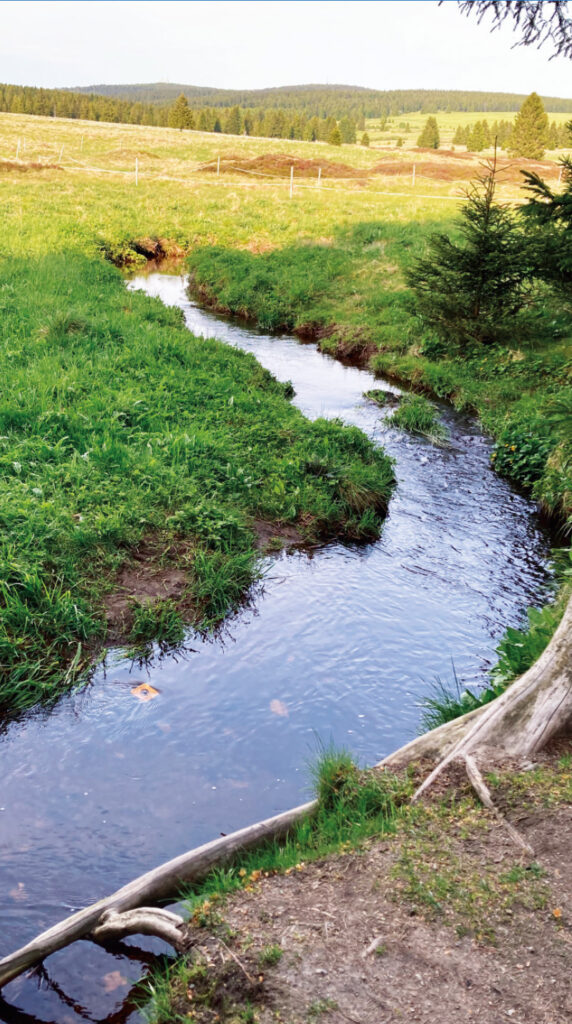
The Ore Mountains triangle formed by the towns of Abertamy, Boží Dar, and Horní Blatná is not only a tourist and skiing paradise, but also part of the Erzgebirge/Krušnohoří Mining Region, inscribed on the UNESCO World Heritage List since 2019. A highly significant and inspiring part of this area is Boží Dar Peat Bog National Nature Reserve. It is located west of Boží Dar on a plateau near Božídarský Špičák, the highest basalt dome in Central Europe (1,115 m a.s.l.). Covering an area of approximately 930 ha, it is one of the important protected areas in the Czech Republic. Its value in terms of nature conservation is best demonstrated by the fact that in 2008 it was designated as a Wetland of International Importance under the Ramsar Convention. It is also part of Ore Mountains Plateau Site of Community Importance within the Natura 2000 network.