List of articles from – 5/2026

Changes in spring areas following sudden major disturbances

This article compares the condition of selected spring areas following sudden major disturbances with their previous condition, while also assessing long-term changes in drained and undrained spring areas. The impacts examined include major changes in groundwater abstraction for drinking-water supply, disturbances resulting from failures of drainage systems, and the effects of a large-scale forest fire. Three areas with contrasting hydrogeological characteristics were selected for the study. The results show that, while the abstraction of spring water for drinking-water supply has a fundamental effect on the very existence of springs, the large-scale forest fire did not significantly affect either the quality or quantity of groundwater. By contrast, gradual changes in agricultural management and the natural recovery of non-functioning drainage systems lead to the formation of secondary spring areas and a gradual improvement in the quality of the emerging water.
Retention potential of beaver dams for surface water storage in the Czech landscape

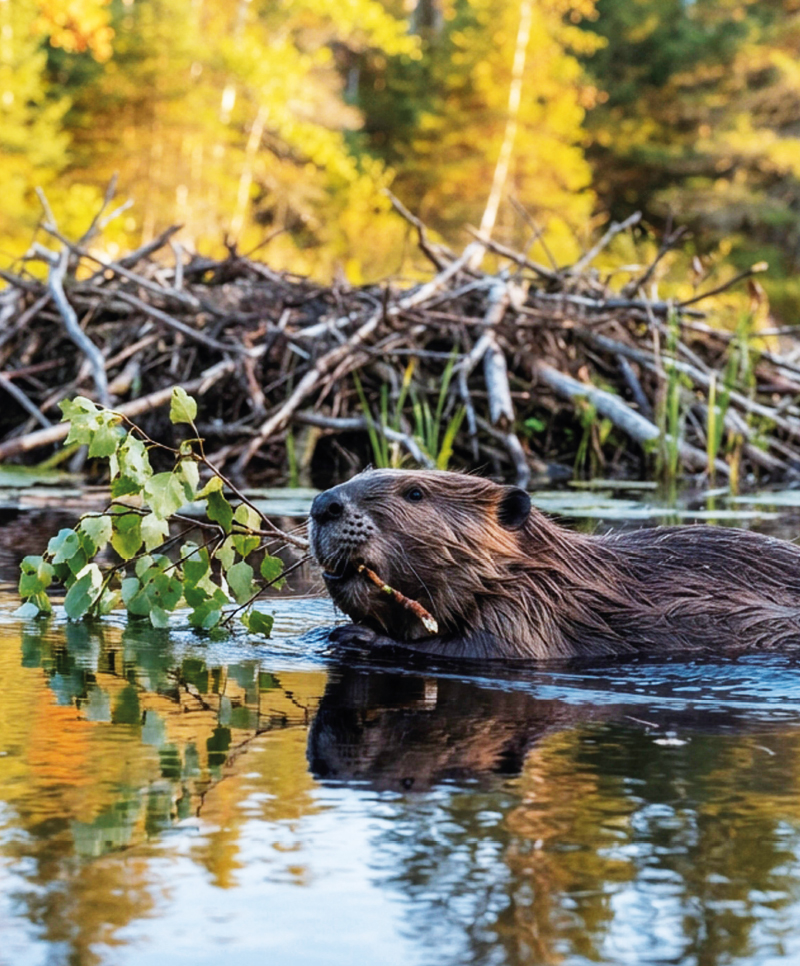
The Eurasian beaver (Castor fiber) is an important ecosystem engineer that alters the hydrological regime of the landscape through its activities. The aim of this study was to quantify the volume of surface water retained by beaver dams in the Czech landscape and to estimate the potential retention capacity of a selected catchment assuming the maximum predicted extent of beaver colonisation. The main focus of the research was to determine the volume of surface water accumulated behind 150 beaver dams at sites in the Plzeň Region (the Křemelná catchment and ten other selected wetlands) and the inundated area of the associated beaver ponds. GIS analyses based on a combination of precise geodetic data and a digital terrain model were used for the calculations.

River basin digital twin: A tool for modelling adaptation measures for water retention in a landscape affected by climate change

River basin digital twin technology is an advanced tool for assessing the effects of complex adaptation measures on the water balance in the context of ongoing climate change. The integrated, fully distributed, physically based MIKE SHE modelling system forms the basis of the digital twin developed for detailed simulation of the hydrological cycle. Using the Dyje River basin and the pilot upper Svratka catchment as case studies, specific measures to promote natural infiltration and enhance baseflow were tested, designed and quantified. The effects of climate change were assessed using an ensemble of 26 independent climate scenarios based on global climate models (CMIP6) for a 30-year period centred on 2050, compared with the historical reference period 1981–2010.

Assessment of fish passage in the Rolava river and estimated effects of its restoration on fish communities

The study examines the effects of river network fragmentation on populations of rheophilic fish species in the Rolava and Ohře river basins, with particular emphasis on assessing fish passage and the effectiveness of restoration measures. An analysis of the river inventory indicates a high degree of anthropogenic disturbance in the Rolava; of the 41 transverse structures identified, more than half constitute critical barriers over 0.6 m high that most native fish species are unable to overcome.

Simulation of the thermal regime of a drinking water reservoir under projected climate change conditions

The potential impact on the thermal regime was assessed using Vrchlice Reservoir as a case study. The model was calibrated for 2023 using detailed measurements of vertical water temperature profiles at selected monitoring sites provided by the Elbe River Water Authority; subse-quent verification was carried out for 2022. To compare the affected thermal regime with the current state, 2018 was selected as the reference year. The observed daily air temperature series for 2018 was transformed using the Advanced Delta Change (ADC) method to reflect changes derived from climate models for the 2050 and 2085 horizons. The scenario calculations presented in this article isolate the effect of changes in air temperature, while other meteorological and hydrological-operational inputs are kept at their 2018 reference levels.

Interview with Assoc. Prof. RNDr. Jan Unucka, Ph.D., Head of the Hydrology Department at the Czech Hydrometeorological Institute in Ostrava

He regularly contributes both scientific and informative articles to VTEI, reviews other submissions, and for two years had his own column on the back cover. He loves nature and animals and is an accomplished photographer. When he first contacted me in spring 2023 to offer a scientific article, which was published that summer, he sent me a photograph for his author profile that was strikingly different from the usual ones: a man in camouflage, kneeling on the ground in a forest, surrounded by his three enormous dogs. “Nature is still the stronger player,” says Assoc. Prof. RNDr. Jan Unucka, Ph.D., who is now sitting across the table from me.