List of articles from – 3/2026

Species composition of enterococci in drinking water and detection methods

Intestinal enterococci are one of the two core microbiological parameters in the new drinking water legislation, used as indicators of faecal contamination. They must be detected in all analyses of drinking water. A total of 134 strains of enterococci (Enterococcus spp.) and 93 strains identified as background microflora, or as potentially false-positive strains, were examined from operational samples of treated (i.e. drinking) water.

Reconstruction of the July 1903 flood in the Opava River basin using GIS and hydrological models

The 1903 flood was undoubtedly one of the most significant floods of the 20th century in Moravia and Silesia. Although systematic observa-tions of water levels had already begun at many gauging sites during this period, it is difficult to convert historical water levels recorded at limnigraph stations into present-day equivalents due to historical territorial changes in terms of politics (Prussia versus the present-day Czech Republic), landscape structure (forest cover in the historical and present-day landscape), morphology (terrain and urban development in the affected areas), and water management conditions (the course of the Opava river channel and the condition of water flumes in 1903 and today). Useful (though not always entirely reliable) sources include historical flood marks, photographic documentation, historical maps and plans, reports in the contemporary press, family chronicles, and the recollections of millers, sawyers, and other craftsmen using water power. These sources form a rather heterogeneous body of evidence, and it is therefore necessary to find ways to verify and combine them. One possible approach is to use these data in GIS-based spatial analyses and subsequently as inputs for rainfall–runoff and hydraulic model-ling. Since the team of the Czech Hydrometeorological Institute (CHMI), together with its partners, had already conducted similar analyses (e.g. during the reconstruction of the 1872 historical flood on Blšanka), they also attempted to apply this approach to the 1903 flood on the Opava river. The results, including a partial uncertainty analysis, are presented in this article.

Marketing vs. reality: using a battery of bioassays to assess the acute toxicity of environmentally friendly detergents

Household detergents are an important source of complex mixtures of anthropogenic substances entering municipal wastewater systems and, subsequently, receiving waters. This study presents a comparative assessment of the acute ecotoxicity of conventional detergents and their environmentally certified counterparts (EU Ecolabel) using a battery of bioassays representing different trophic levels. The tests included the luminescent bacterium Vibrio fischeri, the water flea Daphnia magna, the green alga Desmodesmus subspicatus, and seeds of white mustard Sinapis alba.

Methodology for adaptive management of water reservoirs during hydrological drought

This article presents a methodology for the adaptive management of water reservoirs designed to ensure a reliable water supply under condi-tions of hydrological drought and climate change. The proposed approach combines hydrological modelling, climate change scenarios, and the optimisation of rule curves with regulation levels. The management system allows for flexible restrictions on water abstractions and the adjustment of minimum residual flows depending on the current state of the reservoir. A pilot application of the methodology was carried out on selected Czech reservoirs (Švihov, Klíčava, Žlutice, Obecnice, Pilská, Láz, Vrchlice) under current climate conditions and future scenarios for 2050 and 2100.

Rainwater harvesting systems and flood water management in rural areas: A systematic review

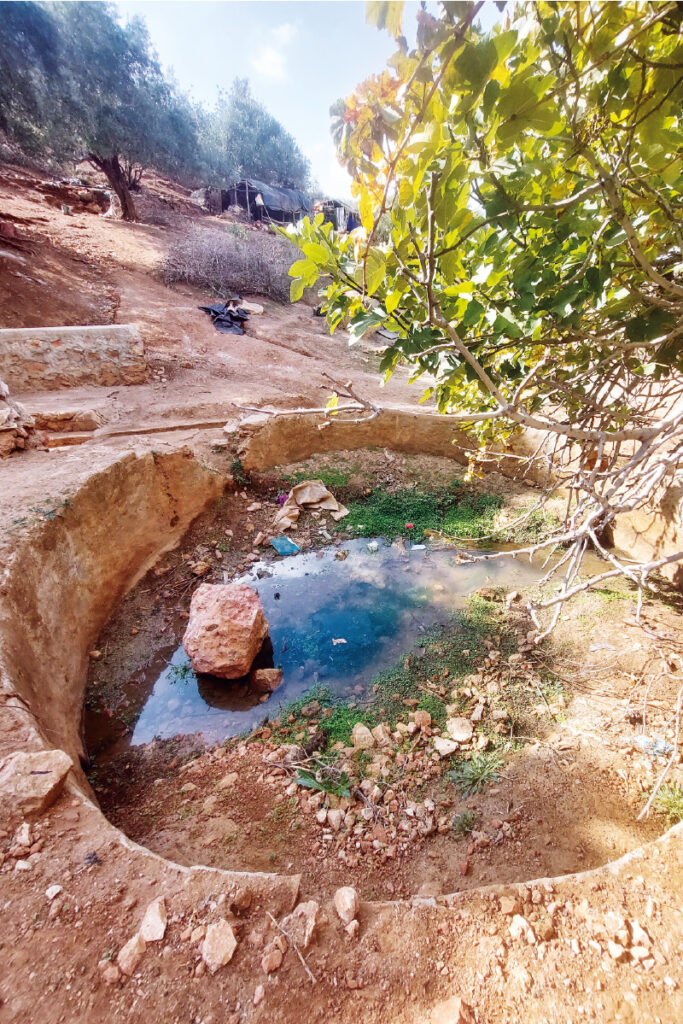
In a climate marked by prolonged drought, observed mainly in arid and semi-arid areas, the installation of hydraulic systems for rainwater collection and storage in rural and isolated areas is becoming a necessity to preserve livestock and ensure water security for the local popula-tion. For this purpose, this review synthesizes recent studies on the various hydraulic systems used for rainwater harvesting (RWH) in rural areas to support agriculture, livestock, and households. This review examines 66 relevant studies published in journals indexed in ScienceDirect and Scopus over a period of five years (January 2021 – December 2025). It emphasizes the importance of design based on the specific characteristics of each location or country, the criteria for selecting implementation sites, the impact of RWH systems on agricul-ture, livestock, and rural households, existing challenges, and proposes some guidelines for sustainable rainwater management and flood reduction.

Estimation of changes in design precipitation at ungauged locations using a geostatistical model of regional frequency analysis with climate projections

The study quantifies changes in the 100-year design quantile of short-duration precipitation at ungauged locations in the Czech Republic and analyses the uncertainty structure of these estimates under climate change conditions. Reference IDF curves were derived using regional frequency analysis based on the index-flood concept, employing the GEV distribution with parameter estimation using the method of L-moments. Future changes were determined from a multi-model ensemble of CORDEX regional climate projections for the RCP2.6, RCP4.5, and RCP8.5 scenarios for the periods 2035–2065 and 2070–2100.

Microplastics in waters: The first accredited laboratory in the Czech Republic at the TGM WRI

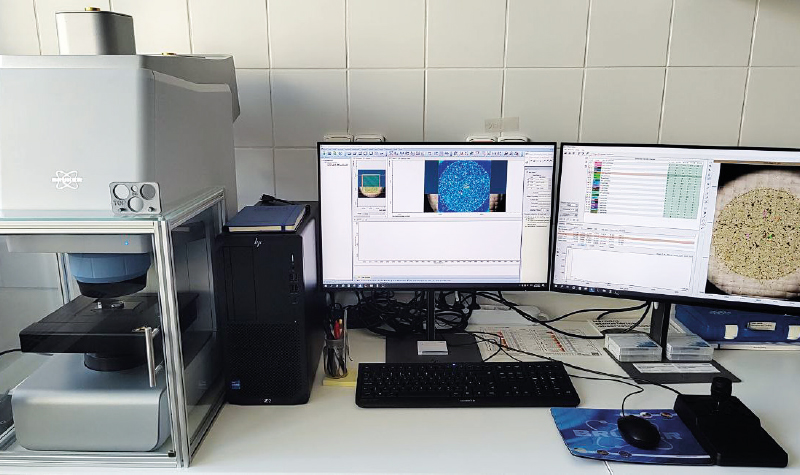
Microplastics, defined as particles of synthetic polymers smaller than 5 mm, represent one of the most intensively studied environmental issues of the present day. The increasing research interest in microplastics is also reflected in the legislative sphere. European legislation requires the implementation of microplastics monitoring in drinking water through an amendment to the EU Directive on the quality of water intended for human consumption (Commission Decision 2024/1441). Similar requirements are expected soon for surface waters following the adoption of the relevant Directive of the European Parliament and of the Council amending Directive 2000/60/EC (Water Framework Directive). In response to this context, and with the aim of providing a reliable analytical background, a specialised Laboratory for Microplastics Analysis was established at the Brno branch of the TGM Water Research Institute (TGM WRI), which has been intensively engaged in this field since 2023.

XXVIII conference on Radionuclides and ionising radiation in water management

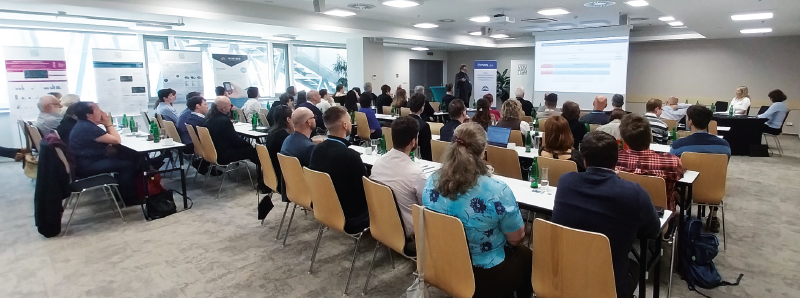
The latest edition of the annual conference Radionuclides and ionising radiation in water management took place on 21–22 April 2026 at the Clarion Hotel in České Budějovice. The scientific coordinators of the conference were Ing. Barbora Sedlářová, Ing. Eva Juranová, Ph.D., and RNDr. Diana Marešová, Ph.D. (TGM WRI), while the organisational coordinator was Jan Kříž (ČVTVHS). The conference was attended by 63 experts, with 59 participants from the Czech Republic and four from the Slovak Republic.