

Microplastics, defined as particles of synthetic polymers smaller than 5 mm, represent one of the most intensively studied environmental issues of the present day (Fig. 1). These ubiquitous particles, arising primarily from mechanical abrasion, fragmentation, or industrial processing of plastics, are released into the environment in large quantities. While early research focused on seas and oceans, attention is now shifting to freshwater ecosystems and drinking water, where they pose significant environmental and health risks [1, 2]. The effects of microplastics on organisms are complex – they act as vectors for contaminants sorbed from the environment, release chemical additives intentionally incorporated into plastics (such as plasticisers and flame retardants) and may mechanically disrupt tissues and cause chronic inflammation [3]. As a result of their slow degradation, they readily enter food chains and accumulate in biota at all trophic levels [4].
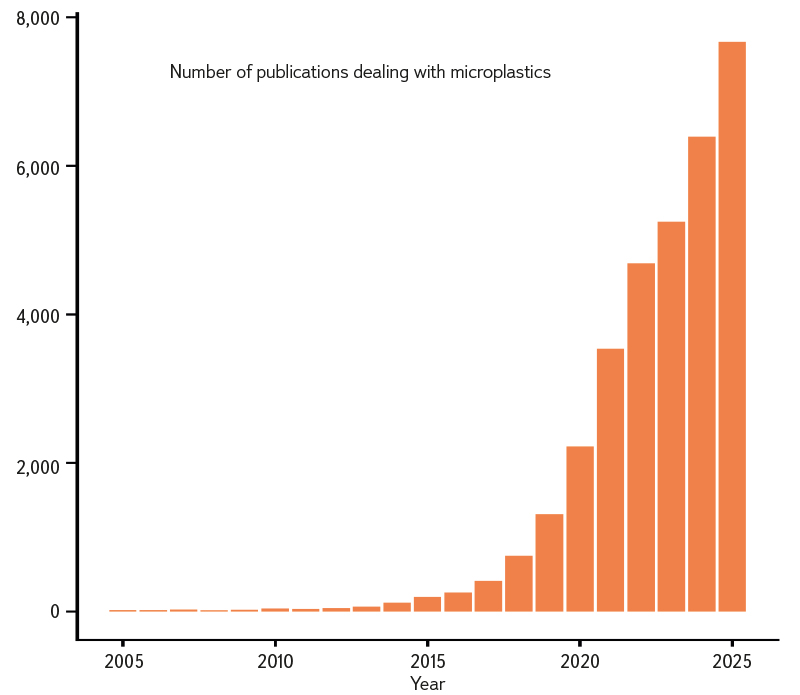
Fig. 1. Cumulative number of scientific publications in the Scopus database containing the keyword microplastic
The increasing research interest in microplastics is also reflected in the legislative sphere. European legislation requires the implementation of microplastics monitoring in drinking water through an amendment to the EU Directive on the quality of water intended for human consumption (Commission Decision 2024/1441). Similar requirements are expected soon for surface waters following the adoption of the relevant Directive of the European Parliament and of the Council amending Directive 2000/60/EC (Water Framework Directive). In response to this context, and with the aim of providing a reliable analytical background, a specialised Laboratory for Microplastics Analysis was established at the Brno branch of the TGM Water Research Institute (TGM WRI), which has been intensively engaged in this field since 2023.
In the field of microplastics analysis, two main groups of methods are key, differing primarily in detection limits and output. Vibrational spectroscopy, in particular Fourier transform infrared spectroscopy (FTIR), and Raman spectroscopy are widely used non-destructive methods for the analysis of microplastic samples. By surface scanning of a prepared sample, a so-called chemical map can be obtained, providing precise information on the number, size, shape, and chemical composition of the detected particles (Fig. 2). The FTIR method is suitable for the quantification and identification of particles from a size of 5 µm [5], whereas Raman spectroscopy can detect particles down to approximately 300 nm [6], thereby enabling the detection of nanoplastics. Another possible method for determining the presence of microplastics is pyrolysis coupled with gas chromatography and mass spectrometry, which, however, leads to the destruction of the analysed sample and provides information only on the total mass of individual polymer types in a given sample [7].
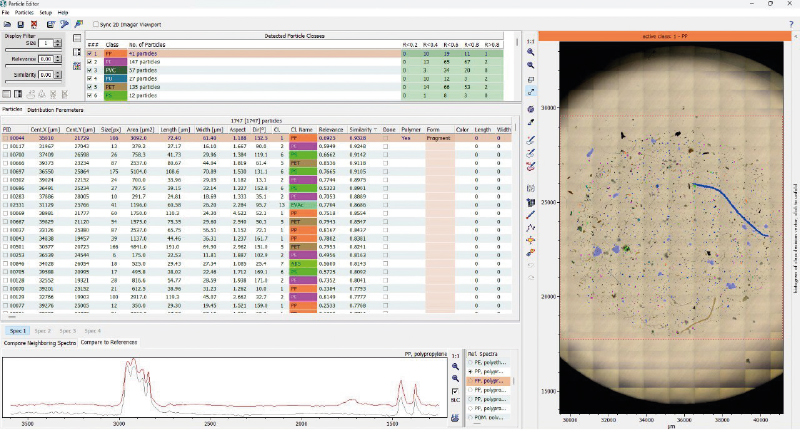
Fig. 2. Chemical map of the analysed microplastics sample visualised using the Microplastic Finder software (Purency)
Information on size distribution and shape obtained by spectroscopic methods is also essential for assessing risks to organisms and is therefore crucial for meeting legislative requirements. At the Laboratory for Microplastics Analysis at TGM WRI, FTIR spectroscopy was selected as the detection method. The laboratory has been equipped with a µFTIR spectroscope LUMOS II by Bruker Corp. (Fig. 3). This instrument enables fully automated analysis of entire areas (typically a filter with a diameter of 25 mm) and the creation of a chemical map of the analysed surface. From the resulting map, computational methods can automatically identify plastic particles, their shape and size, and, most importantly, their chemical composition, that is, the type of polymer.
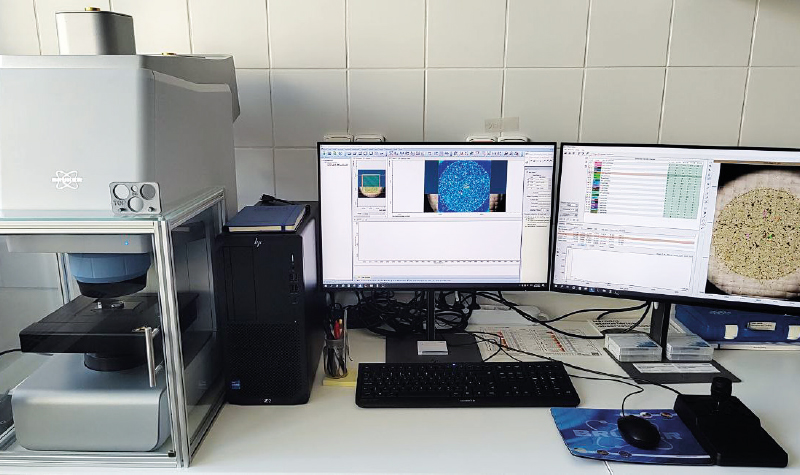
Fig. 3. From left: sample being analysed in the µFTIR spectroscope LUMOS II; processing in the OPUS software; evaluation of the content and type of microplastics using the Microplastic Finder software
The analysis itself is preceded by a relatively complex sampling process – in the case of water, using a cascade of filters and, where appropriate, a pump (Fig. 4) – followed by sample preparation. Sample preparation for analysis involves oxidative digestion processes aimed at removing organic residues from samples originating from environmental matrices (see, for example, [8, 9]), complemented by density separation to eliminate the remaining inorganic fraction [10].
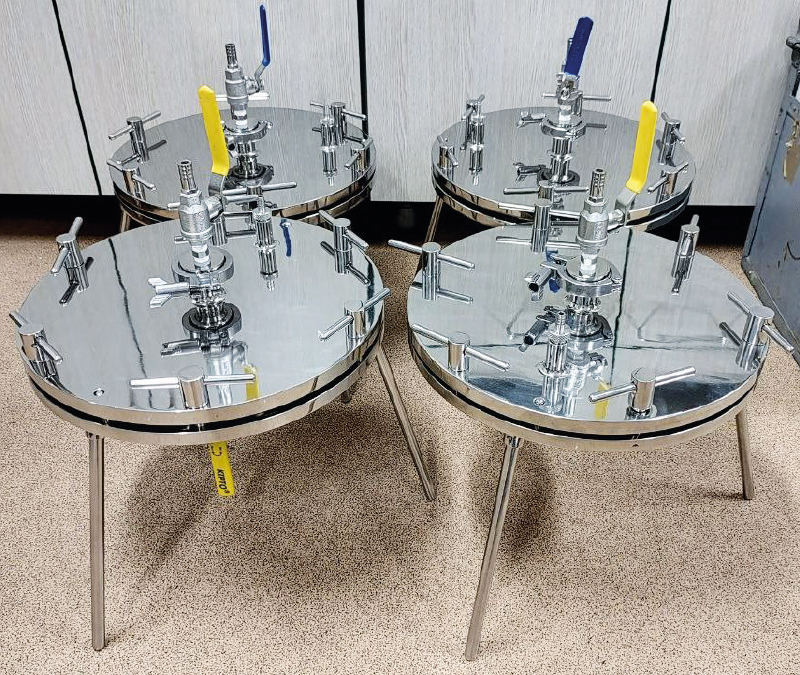
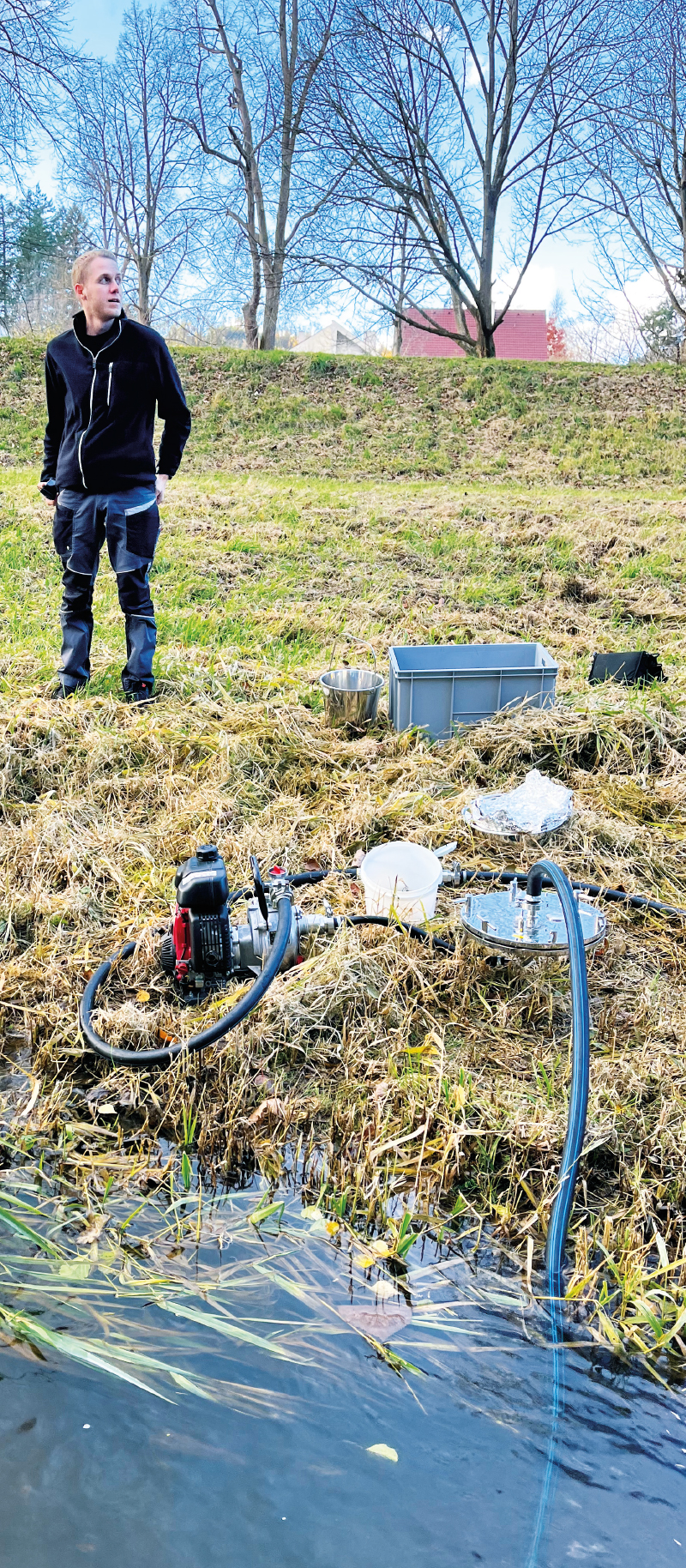
Fig. 4. Pumping and filtration of water from a stream for microplastics analysis (left); detail of the filtration apparatus (right)
The entire process of sample preparation and analysis has been standardised and optimised, and in 2025 the laboratory first obtained certification from the Centre for Assessment of Laboratories (ASLAB), followed by accreditation from the Czech Accreditation Institute (CAI). Both certifications apply to the determination of microplastics in water using Fourier transform infrared spectroscopy and to the sampling of water for the purpose of determining microplastic content. TGM WRI laboratory currently operates the first and, to date, only laboratory in the Czech Republic accredited by CAI and assessed by ASLAB for the sampling and analysis of the quantity, size, and chemical composition of microplastics specifically in drinking water samples. At the same time, the laboratory information system (LIS) LABSYSTÉM was adapted for sample intake and result recording. Experience gained from national and international projects in which the laboratory is currently actively involved was directly utilised in the accreditation process (see Info box).
The Brno branch of TGM WRI offers analytical services to a wide range of clients, including research organisations, laboratories, operators of water supply systems and wastewater treatment plants, public authorities, and the general public within the framework of commercial services. Thanks to our experience from international and national projects and our certified quality standards, we provide comprehensive services ranging from sample collection and analysis to the interpretation of results.
Systematic monitoring of microplastics in the aquatic environment is an essential prerequisite for identifying their pathways of entry, assessing ecological risks, and developing strategies to reduce their presence in the environment. Our laboratory is prepared to provide qualified support in this important area of water resource and human health protection.
Overview of ongoing projects at the Brno branch of TGM WRI focused on the detection of microplastics in environmental samples:

Project Mikroplast-IKA; Funding: Technology Agency of the Czech Republic (TA CR), Environment for Life II Programme, No. SS07010295
The aim of the project is to quantify microplastics in surface waters and to identify their main pathways of transport into watercourses. The initial phase focuses on the development and standardisation of methodologies for sampling and sample processing from complex matrices, specifically water, sediments, and biota. Subsequent monitoring is targeted at critical sources of contamination, such as effluents from wastewater treatment plants and combined sewer overflows, as well as at retention areas such as reservoirs. The project outputs will provide a robust basis for assessing the anthropogenic load of microplastics in surface waters and will enable the effective targeting of mitigation measures at critical points within catchments.
Project MicroDrink; Funding: Interreg Danube Programme, No. DRP0200442
The main objective of the project is to strengthen institutional capacities and governance processes for the prevention of microplastic contamination of drinking water sources in the Danube region. The project brings together the scientific community, decision-making bodies, and operators of water infrastructure with the aim of standardising procedures for monitoring and risk mitigation. A key output is the sharing and practical evaluation of knowledge in the field of sampling and analysis of microparticles in drinking water. The results will support strategic decision-making and the implementation of preventive measures at the transnational level, thereby contributing to the protection of water resources across eight participating countries.

Project Joint Danube Survey 5; Funding:
Technology Agency of the Czech Republic (TA CR),
Long-term Environmental and Climate Perspectives (Centre Water), No. SS02030027
The fifth Joint Danube Survey (JDS5) represents a unique scientific expedition focused on a comprehensive assessment of water quality and biodiversity across 14 countries in the Danube basin and its major tributaries. The main objective is to obtain comparable data on priority pollutants and emerging contaminants that are not included in standard national monitoring programmes. An innovation of JDS5 lies in the integration of advanced methods, such as environmental DNA (eDNA) analysis and the systematic monitoring of microplastics along the entire watercourse. The results of the survey contribute to the harmonisation of methodologies in line with the Water Framework Directive and provide a scientific basis for updating the Danube River Basin Management Plan.
An informative article that is not subject to peer review.
