

ABSTRACT
The stone crayfish (Austropotamobius torrentium) is a critically endangered species listed on the Red List of Invertebrates of the Czech Republic. It is protected under Decree No. 395/1992 Coll. and designated as a priority species according to Council Directive 92/43/EEC on the conservation of natural habitats, wild fauna, and flora. It is generally assumed that stone crayfish requires water quality that meets at least the emission limits for salmonid waters as defined by Government Regulation No. 71/2003 Coll., as amended, and also by Government Regulation No. 401/2015 Coll., as amended. Stable and abundant populations, however, require stricter environmental objectives, both in terms of limit values and the range of monitored parameters. To establish these objectives, 14 sites were selected. These sites are either unaffected or only slightly influenced by human activities, with confirmed current occurrence of stone crayfish or historical presence where disappearance was probably due to crayfish plague. The sites were sampled monthly over one year. Using principal coordinate analysis (PCoA) and non-metric multidimensional scaling (NMDS), the sites were separated in ordination space based on the ANC₄.₅ (Total Alkalinity) (with a dividing criterion of an annual median of 2 mmol/l) and closely correlated indicators (calcium, magnesium, conductivity). This resulted in two groups of sites with distinct environmental conditions. Environmental objectives were set separately for these two groups. For sites with low acid neutralization capacity (< 2 mmol/l), stricter objectives were applied to parameters indicating pollution. For both groups, some environmental objectives are considerably stricter (e.g. annual median BOD5 = 1.2 mg/l) than the limits used for water body assessment under the Water Framework Directive (2000/60/EC), depending on the water type (1.5–2.5 mg/l). Environmental objectives for some parameters are also stricter than those in Government Regulation No. 71/2003 Coll., although direct comparison of median and C95 values is not possible. For parameters that naturally fluctuate in aquatic environments, we consider it is important to use the median to assess site conditions, rather than short-term fluctuations that are not limiting for stone crayfish (e.g., BOD5). In contrast, minima and maxima should be applied for parameters where even a single exceedance could be harmful (e.g., pH, toxic free ammonia) or to detect accidental pollution events.
INTRODUCTION
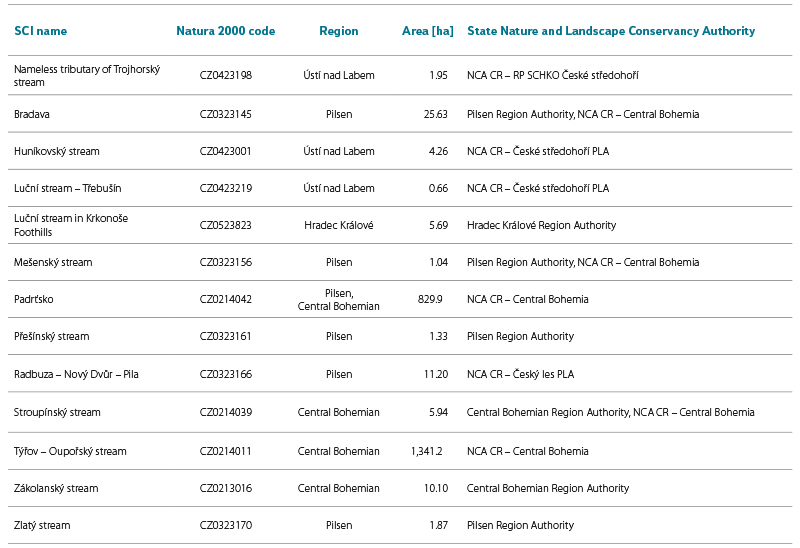
The stone crayfish (Austropotamobius torrentium) is a critically endangered species listed in the Red List of Invertebrates of the Czech Republic [1] and is also classified as critically endangered under Decree No. 395/1992 Coll. [2]. At the level of the European Union, it is protected as a priority species listed in Council Directive 92/43/EEC on the conservation of natural habitats and of wild fauna and flora [3]. To ensure its protection in the Czech Republic, 13 of the most valuable sites have been designated within the Natura 2000 network as Sites of Community Importance (SCIs) [4]. An overview of the designated SCIs and their basic characteristics is presented in Tab. 1. However, targeted monitoring has gradually identified additional sites with the occurrence of the stone crayfish (by 2024, a further 32 sites had been recorded), demonstrating that the designation of the original SCIs alone is insufficient for the effective protection of the species. In order to ensure maximum protection of the stone crayfish at its sites of occurrence, a Rescue programme was approved in 2024, which, among other measures, defines the water environment conditions necessary for the long-term survival of the species. Rescue programmes aimed at the conservation of endangered species are a widely used tool and are being applied with increasing frequency both in the Czech Republic and abroad [5]. An important advantage of rescue programmes is that protecting a single target species also has a positive effect on other species inhabiting the same habitat, reflecting the umbrella species concept with beneficial impacts on the entire ecosystem [6].
Tab. 1. Overview of designated Special Areas of Conservation in the Czech Republic where the stone crayfish is listed as a species of conservation interest (source: Nature Conservation Information System Portal, NCA CR)
The stone crayfish (Austropotamobius torrentium) is among the largest invertebrates inhabiting both flowing and standing waters. Like other crayfish species, it is omnivorous and feeds on a wide range of food items. In freshwater ecosystems, it therefore plays an important role in nutrient cycling by shredding and processing organic matter, thereby making it available to other organisms [7, 8]. The stone crayfish is one of the native crayfish species in the Czech Republic; however, its original distribution range within the country cannot be precisely defined, as the gradual discovery of its occurrence continues to the present day and the original pattern of settlement can no longer be reliably reconstructed. The current distribution of the stone crayfish (Austropotamobius torrentium) is concentrated in central, northern and western Bohemia, together with one isolated population occurring in the Krkonoše foothills [9]. It inhabits slightly meandering natural streams flowing through mixed forests, where fast-flowing sections alternate with slower reaches forming pools. The stream bed is typically composed of stones or coarse-grained substrate. Its occurrence is influenced not only by the hydromorphological condition of the site and the quality of the aquatic environment [4, 10], but also by the presence of non-native crayfish species, which act as carriers of crayfish plague. The causative agent of crayfish plague is the fungus-like microscopic pathogen Aphanomyces astaci, which represents one of the most serious threats to native crayfish species. Another major threat to the stone crayfish is the loss of shelter availability, caused both by occupation by invasive species (including non-infected ones) and by insensitive modifications of watercourses, infilling of shelters with fine-grained material originating from agricultural land and fishponds, as well as sludge discharged from wastewater treatment plants. In recent years, climate change has added further pressure, particularly through the increasingly frequent drying of watercourses [11]. Additional significant negative impacts may include, for example, pesticides originating from agriculture or industrial applications, which can enter watercourses as a result of improper use [12].
The stone crayfish is an aquatic organism that is dependent on a high quality of the ecosystem as a whole. In the past, it was considered a better bioindicator of water quality than the noble crayfish [13], another of our native crayfish species. However, recent research shows that the water quality requirements of both species are approximately the same [14]. Nevertheless, the truth is that at sites where stable populations of stone crayfish occur at high abundance, the overall quality of the ecosystem is high, including water quality [9].
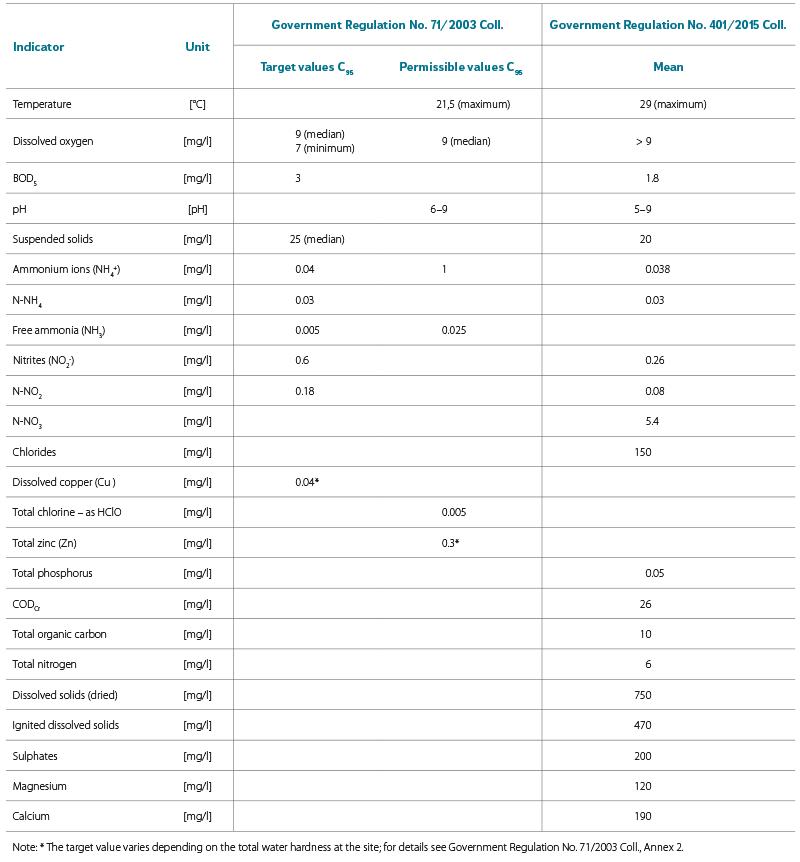
Research into the water quality requirements of the stone crayfish in the Czech Republic began after 2000. The first studies focused on surveys of known sites with occurrences of stone crayfish, where water quality monitoring was carried out, including sites where crayfish abundance was very low and water quality poor. At some sites, longer-term monitoring was conducted, but at most of the other watercourses only two samples per year were taken [15]. Data collected by the Nature Conservation Agency of the Czech Republic (NCA CR) and TGM WRI within these studies between 2006 and 2010 formed the basis for establishing the first threshold values of the aquatic environment for the occurrence of stone crayfish [4, 14, 16, 17]. In order to eliminate data representing sites unfavourable for the longer-term persistence of stone crayfish, sites with long-term reduced water quality, sites affected by episodic pollution incidents, and sites where data were obtained immediately before or during crayfish mortality events were excluded from the dataset. From the original set of sites, 19 sites with stone crayfish were selected, for which mean values and interquartile ranges were calculated for the most important water quality parameters [4, 14, 16]. The obtained results were compared with the applicable legislation, in particular Government Regulation No. 71/2003 Coll., on the designation of surface waters suitable for the life and reproduction of native fish species and other aquatic organisms and on the detection and assessment of the quality status of these waters [18], as amended. The calculated values were closest to the target immission limits for salmonid waters (Tab. 2); therefore, these limits from the government regulation were also adopted in the Rescue Programme for the Stone Crayfish as binding limits. Limits for salmonid waters are also secondarily specified in Government Regulation No. 401/2015 Coll., on indicators and permissible values of pollution of surface waters and wastewater, the requirements of permits for the discharge of wastewater into surface waters and sewerage systems, and on sensitive areas [19], as amended..
Tab. 2. Immission limits set by Government Regulation No. 71/2003 Coll. [18] and by Government Regulation No. 401/2015 Coll. [19] for salmonid waters. When assessing according to Regulation No. 71/2003 Coll., the 95th percentile (C95) is calculated if 12 or more values are available. If fewer data are available, the maximum value is used. When assessing according to Regulation No. 401/2015 Coll., the annual average is calculated, except for the temperature parameter, where the maximum value is applied
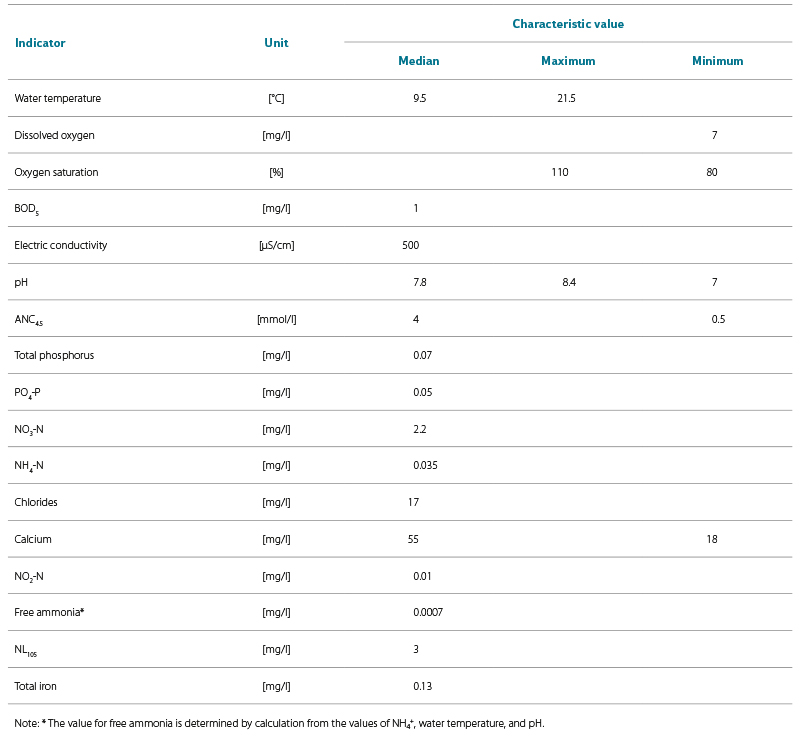
As subsequent research has shown, the requirements of the stone crayfish do indeed necessitate water quality that meets at least the target immission limits for salmonid waters [9, 16, 17]. However, for crayfish populations to be stable and characterised by high abundance, water quality should tend towards more stringent environmental objectives, both in terms of limit values and the range of assessed parameters. Such environmental objectives were newly defined within the TA CR Beta 2 Project No. TITSMZP701 Methodology for the assessment of the status of protected areas designated under the Water Framework Directive for the protection of habitats or species, which made use of previous extensive datasets and information from reference and other sites obtained within several TGM WRI research projects [11]. Within the TA CR Beta 2 project, these datasets were supplemented by two pilot sites (Chejlava and Hůrecký stream), at which monitoring was conducted at monthly intervals from November 2018 to October 2019. On the basis of these data and their evaluation, environmental objectives were established for a set of indicators listed in Tab. 3 [20]. The environmental objectives were defined as annual medians of 12 values, or alternatively as maximum or minimum target values, depending on the type of indicator assessed and its relationship to the type and character of pollution.
Tab. 3. Environmental objectives for aquatic environment quality indicators for the stone crayfish according to the methodology for assessing the conservation status of protected areas [20]
Even these newly established environmental objectives, however, exhibited lower reliability, as most of the underlying monitoring data did not include year-round observations. Therefore, within the research project No. SS02030027 Water Systems and Water Management in the Czech Republic under Climate Change (Water Centre), a monitoring campaign was carried out at reference sites and the best available sites with documented current or historical occurrence of stone crayfish. The data obtained formed the basis for the establishment of revised environmental objectives. This article focuses on the methodology of data collection and evaluation, the new setting of environmental objectives, and their comparison with previously applied limit values.
METHODOLOGY
The refinement of environmental objectives for water environment indicators at sites with the occurrence of stone crayfish was initiated by the selection of suitable reference sites. On the basis of available information on both current and historical occurrences of stone crayfish, as well as previously measured values of physicochemical parameters in watercourses, appropriate monitoring profiles were identified. Within the Czech Republic, a total of 14 reference or slightly anthropogenically influenced sites were selected, where the long-term occurrence of stable populations of stone crayfish had been confirmed or where the disappearance of formerly abundant crayfish populations had apparently been caused by crayfish plague rather than by pollution or accidental contamination events. An overview of the monitored sites is provided in Tab. 4 and Fig. 1.
Tab. 4. Overview of reference and best available sites for the stone crayfish used for establishing new environmental objectives
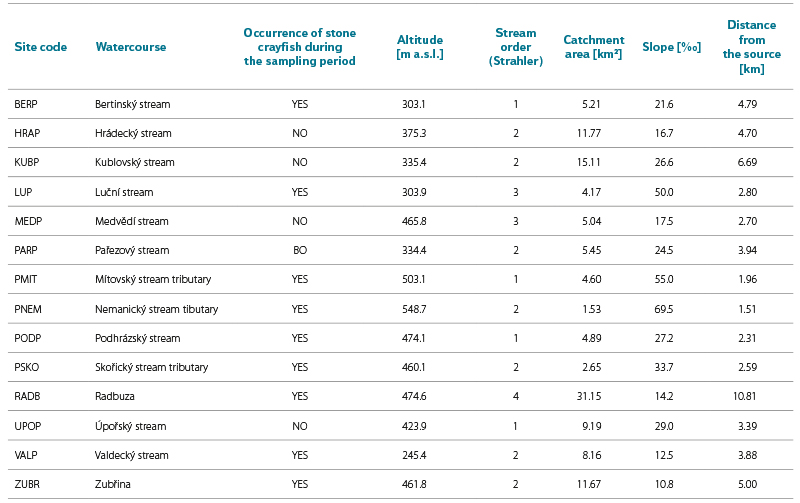
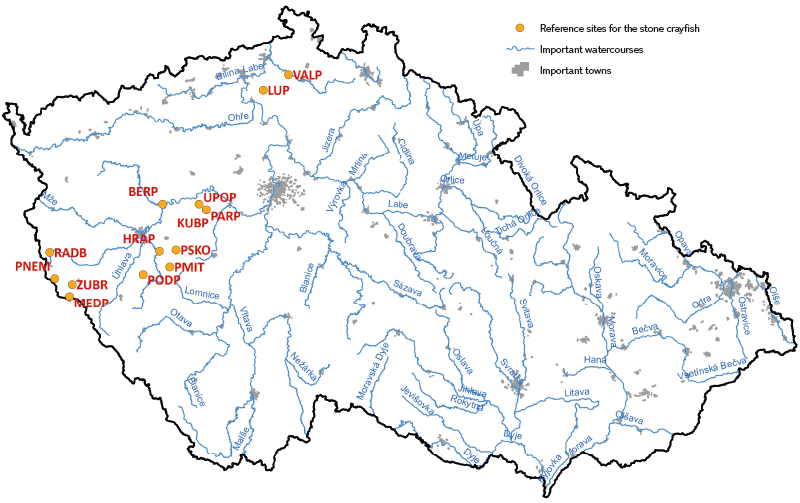
Fig. 1. Location of sampled sites for establishing environmental objectives for the stone crayfish. BERP – Bertinský stream, HRAP – Hrádecký stream, KUBP – Kublovský stream,
LUP – Luční stream, MEDP – Medvědí stream, PARP – Pařezový stream, PMIT – Mítovský stream tributary, PNEM – Nemanický stream tributary, PODP – Podhrázský stream, PSKO – Skořický stream tributary, RADB – Radbuza river, UPOP – Úpořský stream, VALP – Valdecký stream, ZUBR – Zubřina river
The selected sites were monitored at monthly intervals from July 2021 to June 2022. At each site, dissolved oxygen and oxygen saturation, pH, conductivity, and water temperature were measured using a field multiparameter probe HQ40d multi (HACH‑LANGE), and an estimate of the current discharge was recorded. Simultaneously, a grab water sample was collected from the main current for the determination of additional physicochemical parameters (BOD₅, chlorides, sulphates, ammonium nitrogen, nitrate nitrogen and nitrite nitrogen, nitrates and nitrites, phosphate phosphorus, total phosphorus and phosphates, suspended solids, acid neutralisation capacity ANC₄.₅, calcium, magnesium, iron, and the ammonium ion). The set of indicators also included water environment parameters whose relationship to the occurrence of stone crayfish at sites had not yet been documented in literature. These indicators (for example iron, magnesium, and sulphates) were included in the monitoring programme in order to verify their potential significance. The collected samples were cooled and transported to TGM WRI, where the analyses were carried out in an accredited laboratory.
The collected data were processed using the software Canoco 5. Principal coordinate analysis (PCoA) was applied, which displays samples in an ordination space in such a way that similar samples are positioned close to each other, whereas dissimilar samples are more distant. For clearer visualisation, non-metric multidimensional scaling (NMDS) was also used. This method does not preserve absolute distances between objects (samples) but represents the positions of objects from an n-dimensional space in a two-dimensional display as faithfully as possible by maintaining rank-order relationships; thus, distant objects are displayed far apart and similar objects close together. For subsequent analyses of groups of sites identified during testing in Canoco 5, a two-sample t-test was applied, as the measured data showed a normal distribution. This test compares two independent datasets with unequal variances.
The obtained results were further compared with the limit values specified in Government Regulation No. 71/2003 Coll. [18] and Government Regulation No. 401/2015 Coll. [19], as well as with the environmental objectives used for the assessment of general physicochemical components of the ecological status of water bodies [21] and with the objectives applied in the assessment of the conservation features of Natura 2000 SCIs [20]. It is necessary to bear in mind that the individual legislative frameworks use different characteristic values: in Government Regulation No. 71/2003 Coll., the assessment is based predominantly on the 95th percentile; in Government Regulation No. 401/2015 Coll., on the annual mean; whereas the environmental objectives for stone crayfish were established on the basis of the annual median, or, where appropriate, minimum or maximum values. These methodological differences were taken into account when comparing the results.
RESULTS
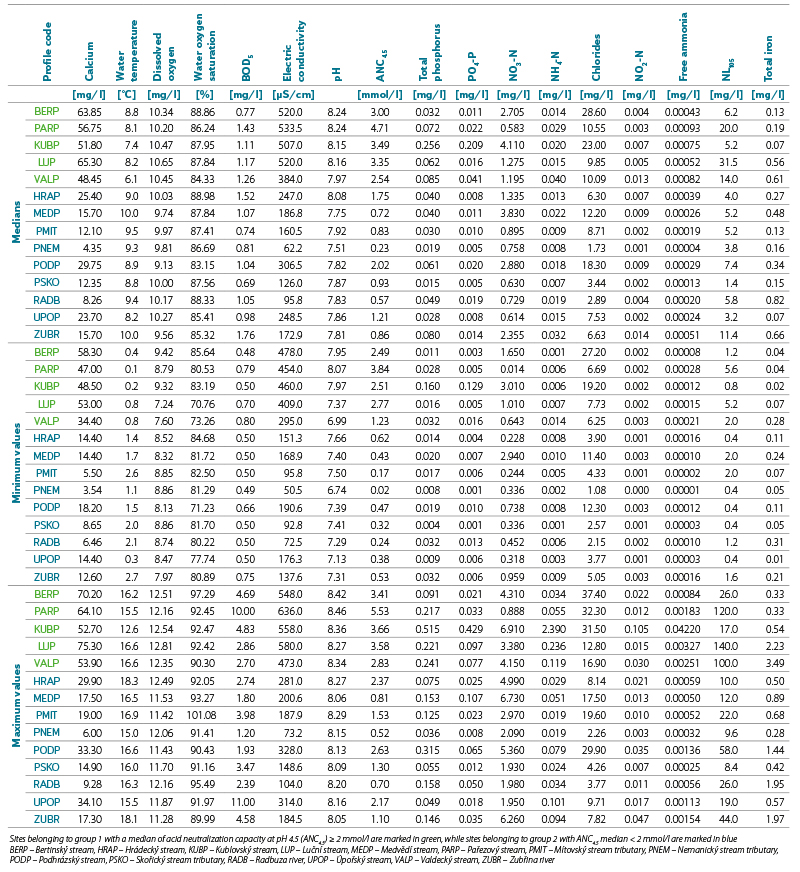
The results of sample analyses and field measurements from all 14 sites were evaluated, and basic descriptive statistics (median, minimum, and maximum) were calculated for each parameter. The results are summarised in Tab. 5.
Tab. 5. Median and measured minimum and maximum values for individual indicators at stone crayfish sites
The results of the principal coordinate analysis (PCoA, Fig. 2) and non-metric multidimensional scaling (NMDS, Fig. 3) showed that the 14 assessed sites form two clearly separated clusters in ordination space. The PCoA explained 75.3 % of the total data variability (axis 1 = 50.6 %, axis 2 = 22.6 %), with the most important environmental variables correlating with the first and second axes at r = 0.98 and r = 0.88, respectively. The NMDS analysis produced comparable results and explained 89 % of the data variability (axis 1 = 62.6 %, axis 2 = 31.4 %), with correlations between environmental variables and the first two axes reaching r = 0.98 and r = 0.94. In the PCoA plot, samples with the highest weights corresponding to the first two axes are displayed; samples from the Podhrázský and Úpořský streams are not shown, as they project along the third axis. Both ordination methods revealed a consistent structure: five sites (Group 1) are separated along gradients of ANC₄.₅, electrical conductivity and related parameters, while the remaining nine sites form a less compact cluster. The vertical spread of this group is primarily driven by the markedly higher discharge of the Radbuza river compared to the other, predominantly small watercourses.
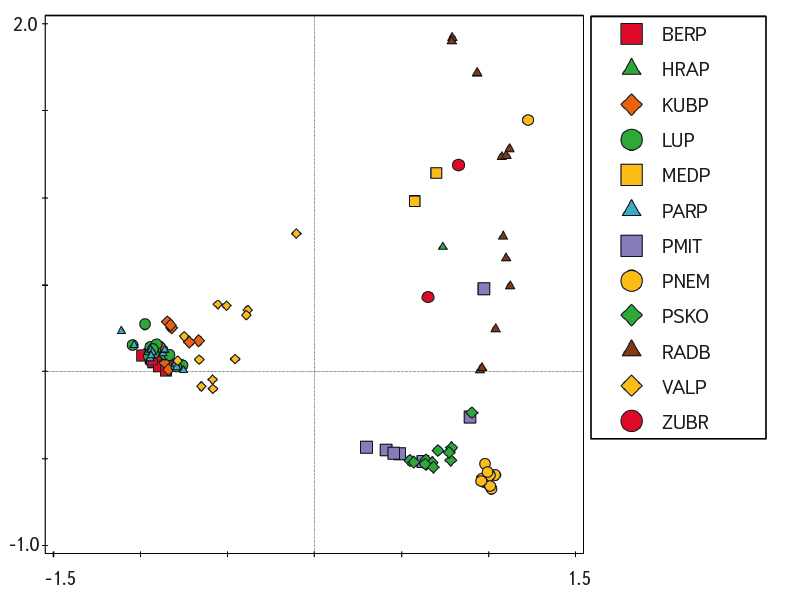
Fig. 2. PCoA analysis (Canoco 5) for the assessed sites characterized by monthly values of measured indicators, 1st and 2nd axes shown, cumulative variability explained by the displayed axes is 73.12 %
BERP – Bertinský stream, HRAP – Hrádecký stream, KUBP – Kublovský stream, LUP – Luční stream, MEDP – Medvědí stream, PARP – Pařezový stream, PMIT – Mítovský stream tributary, PNEM – Nemanický stream tributary, PSKO – Skořický stream tributary, RADB – Radbuza river, VALP – Valdecký stream, ZUBR – Zubřina river (samples from Podhrázský and Úpořský streams are not displayed because they are projected along the third axis)
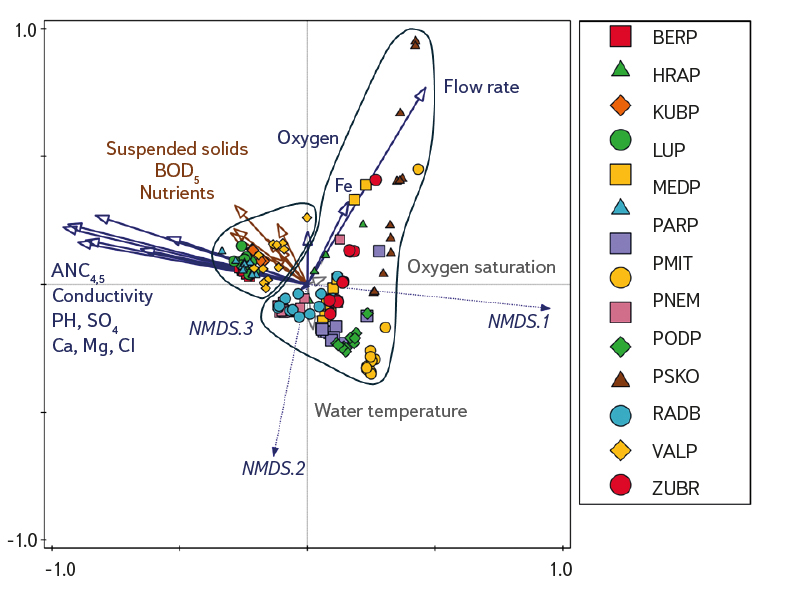
Fig. 3. NMDS analysis (Canoco 5) for the assessed sites characterized by monthly values of measured indicators, 1st and 2nd axes shown, cumulative variability explained by the displayed axes is 94 %. BERP – Bertinský stream, HRAP – Hrádecký stream, KUBP – Kublovský stream, LUP – Luční stream, MEDP – Medvědí stream,
PARP – Pařezový stream, PMIT – Mítovský stream tributary, PNEM – Nemanický stream tributary, PODP – Podhrázský stream, PSKO – Skořický stream tributary,
RADB – Radbuza river, UPOP – Úpořský stream, VALP – Valdecký stream, ZUBR – Zubřina river
The analysis indicates a division into two groups based on alkalinity (parameter ANC₄.₅) and closely correlated variables (calcium, magnesium, conductivity). As alkalinity is a complex parameter that is only weakly influenced by human activity and describes the natural character of a site, subsequent analyses were conducted for two groups of sites, with the dividing criterion defined on the basis of the analysed data as an annual median ANC₄.₅ value of 2 mmol/L (see the clear separation of groups in Fig. 4). For these defined groups, statistical evaluation of differences in individual parameters was performed using a two-sample t-test (comparing two independent samples with unequal variances; a significance level of p = 0.001 was applied). The results of the testing are summarised in Tab. 6.
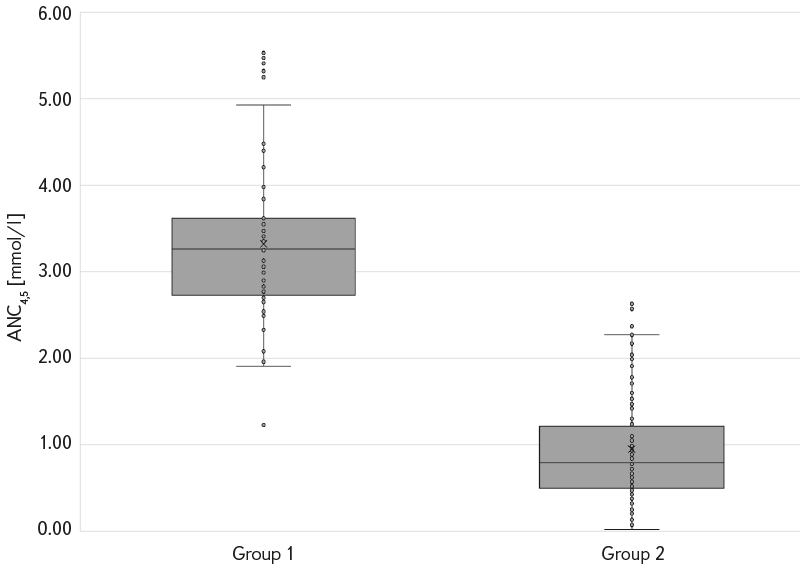
Fig. 4. Boxplot for the ANC4.5 indicator with sites divided into groups based on PCoA and NMDS analyses; group 1 = sites with higher base ion content – ANC4.5 ≥ 2 mmol/l, group 2 = sites with lower base ion content – ANC4.5 < 2 mmol/l
Tab. 6. Range of values measured in two groups of sites classified by base ion content, with indication of the statistically significant differences in all measured values of the respective parameter between the groups
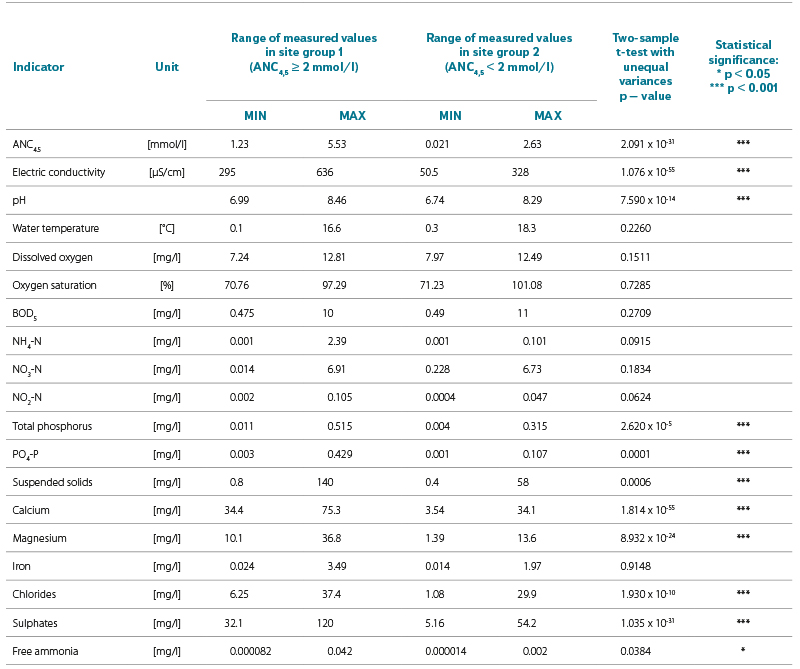
Statistically significant differences between the groups were identified for calcium, electrical conductivity, pH, chlorides, total phosphorus, orthophosphate phosphorus, and suspended solids. For these parameters, environmental objectives related to the stone crayfish were defined separately for each group of sites. For the remaining parameters (water temperature, dissolved oxygen and oxygen saturation, BOD₅, nitrate, ammonium and nitrite nitrogen, free ammonia, and iron), no statistically significant differences were detected at the selected significance level of p = 0.001; therefore, a single environmental objective was applied uniformly to both groups of sites.
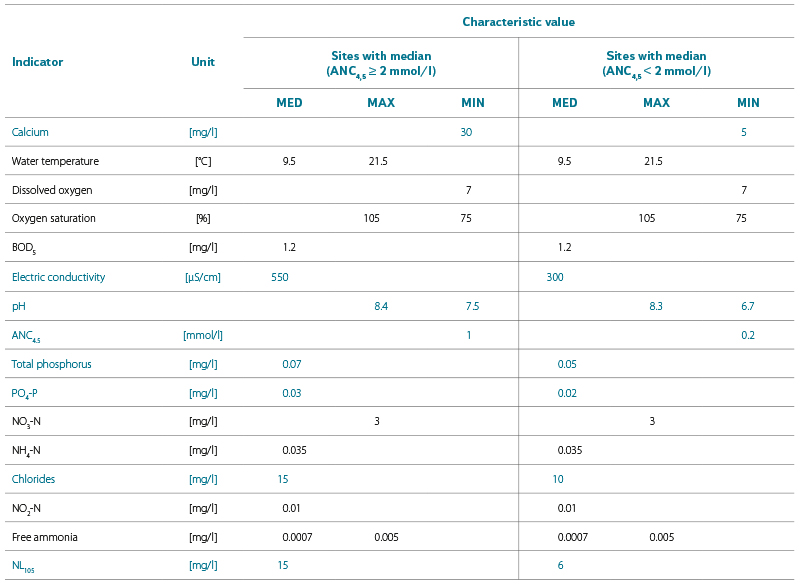
The resulting environmental objectives, as presented in Tab. 7, were established with regard to the degree of anthropogenic influence at the sites based on the measured parameter values. For indicators documenting the impact of pollution (in particular nutrients and organic matter expressed as BOD₅), significantly impacted sites were excluded from the dataset and the objectives were derived solely from unimpacted sites. Target median values were set according to the calculated median of the relevant dataset, with expert judgement applied to take into account mean parameter values at individual sites and the occurrence of extreme values. Minimum values were defined based on the lowest value in the dataset (for the given group of sites or for the entire dataset), adjusted by rounding down, while maximum values were set by rounding up.
Tab. 7. Environmental objectives of selected aquatic environment parameters for the stone crayfish (Austropotamobius torrentium), divided into two groups according to the ANC4.5 indicator; parameters for which a statistically significant difference between the site groups was identified are marked in blue
DISCUSSION
The newly derived environmental objectives differ from the original objectives presented in the methodology for assessing the status of protected areas [20] primarily in that they are not defined uniformly for all sites, but are divided into two groups according to the mean ANC₄.₅ value (alkalinity), which distinguishes sites with high and low concentrations of basic ions. Based on statistical testing of the data in both groups, statistically significant differences were identified in the concentrations of certain parameters that are related both to the natural composition of waters and to indicators potentially associated with pollution. In the previous methodology, environmental objectives were established on the basis of a markedly limited dataset, whereas the new monitoring of reference and additional sites enabled a more robust data analysis and statistical evaluation of the two resulting groups.
Compared with the objectives specified in the above-mentioned methodology [20], not only the absolute target values were revised, but changes were also made to the characteristic values, which are now newly determined as limit values. For the parameters calcium and ANC₄.₅, the median value is no longer used and the limit is defined solely as a minimum value. The median is also no longer applied for pH, for which only a range between minimum and maximum values is now specified. In view of the nature of pollution and the risk of the transfer of additional substances from agriculturally managed land, the characteristic value used for nitrate nitrogen was also revised. The target is now defined as a maximum value instead of the previously used median value. For this parameter, the requirement for water quality has therefore been made more stringent, bringing it closer to the assessment approach applied under the so-called Nitrates Directive [22]. In order to protect crayfish during critical periods of the year characterised by high temperatures and an increased risk of free ammonia formation, a target value for the permissible maximum was newly established for this indicator, while the median value was retained simultaneously.
In general, stricter objectives were established for sites with low acid neutralising capacity (annual median ANC₄.₅ < 2 mmol/L) for parameters characterising anthropogenic pollution. This applies in particular to total phosphorus, orthophosphate phosphorus, chlorides and suspended solids. As shown by the statistical evaluations performed, the ANC₄.₅ indicator correlates, among other factors, with calcium concentrations in waters. Previous studies have shown that crayfish are able to survive even under poorer environmental conditions and tolerate a certain level of pollution if sufficient bioavailable calcium is present in their environment [4].
In the original methodology for assessing the status of protected areas [20], a target value was also defined for total iron. At the individual reference sites, a wide range of values was observed without any direct relationship being identified with the presence or absence of crayfish. Based on the results obtained, we conclude that iron does not have a direct influence on the occurrence of the stone crayfish at the sites, and therefore no environmental objective was defined for this parameter. Similarly, environmental objectives were not established for other measured parameters exhibiting a wide range of values (magnesium, sulphates, and the estimated instantaneous discharge recorded at the time of sampling).
Particular attention in the setting of environmental objectives was paid to the indicator characterising the content of readily biodegradable organic matter in waters, namely BOD₅ values. Previous research and measurements at sites with the occurrence of stone crayfish indicated that target values should be very low. However, these limit values were derived from datasets that did not include complete year-round measurements but focused solely on seasonal monitoring. Analyses of samples from reference sites carried out within the present study showed that the central tendencies of the datasets point to the need to increase the environmental objective for this indicator. The main reason is the overall annual dynamics of the BOD₅ indicator, which is related to the cycling of organic matter in watercourses. It is necessary to recognise that, particularly during the period of leaf fall in autumn, a large accumulation of organic matter occurs within watercourses. Crayfish belong to the group of shredders and, as omnivores, play a substantial role in the breakdown of this organic matter. These fluctuations, which are most often manifested by elevated BOD₅ values in autumn, were recorded in all monitored watercourses. Certain differences were also identified between sites with the presence and absence of crayfish. Whereas at sites with a current occurrence of stone crayfish BOD₅ values did not exceed 4 mg/l, in watercourses where crayfish had disappeared, for example as a consequence of crayfish plague, these values were higher, in some cases reaching up to 10 mg/l BOD₅. At sites without anthropogenic pollution, elevated BOD₅ values during routine monitoring were observed mostly only in the autumn period, when the streambed was covered with fragmented leaf litter. Although these sites met the newly established environmental objective for the median BOD₅ of 1.2 mg/l, the C95 limit for biochemical oxygen demand of 3 mg/l for salmonid waters [18] was exceeded due to the period of leaf fall. In the subsequent months, BOD₅ values then declined to the usual low level.
For both groups of sites, the original requirement of the methodology for the assessment of the status of protected areas [20] concerning the central value of BOD₅ was therefore relaxed. Nevertheless, the new value (1.2 mg/l) remains considerably more stringent than the limit required under the methodology for the assessment of water bodies according to the Water Framework Directive [21] (ranging, depending on water type, from 1.5 mg/l to 2.5 mg/l). The new environmental objective values were incorporated into the completed Rescue Programme for the Stone Crayfish [9] and will be applied in the forthcoming update of the methodology for the assessment of SCIs [20] planned for 2026.
The importance of the BOD₅ indicator from the perspective of stone crayfish survival is further demonstrated by the assessment of water quality in the Zákolanský stream SCI. This watercourse ranks among the most polluted streams with recorded occurrence of stone crayfish. At the Dobrovízský stream site (Dobrovíz downstream) within this SCI, high BOD₅ values ranging from 9 to 16 mg/l were recorded in six samples collected during 2023. These values exceed both the new environmental objective for the water environment for stone crayfish and the limit set by Government Regulation No. 71/2003 Coll. [18], as well as the limit required to achieve good ecological status of water bodies [21]. Although this site was designated as an SCI for stone crayfish, in recent years the stone crayfish has become extinct in this part of the SCI as a result of severe municipal pollution.
For the reasons outlined above, we consider it important, when assessing the status of the water environment at sites with stone crayfish, to use the median value as the primary environmental objective for pollutants such as BOD₅, total and phosphate phosphorus, or chlorides, rather than evaluating short-term fluctuations in measured values that regularly occur under natural conditions and are not limiting for the occurrence of stone crayfish. Minimum and maximum values (including the C95 value used in Government Regulation No. 71/2003 Coll. [18]) are important for capturing extreme conditions, for example during pollution incidents, and it is meaningful to apply them to parameters for which even a single exceedance of the established limit could pose a threat to stone crayfish (pH, nitrate nitrogen, toxic free ammonia, etc.). Ideally, therefore, the assessment of the water environment at stone crayfish sites should combine evaluation against both species-specific environmental objectives and the objectives defined for salmonid waters [18].
The newly established environmental objectives were therefore further compared with the target values for salmonid waters, as specified primarily in Government Regulation No. 71/2003 Coll. [18] and secondarily in Government Regulation No. 401/2015 Coll. [19]. When comparing individual limits from Government Regulation No. 71/2003 Coll. [18] with the environmental objectives, it must be borne in mind that the environmental objectives are based on characteristic values derived from the median, minimum, and maximum of 12 monthly measurements, whereas the limits for salmonid waters are based predominantly on the 95th percentile when all 12 values are available, or on the maximum when fewer values are available. Direct comparison of the limits is therefore not possible; nevertheless, when measured data from reference sites were compared, some parameters were found to be set at comparable levels (for example water temperature or ammonium nitrogen), whereas others were more stringent. More stringent environmental objectives were established for free ammonia (NH₃), which is highly toxic to aquatic organisms due to its ability to penetrate cell membranes, as well as for nitrites (NO2-) and suspended solids (NL₁₀₅). At sites with crayfish, suspended solids cause increased turbidity, settle on crayfish gills, and also lead to the clogging of suitable refuges within the watercourse. The upper limit of pH has likewise been set more strictly, since pH values above 8.5, in combination with higher temperatures, promote the dissociation of NH₄+ into toxic NH₃. At the same time, it should be noted that, compared with Government Regulation No. 71/2003 Coll. [18], the new set of objectives for stone crayfish includes a larger number of parameters. The government regulation, by contrast, additionally specifies limits for dissolved copper, total zinc, and total chlorine (as HOCl).
The limits for salmonid waters, which are also secondarily listed in the table of immission limits in Government Regulation No. 401/2015 Coll. [19], are defined as annual mean values, with the exception of the pH range and water temperature, which is specified as a maximum value. Owing to the use of annual means, however, situations may arise (in contrast to the use of the C95 value in Government Regulation No. 71/2003 Coll. [18]) in which the established immission limits are formally met even if an accidental pollution event occurs at a site or if a source operates intermittently for only a few months per year. Nevertheless, populations of most aquatic organisms may be severely affected in such watercourses, or even decimated. Although median and mean values may appear to be relatively similar, the mean, unlike the median, is easily influenced by extreme and outlying values. Direct comparison is therefore possible only for the maximum water temperature limit, which is permitted to be substantially higher under Government Regulation No. 401/2015 Coll. (29 °C), and for the pH range, which is specified more broadly in this regulation (5–9) [19]. When median and mean values derived from measured data at reference sites are compared, the immission limits set out in this government regulation appear more permissive than the environmental objectives also for other parameters (BOD₅, suspended solids, chlorides, etc.).
An interesting perspective is also provided by a comparison of the newly proposed environmental objectives with the limits used for the assessment of the ecological status of water bodies for general physicochemical components [21]. This methodology was developed for the purposes of assessing river-type water bodies in accordance with Water Framework Directive (Directive 2000/60/EC of the European Parliament and of the Council of 23 October 2000 establishing a framework for Community action in the field of water policy; hereinafter WFD) [23]. One of its objectives is to achieve at least the second class, that is, good ecological status, in water bodies, where the values of biological quality elements of a given type of surface water body show a slight level of disturbance caused by human activity, yet differ only slightly from those that typically occur in this type of water body under undisturbed conditions [23].
The limits established for the assessment of water bodies under the WFD requirements differ among individual water body types. These limits, like the environmental objectives, are defined as medians or, where appropriate, as minimum and maximum values, which allows for direct comparison of the respective values. As noted above, the WFD requires that at least good ecological status be achieved. It is therefore relevant to compare the values of the environmental objectives with the threshold separating moderate and good ecological status. Water bodies are characterised on the basis of river basin, altitude, geological substrate, and stream order derived by the Strahler method [21]. For the purposes of our comparison with the environmental objectives, only altitude can be used, as the other characteristics (such as river basin) do not affect the applicable limit values within the given altitude range.
In watercourses situated at altitudes above 800 m a.s.l., the threshold between moderate and good ecological status for BOD₅ is set at 1.5 mg/l; for watercourses at 500–800 m a.s.l. at 1.7 mg/l; for those at 200–500 m a.s.l. at 2.2 mg/l; and for watercourses below 200 m a.s.l. at 2.5 mg/l. In all cases, these limits are less stringent than the environmental objective defined for stone crayfish, whose core distribution lies at mid-altitudes, that is, between 200 and 800 m a.s.l. The same value of 1.2 mg/l for this parameter is specified only as the boundary between good and very good ecological status in watercourses above 800 m a.s.l., that is, in very clean mountain streams without anthropogenic influence. Similarly stringent is the environmental objective set for water temperature (9.5 °C), whereas the annual median limit separating moderate and good status according to the methodology for the assessment of water bodies [21] is 10, 11, 12, and 13 °C for the respective altitude categories listed above, and a value of 9 °C is specified only as the threshold between good and very good status for watercourses above 800 m a.s.l.
Phosphate phosphorus is set more stringently in the environmental objectives for stone crayfish for watercourses below 500 m a.s.l. in both groups of sites defined by base ion content; at higher altitudes, the limit is already comparable. The environmental objective for ammonium nitrogen is more stringent across all altitude categories. A stricter maximum value is also defined for nitrate nitrogen (3 mg/l) for watercourses up to 800 m a.s.l. (under the WFD-based assessment, 4.6 mg/l applies for altitudes of 500–800 m a.s.l. and 5.6 mg/l below 500 m a.s.l.). In the altitude category above 800 m a.s.l., assessment according to the methodology for the evaluation of water bodies [21] is more stringent for this parameter, with a value of 1.4 mg/l. Furthermore, the environmental objective for the maximum oxygen saturation (105 %) is set more strictly, whereas the threshold between moderate and good ecological status is 125 % for watercourses below 500 m a.s.l. and 120 % for watercourses between 500 and 800 m a.s.l. For the remaining parameters, the values of the environmental objectives and the limits under the WFD are set at broadly comparable levels.
CONCLUSION
At 14 reference and best available sites suitable for the occurrence of stone crayfish, year-round monitoring of physicochemical water quality indicators was carried out and the resulting data were statistically evaluated. The evaluation revealed that sites suitable for stone crayfish can be divided into two types according to natural conditions, with the separating parameter being alkalinity expressed as a median ANC₄.₅ value of 2 mmol/l. Based on the statistical assessment of sites within these two groups, indicators that differ significantly were identified, for which different environmental objectives can be used. At the same time, the remaining indicators were identified for which environmental objectives were set identically for both groups. More stringent requirements for the state of the water environment for stone crayfish were established for the group of sites with a low content of base ions.
From the perspective of water environment quality, the stone crayfish can be considered an umbrella species only for certain parameters. The BOD₅ parameter can be described as strictly limited, as it corresponds to the upper limit of the oligosaprobic level [24, 25] and is defined much more strictly than the limit established for achieving good ecological status for the relevant type of water body under the WFD. From the perspective of maximum measured values, however, the C95 value for salmonid waters under Government Regulation No. 71/2003 Coll. is also set relatively strictly; this value was exceeded at some of the monitored reference sites due to elevated BOD₅ values during the period of leaf fall. In many cases, these were sites where the presence of a stone crayfish population was not confirmed during the sampling period. In comparison with the limits under the WFD, parameters indicating thermal and oxygen conditions, as well as parameters assessing nutrient conditions in the watercourse, are also limited more stringently. In comparison with the limits for salmonid waters, the environmental objectives are more stringent for free ammonia, nitrites, and suspended solids. Direct comparison, however, is possible only with the limits under the WFD, where, as in the case of the environmental objectives, characteristic values are defined as medians or, where appropriate, as minimum and maximum values. Comparison with Government Regulation No. 71/2003 Coll. and Government Regulation No. 401/2015 Coll., which are based on C95 values and annual means, was therefore carried out using data from the measured reference sites.
Acknowledgements
This article was written with the support of projects of the Technology Agency of the Czech Republic No. TITSMZP701 Methodology for Assessing the Condition of Protected Areas Designated under the Water Framework Directive for the Protection of Habitats or Species and No. SS02030027 Water Systems and Water Management in the Czech Republic under Climate Change Conditions (Water Centre).
The Czech version of this article was peer-reviewed, the English version was translated from the Czech original by Environmental Translation Ltd.
