climate

Rainwater harvesting systems and flood water management in rural areas: A systematic review

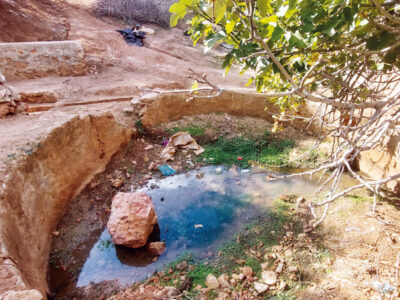
In a climate marked by prolonged drought, observed mainly in arid and semi-arid areas, the installation of hydraulic systems for rainwater collection and storage in rural and isolated areas is becoming a necessity to preserve livestock and ensure water security for the local popula-tion. For this purpose, this review synthesizes recent studies on the various hydraulic systems used for rainwater harvesting (RWH) in rural areas to support agriculture, livestock, and households. This review examines 66 relevant studies published in journals indexed in ScienceDirect and Scopus over a period of five years (January 2021 – December 2025). It emphasizes the importance of design based on the specific characteristics of each location or country, the criteria for selecting implementation sites, the impact of RWH systems on agricul-ture, livestock, and rural households, existing challenges, and proposes some guidelines for sustainable rainwater management and flood reduction.
Fishponds as an element of surface waters network – overview, history, function

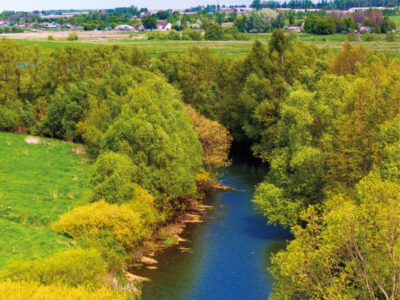
Historically, fishponds are a part of our landscape and Christmas carp is also a part of our culture. This paper describes the history of fishpond management and the different functions of fishponds – the development of fish production as food, the influence on quality of surface waters, the influence on climate and on hydrological regime of the landscape, and the issue of fishpond sediments – their removal and further use. As there is no general pond register in the Czech Republic, so (as part of the DivLand project) we created the Map of water bodies and fishponds in Czech Republic, based on the ZABAGED (primary base of geographical data
in the Czech Republic). For water bodies with an area over 1.0 ha, a public database (xls) was created; bodies over 5.0 ha were classified into groups (fishponds, reservoirs, flooded areas, lakes). The database also contains accessible data on the quality of fishpond sediments. Fishpond sediments are a favourable material for improving the quality of agricultural soils; problems with their use are mostly technical and economical.