

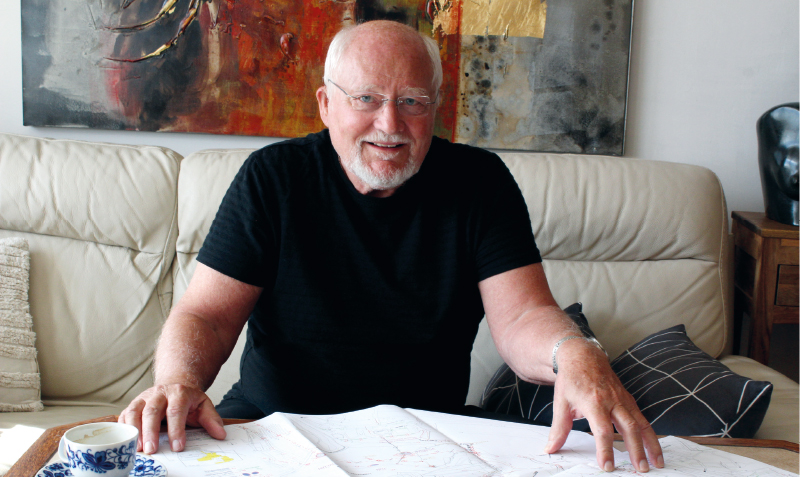
Ing. Jiří Jílek is one of the leading figures in Czech hydraulic engineering. Throughout his professional career, he has designed, delivered, and supervised the construction of numerous water management projects, including river restoration schemes and urban water features. His work includes the system of ponds in Prague’s Stromovka Park, including the unique raft connection to the island, the water feature on Letná Plain, the Braník Water Biotope, the restoration of fire ponds in Lysolaje and Dolní Chabry, the restoration of the Rokytka River and the Botič, Kunratický, Motolský, and Šárecký streams, as well as the currently ongoing project to utilise mine water on Petřín Hill. In this interview, he reflects on his experience with major engineering projects, the importance of first-hand knowledge of the site, working with stone as a construction material, and why hydraulic structures should not only be functional but also sensitively integrated into their surroundings.
Mr Jílek, about eight years ago I discovered your pond on the Lysolaje stream. What brought you to this creation and to working with water?
I come from eastern Bohemia, specifically the town of Vysoké Mýto, which is home to the country’s oldest water management school. It was founded in 1897, and by 1903 it already was known as the Agricultural and Grassland Management School. Even then, it enjoyed an excellent reputation among professionals, thanks to its outstanding teachers and a wonderful community. Although I was more of a technically minded, hands-on person than an excellent student, the school was fantastic and gave me the opportunity to acquire a lot of technical knowledge.
So did you already know back then that you wanted to work with water?
After graduating from secondary school, my teacher Jiří Muzikant convinced me that I should continue my studies, so I enrolled at the Faculty of Civil Engineering at the Czech Technical University, where I studied Hydraulic Engineering and Water Management. There were experts on weirs, dams, and river engineering; thanks to them, I was able to delve deeper and deeper into the field. I think it’s a fascinating discipline, one that’s closely connected with both everyday life and the way our civilisation functions.
I’ve always been a fairly creative person, and I’ve never liked the idea of simply hiding behind standards and prescribed procedures. Standards are, of course, important, but every site and every project is different, and that’s how they should be approached.
After graduating, the choice of where to work was an easy one – I joined Hydroprojekt, which was already a major engineering company at the time, with offices across the Czech Republic and Slovakia. It brought together experts from almost every discipline, including architects, mechanical engineers, and geologists. It was there that I gained a wealth of experience that would be hard to come by today.
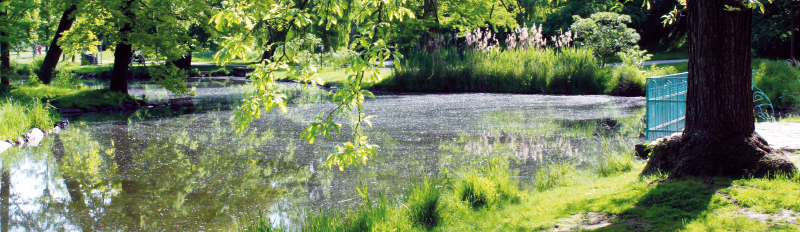
Fig. 1. System of interconnected ponds and water features in Stromovka Park, restored following the 2002 floods. The project included not only the restoration of the ponds, but also the rehabilitation of stream channels, culverts and pools, together with the construction of new bridges and footbridges, a duck pontoon, a raft providing access to the island, a paddling area, a central fountain jet, and the renovation of the ornamental fountain
And this was in the eighties?
That was in 1974. Even then, I was surprised that, as a young newcomer joining such a large company, there was a noticeable gap between generations. I had just graduated, while most of my colleagues were in their fifties or older. It was quite a striking age gap for the time.
At that time, I was most interested in major water engineering projects. I joined a department that worked on all kinds of water management structures, from stream restoration and river training projects to weirs, power plants, and dams.
What was the first project you worked on?
As the youngest member of the team, I was assigned almost immediately to the Josefův Důl Dam, which is now an important water-supply reservoir. At first, I did just about everything. In those days, project teams weren’t nearly as large as they are today. A project of that scale was prepared by just a handful of people, of course under the guidance of experienced specialists. I wasn’t just involved in the design work; I also bound reports, ran off copies on a mimeograph machine, assembled the documentation, and generally helped put everything together. It was demanding work, but for a young engineer it was an exceptional learning experience.
Every now and then I surprised people by approaching things a little differently. For example, I used to draw reinforcement layouts as mirror images, which wasn’t common practice at the time. But once my colleagues saw the technical logic behind it, they accepted the idea without hesitation.
At the time, Hydroprojekt employed specialists who each focused on a particular area of work, and it was obvious that they really knew their field. I think that’s extremely important. These days, it’s quite common for one person to be expected to do almost everything, but they may not have enough experience in every aspect. And it’s often that lack of experience that leads to solutions which are not often the best ones.
You stayed with Hydroprojekt even after 1989. How did you eventually make the move into running your own design practice?
I stayed there until 1992. People often used to say that staff were never the problem, that you could always find people. I’ve always seen it differently. In my view, what really matters are people who genuinely know what they’re doing. Managers can be replaced, but finding people with the skills and experience to actually deliver the work is much harder.
Around that time, environmental issues were becoming a major topic, so together with a new team that I was able to put together, we started working on landfill engineering. It was a very timely field then. Entirely new lining and sealing systems were coming from Western Europe, and standards were being developed for how landfills should be designed, built, and financed. It was a completely new body of know-how.
And was that what brought you to large-scale water engineering?
Yes, because after a while I found it all a bit repetitive. You were constantly having to explain to people that building a landfill wasn’t always the best solution. Many people think it’s a lucrative business, but in reality it all depends on the specific circumstances.
Gradually I lost interest. What I enjoy is creativity – having each project present a different challenge. That’s exactly what river restoration offers. I much prefer complex, unconventional sites where you really have to think carefully about how to work with the landscape.
Since I have always had a strong interest in structural analysis, soil mechanics, and geology, I also carried out various remediation projects various remediation projects – not just landfill remediation, but also repairing embankments, for example where water was seeping through them. In Prague, that included sites such as Černý Most, Nové Butovice, and Čimice.
From what you’re saying, it sounds as though you’re still very busy. How many projects are you working on at the moment?
The demand is certainly greater than I can handle in the standard of quality that is expected – I’m not getting any younger. At the moment, I’m working on about three major projects.
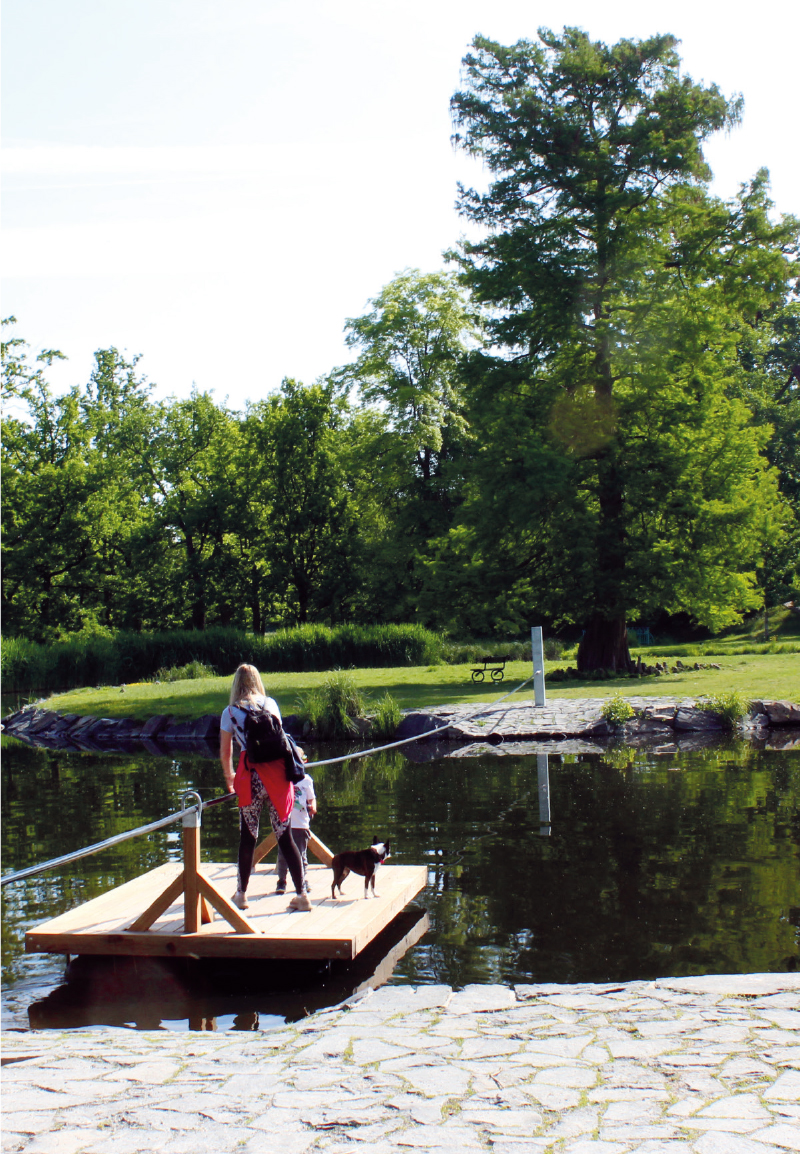
Fig. 2. The romantic raft providing access to the island in one of the many ponds in Stromovka Park, one of the park’s main attractions, had to be subsequently reinforced to accommodate adult visitors
And sometimes you’re brought in to rescue projects…
In addition to supervising construction work, I’m often asked to step in and help fix problems I see in other people’s projects after the client or contractor has become frustrated with the results and turns to me. Sometimes the solution is fairly straightforward; other times it’s much more complicated.
The fact is that the technical expertise in some areas of our profession is beginning to decline. There are fewer people with the depth of practical experience. The worst answer I can hear is, “We’ve always done it this way.” I don’t like that approach at all, because every solution should be based on the specific site, the particular structure, and the conditions on the ground. You can’t apply the same solution everywhere.
When I can see that a proposed design isn’t the right one, I try to get involved and help improve it as best I can. Of course, nobody has a monopoly on good ideas, but practical experience is invaluable in this field. These days there are very few people still actively working who have been involved in several major dam projects and who also have decades of experience working with construction companies, contractors, and subcontractors.
Do you have a favourite project – one that has stayed with you over the years and that you still enjoy going back to?
Not long ago, I was travelling by train, and every time it stopped I realised how many places I’d worked in over the years. There is an incredible number of projects. But if I had to choose one, it would probably be Stromovka. At the time, I didn’t really believe I’d win the competition for the project. My aim was to restore the area, which had been devastated by the 2002 floods, using natural approaches. It was an ideal place to make use of simple structures with a flexible function.
The stream Malá Říčka had been completely torn apart by the flood, and I offered to put it back together. I designed a new weir and a cascading inlet from the navigation channel, and it’s become a place where people enjoy spending time. It’s not a conventional design – there are no rectangles, squares, or right angles. That kind of approach is much more in keeping with nature.
The expansion of water surfaces at the former Rudolf Pond created further challenges regarding the integration of valuable areas. A significant tree left standing on a small island called for an unconventional approach; to design something interesting that would allow people to reach it by more than just a footbridge. That’s how I came up with the idea of a cable-guided raft. Originally, it was meant to be supported by two large puppet figures, but that idea was eventually rejected and replaced with ordinary posts. At first, I imagined it mainly as something fun for children, but then I ran into problems because attractions like that have to meet certification requirements. In the end, following an agreement with Prague City Hall, I increased the raft’s buoyancy – since adults were also riding on it – and today it serves as an operational facility.
You mentioned certification requirements. You’re very much old school in the best sense of the word. Has today’s bureaucracy made it harder to design and build water engineering projects than it was thirty or forty years ago?
Unfortunately, yes. We seem to want to fit everything into neat little boxes, but I don’t think that’s the right approach. It leads to a kind of standardisation that often does more harm than good. History shows us that the great structures built by earlier civilisations weren’t based on templates – they were original solutions, created by teams of true professionals. Sadly, I think we’re losing some of that professionalism today. The specialisation of construction companies in particular types of structures has practically disappeared, and this is reflected in the structures themselves.
On top of that, we’re constrained by standards and regulations, leaving less and less room for independent thinking. As a result, engineers can end up assembling projects from predefined components instead of developing creative solutions.
Do you think that also has something to do with the way engineers are trained today?
One of the biggest problems, in my view, is that projects often fail to take account of all the conditions that really need to be considered. Clients can’t always be expected to know exactly what they should ask for. That’s why designers shouldn’t just respond to a brief – they should think for themselves about what’s important for the site and the project, and make sure those considerations are reflected in the design.
I don’t think it’s acceptable to make excuses afterwards by saying something couldn’t be done, or that the client did or didn’t ask for it, or that nobody knew about a particular issue. That’s the wrong approach. The same applies to project documentation. We often spend a great deal of time describing things in minute detail, but not always to any real benefit. A lot of the documentation has become an administrative exercise rather than something with genuine technical value.
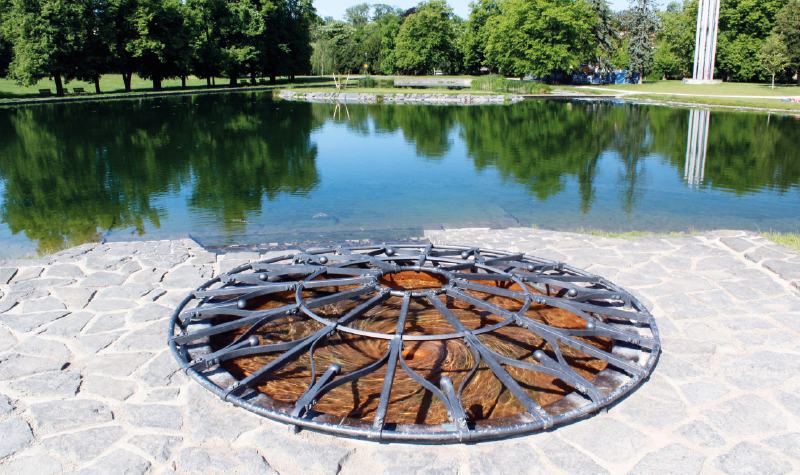
Fig. 3. Water reservoir in the western part of Letná Park (design proposal), showing the inlet cascade beneath a wrought-iron grille, designed to induce water circulation within the lake, which is characterised by exceptionally clear water throughout the year
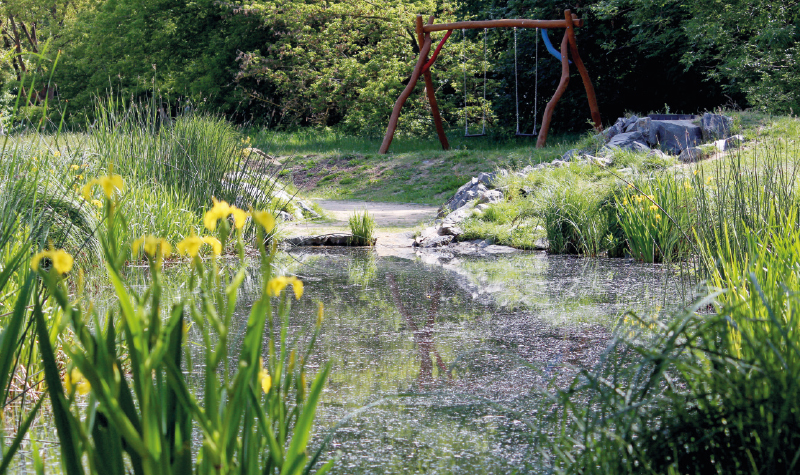
Fig. 4. The Braník aquatic biotope is supplied by groundwater, which is not usual. It was created in spring 2023 not only as a new landscape feature on previously open grassland, but also, together with a short educational nature trail, as part of environmental education for the people of Prague. It is now home to hundreds of edible frogs, smooth newts, grass snakes, and 27 species of aquatic and wetland plants
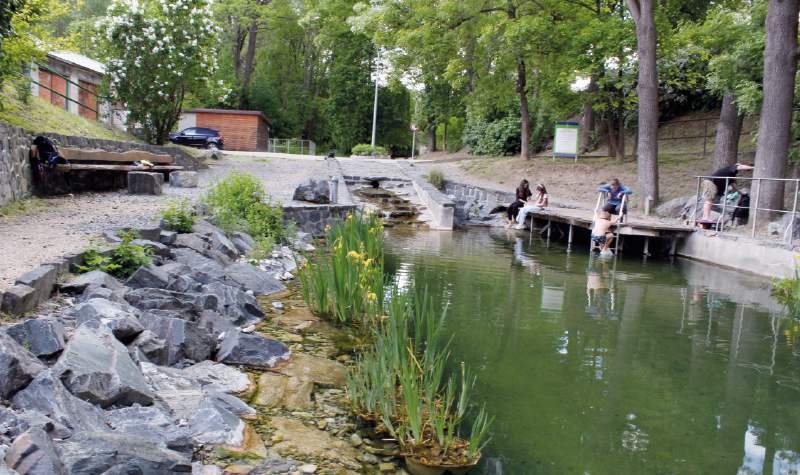
Fig. 5. Revitalisation of the fire pond on the Lysolaje stream and the upper section of its channel below one of Prague’s most productive springs, the so-called Miraculous Spring (Zázračná studánka). The recreational biotope is now fed by this spring, making it one of the coldest water bodies in Prague
Do you have a trusted team of people you like to work with? I remember watching one of your excavator operators place a boulder exactly where you wanted it – it was incredible to see how skilfully and efficiently he worked.
There are plenty of contractors, of course, but not all of them have teams of operators, technicians, and labourers who are truly outstanding at what they do. Fortunately, there are still people who are exceptionally creative, highly skilled, and willing to listen and learn. I enjoy working with people like that. You can talk things through with them – they immediately understand what you’re trying to achieve, what you want them to do, and why. And it doesn’t matter whether they’re Czech, Ukrainian, or from anywhere else. On construction sites you meet people from all kinds of backgrounds. Some are even trained engineers who eventually swapped the drawing board for heavy machinery because they found it more rewarding – and they’re excellent at it.
Have you ever encountered any major technical difficulties while building water engineering structures? Is it even possible to predict everything in advance?
No, it’s impossible to predict everything with complete certainty. Even with a thorough geological survey, you’re still working from a series of sampling points and applying that information to a much larger area. So, on rare occasions, unexpected problems can arise. The most serious difficulty I encountered was when a flood struck a project that was still under construction; there’s only so much you can do to protect against something like that. Even so, a designer should anticipate the risk as far as possible and warn the contractor where the flood hazard is greatest.
In my case, it happened during the construction of a special intake structure on the Elbe at the Opatovice Power Station. The flood virtually tore apart the unfinished section of the project. But you can insure yourself against this in advance and plan for a somewhat larger reserve.
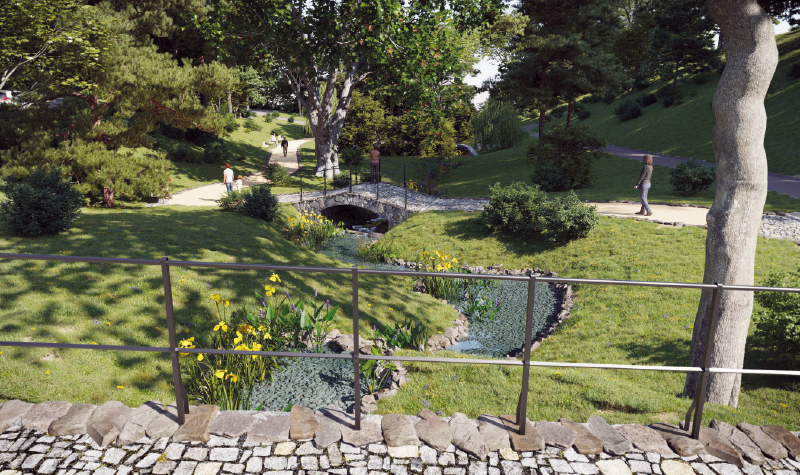
Fig. 6. Planned comprehensive revitalisation of the now-dry pond in Jezerka Park, Nusle, including the creation of a new surface water channel and the bridging of its part beneath the piazza of the adjacent Jezerka Theatre. The project will also include an underground retention tank with a flow-regulation function, enabling the park’s water features to be supplied with rainwater collected from the theatre roof even during prolonged dry periods
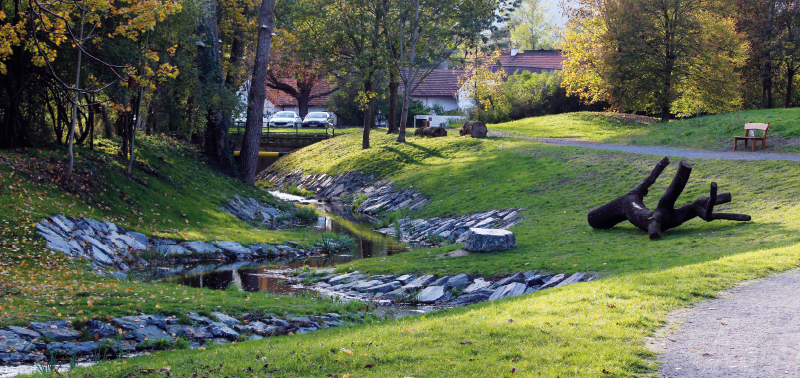
Fig. 7. Revitalisation of the lower reach of the Kunratice stream in Braník, in Za mlýnem Park, commissioned by the Prague City Hall (construction supervision) in cooperation with the Prague 4 Municipal District. This extensive restoration project also incorporates the use of decorative boulders and large woody debris
Is there a general recipe for designing a successful river restoration project? I know, for example, that you’re particularly fond of using basalt for bank protection.
I think the first step is to really get to know the place you’re working with. It’s not enough just to know the size of the site. You need to spend time there, get a feel for it, and only then start thinking about what should be done with the stream and the surrounding landscape so that the result is functional, interesting, and fits naturally into its surroundings.
I’m not a fan of restoration projects that amount to nothing more than a few neat little meanders cut into the channel, or that produce a straight trapezoidal watercourse or a perfectly rectangular pond. Unfortunately, you still see that kind of thing, but to me it rarely looks right. The design should always respond to the character of the landscape it’s being built in.
A good example is the restoration of the village pond at Točná in Prague 12, which I’m working on at the moment. I wanted it to be more than just another ordinary pond. I used basalt not only for the bank protection but also for the footpaths, created an interesting shoreline, and gave the whole site a slightly unconventional character. When about twenty of us met there – including the director of Prague Water Supply and Sewerage – I actually received a verbal compliment. (laughs) That really meant a lot to me, because people often take these things for granted and don’t even notice them.
I know that for the Braník Water Biotope you personally selected a particular stone from the quarry because you wanted it to catch people’s eye. How important is the choice of materials to you?
That one was chert instead. When rock is blasted in a quarry, the structure of the particular stone can produce remarkably interesting and distinctive shapes, and I think those should be put to good use in the right setting. That’s why I often tell contractors not to let someone simply load the stones onto the truck. We first agree on exactly where to source them, so they suit the project, or, if necessary, I’ll go to the quarry and choose individual stones myself. You have to think ahead about how the stones will fit together, how the exposed faces will look, and how their colours will complement the site. Of course, to some extent, that’s also a matter of personal aesthetic judgement.
The aim of water engineering isn’t to transform an entire landscape. Only the part directly affected by the project should be altered. There are many different types of stone you could use, but when it comes to subtle surface textures and the way the stones fit together, basalt and chert are hard to beat. Granite is perfectly serviceable, but I don’t find it nearly as interesting. Its grain size and colour vary a lot, and, more importantly, it tends to split along flat planes, producing rather blocky shapes. I’ve never been much of a fan of square blocks of stone.
How do you see the future of water engineering? You mentioned that even when you joined Hydroprojekt there was a significant generation gap in the profession. Do you see a new generation ready to take over?
Unfortunately, history seems to be repeating itself – we’re seeing the same generation gap all over again. There simply aren’t enough young engineers coming through who are ready to build on what we’ve done. On top of that, fewer and fewer students are choosing engineering because the courses are demanding. Another problem is that, although many technical secondary schools still culminate in the maturita school-leaving examination, the vocational training programmes that used to give people real hands-on skills are disappearing. And for water engineering, those practical skills are essential.
What has a career in water engineering given you – and what has it taken away?
It’s work that I’ve genuinely enjoyed, and not everyone can say that. A lot of people go to work simply because they need a job and a salary, and sooner or later that shows in the quality of what they do. Even under the communist regime, water engineers got along well with one another. Politics didn’t really come into it. What mattered was that they understood their profession. You simply can’t approach work with water in a superficial way.
I also don’t like hearing people say, “If you’re not earning enough, just find another job.” How can anyone become truly good at what they do if they’re constantly changing jobs for a higher salary? That’s not how you achieve real expertise. Money isn’t everything, even though, unfortunately, it’s often treated as if it were.
And what has working with water taken away? Time – above all, time. I’ve spent my life chasing deadlines.
Let’s finish with your current project – the restoration of the pond in Jezerka Park. Are you looking forward to it, or are you expecting a few challenges along the way?
I think it’s going to turn out well. Looking back, most of the projects I’ve worked on have been well received, and I’m confident that this restoration will benefit Jezerka too.
One of the reasons I took it on was that it isn’t a routine project. It’s not just about designing a channel, a path, or a single engineering structure. It’s about working with both surface water and groundwater, the park landscape, and the overall character of the site. When all those elements come together, you can create something that genuinely enhances the whole area.
Of course, a lot will depend on how the project is ultimately carried out. With this kind of work, I think it’s essential that the engineering, the way the water is managed, and the aesthetics all come together naturally. I’m optimistic that we’ll achieve that at Jezerka.
And when you’re not working with water or on a construction site, how do you like to spend your time?
I’ve always enjoyed being active and making things with my hands. I played volleyball for many years, and these days I enjoy skiing, although I’m a bit more careful than I used to be. Ever since I was young, I’ve also enjoyed working with wood, blacksmithing, sculpture, and painting. I renovated and built a substantial part of my cottage myself, with my girlfriend’s help. I also handle the selection of accessories the same way. Building stairs, laying floors, or installing tiling poses no problem for me.
I think all of that has helped me as an engineer. When you’ve worked with materials yourself and understand how things are actually built, it’s much easier to judge what’s practical and what is simply a nice idea on paper that’s going to be difficult to build in reality.
Thank you very much for the interview. I wish you many more original challenges and successful projects.
Photo (pp. 54–59): T. Hrdinka
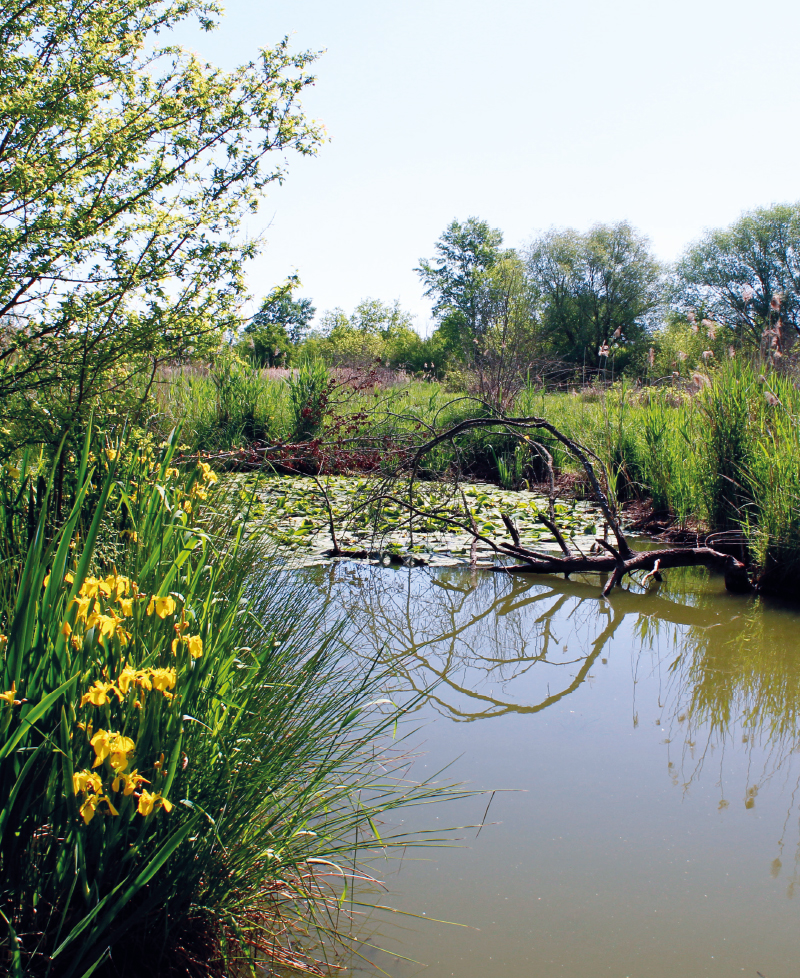
Fig. 8. Revitalisation of the middle reaches of the Rokytka and Svépravický streams within the floodplain of the Čihadla dry retention basin, including the creation of flow-through pools to enhance biodiversity in aquatic and wetland habitats
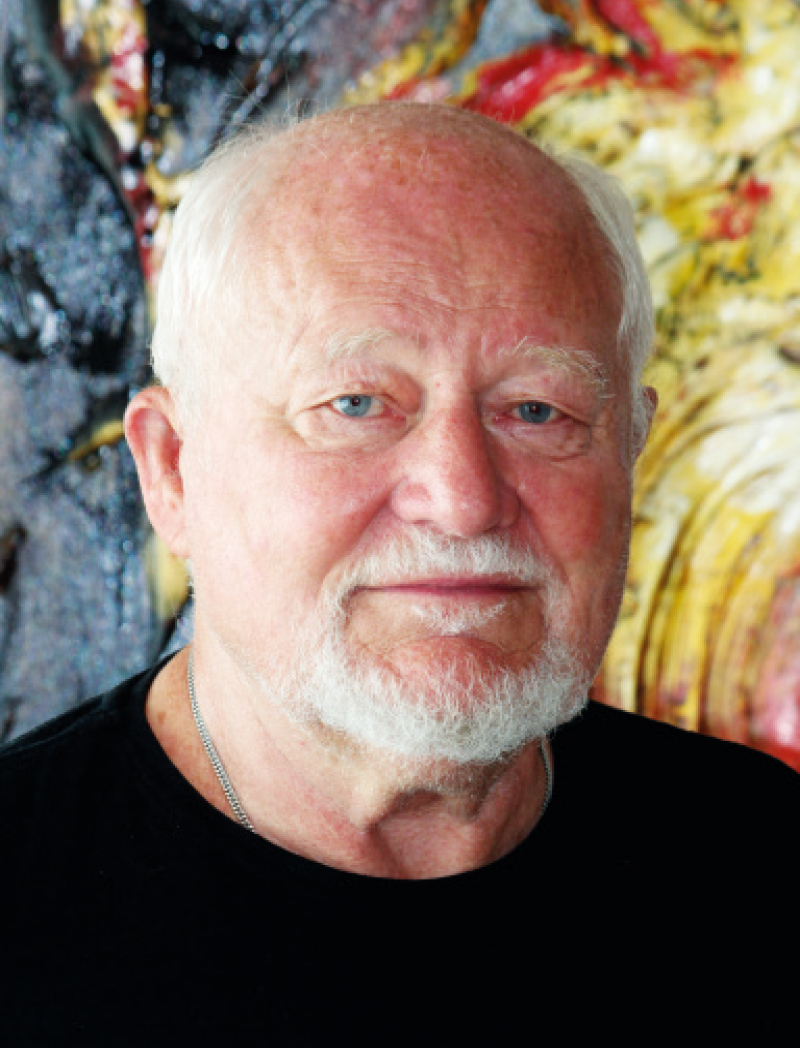
Ing. Jiří Jílek
Ing. Jiří Jílek was born on 6 April 1950 in Vysoké Mýto. After graduating from the Secondary Technical School of Civil Engineering in Vysoké Mýto, he continued his studies at the Czech Technical University in Prague, specialising in Water Structures and Water Management. In 1974, he joined Hydroprojekt Prague, where he worked until 1992. In the same year, he established his own licensed design practice, Hydro-Natur, followed by the engineering consultancy Ekotechnik-Inženýring, Ltd. Over the course of his career, he has designed more than 300 new water management and environmental engineering projects. He has also been involved in the repair and rehabilitation of existing structures and the remediation of unsuccessful designs prepared by others, with projects implemented throughout the Czech Republic and Slovakia. In recent years, his work has focused primarily on Prague and its surrounding area. In addition to design work, he remains actively involved in project implementation, serving as a construction supervisor. His personal interests include woodworking, craftsmanship of all kinds, the arts, travel, the history of construction and engineering, and, since 2000, renovating and maintaining a country cottage. Until the age of 65, he played volleyball competitively, and he continues to enjoy skiing. He lives in the Chodov district of Prague, is widowed, and has three children.
