

The Fifth Water Centre conference, held on 25 November 2025 at TGM WRI, focused on water management in the Czech Republic under con-ditions of ongoing climate change. The event, organised with the support of the Ministry of the Environment and the Technology Agency of the Czech Republic, presented current research results in the fields of water resources modelling, landscape water retention, water quality, and adaptation to extreme weather events. The conference followed on from previous years, which have long provided a platform for the presentation of research outcomes in water management and for fostering interdisciplinary dialogue between experts from both the academic and applied spheres. It also confirmed the growing importance of interdisciplinary cooperation in addressing environmental challenges and presented a number of practically applicable insights for water management practice.
Main thematic areas and expert contributions
The conference programme was divided into two parts, reflecting both current research directions and practical issues related to the impacts of climate change on the aquatic environment. The morning session focused on the prediction of climate change impacts and the use of modern tools for their modelling and monitoring:
P. Vyskoč, J. Dlabal and A. Vizina from the TGM WRI presented the results of Work Package WP1 of the Water Centre project, which asses-ses future water demand in the Czech Republic up to 2050 and its consistency with available water resources. The analysis combines so-cio-economic scenarios with the impacts of climate change in order to determine water requirements across individual sectors and to identify where water deficits may arise. The outputs are published in several specialised public databases and include abstractions for industry, energy production, agriculture, irrigation, public water supply, and livestock consumption, as well as the identification of areas at risk of water scarcity and projections of water resource security.
T. Laburda and colleagues from the Czech Technical University in Prague presented new experimental research demonstrating that grass buffer strips can significantly reduce surface runoff and soil erosion on agricultural land. Testing on model plots showed that fully grassed strips reduce sediment export by up to 85 % and delay the onset of runoff, thereby increasing landscape water retention capacity. The study thus confirms that even relatively short grassed sections can represent an effective and readily applicable tool for the protection of soil and water-courses.
L. Jačka and his team from the Czech University of Life Sciences Prague have been monitoring soil microclimate over the long term in the pilot area known as the “Amálie Smart Landscape” in the Rakovník region. Data from hundreds of sensors confirm that the type of vegetation cover has a significant impact on both soil temperature and soil moisture. Forest stands keep the soil up to 7 °C cooler on hot days than open agricultural land, while grassed buffer strips with tree avenues are able to mitigate overheating and improve water infiltration in arable fields. The study thus demonstrates that stable vegetation increases landscape resilience to drought and extreme temperatures and may represent a key element of adaptation to climate change.

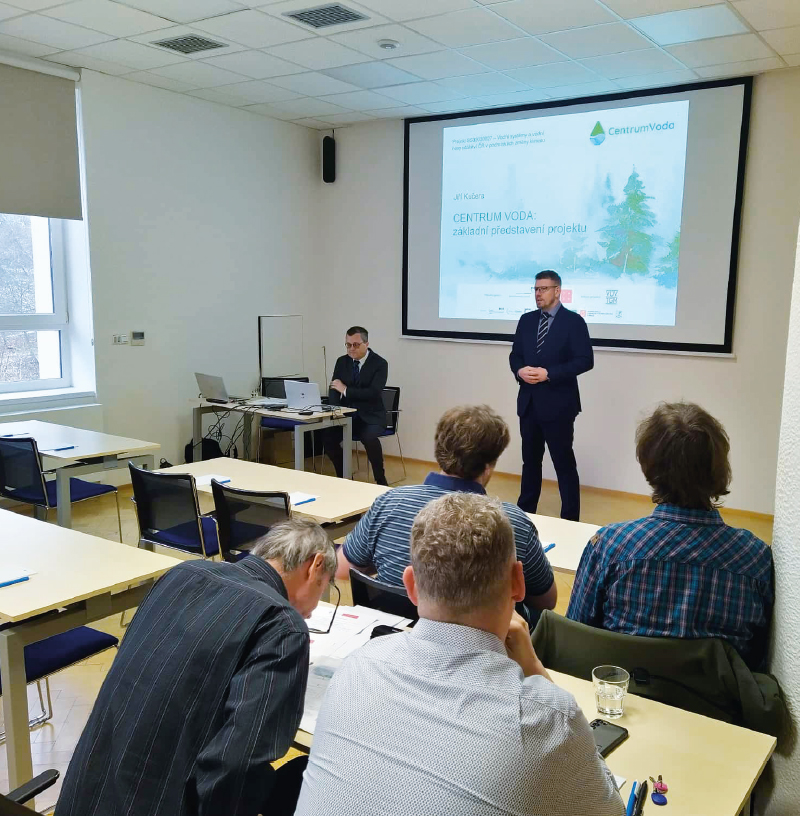
Fig. 1. The opening address was delivered by Ing. Tomáš Fojtík, TGM WRI Director
J. Bernsteinová from CzechGlobe presented the concept of a digital twin of the Dyje River basin as a tool that integrates hydrological, clima-tic, soil and water-management data into a dynamic, living model of the catchment. This model enables the safe testing of the impacts of climate scenarios as well as various adaptation measures, such as changes in land use, agricultural practices or water-reservoir management. The model shows that an effective response to the expected decline in runoff requires a combination of measures across the entire system. The digital twin therefore provides a modern evidence base for decision-making on the future management of water resources under conditi-ons of climate change.
R. Bachan and M. Hlavňa from TGM WRI demonstrated the use of unmanned aerial vehicles (UAVs) for rapid and accurate monitoring of the impacts of intense rainfall events. The combination of drones and photogrammetry makes it possible to map newly formed erosion gullies in detail, determine the volume of soil loss, and assess the characteristics of the affected slopes. The method is flexible and efficient and provides valuable data for the design of soil-erosion control and flood-protection measures. UAV technologies thus introduce a new standard for documenting extreme rainfall events in the Czech landscape.
The presentations highlighted that issues related to water availability and water quality require a combination of technological, landsca-pe-based and legislative solutions.
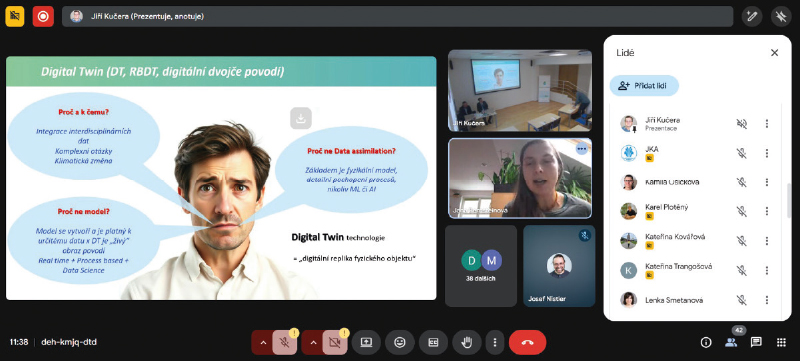
Fig. 2. The fifth conference of the Water Centre project had more than ninety participants, both in person and online
The afternoon session was opened by a presentation by H. Nováková and M. Forejtníková (TGM WRI) which focused on the catchments of selected sites designated for surface water accumulation (SWAS). These sites may in the future serve to enhance water resources or to provide protection against drought and flooding. The research shows that current planning instruments primarily protect the area of the future reservoir itself, rather than the quality of the water and the condition of its catchment. An analysis of 61 sites identified risks associated with erosion, diffuse sources of pollution, agricultural land use and the presence of hazardous substances. The outcome of the study is a recommendation to introduce targeted protection of the catchments of future reservoirs, particularly where they are intended to serve as sources of drinking water. The lecture session conti-nued with the following contributions:
J. Musil, T. Daněk and a team of authors from TGM WRI presented the results of research showing that harmonizing hydropower with na-ture conservation is possible, provided that the ecological impacts of hydropower plant operation are more effectively taken into account. A questionnaire survey conducted among representatives of public authorities and hydropower operators revealed differing priorities betwe-en the two groups: while public institutions place emphasis on ecosystem protection, energy producers give greater consideration to economic and operational aspects. At the same time, respondents identified scope for cooperation and the search for compromises. The project there-fore aims to develop a methodology for so-called environmental bonuses, which would incentivize power plant operators to implement mea-sures reducing ecological pressure, such as improving fish migration conditions or limiting sediment transport.
T. Mičaník and a team of authors (TGM WRI) mapped the occurrence of selected emerging pollutants in industrial wastewater in the Czech Republic. The analyses confirmed the presence of substances that are not yet subject to standard regulation – particularly per- and polyfluoro-alkyl substances (PFAS), flame retardants and bisphenols – across the chemical, paper and other industrial sectors. In some facilities, measured concentrations exceeded several hundred ng/L. However, in the case of PFAS, only a very small number of facilities exceeded the reporting threshold of 50 g of substances per year.
H. Zvěřinová Mlejnková, Š. Šabacká and K. Sovová (TGM WRI) presented the results of systematic monitoring of antibiotic resistance in surface waters in the Czech Republic. The research combines culture-based methods with molecular DNA analysis and shows that resistant bacteria and resistance genes occur in all types of monitored waters, most frequently in the inflows to and outflows from wastewater tre-atment plants. Multidrug-resistant microorganisms and clinically significant types of resistance were also detected. The study confirms that the aquatic environment can play an important role in the spread of antimicrobial resistance and highlights the need for long-term monitoring and preventive measures at the level of healthcare, industry and municipal infrastructure.
P. Kožený (TGM WRI) and a team of authors summarised the results of research confirming that nature-based modifications of small water-courses improve their ecological status. An analysis of 36 reaches across 13 streams showed that renatured and natural channels support a higher diversity and abundance of aquatic invertebrates than technically modified watercourses. Neverthe-less, these differences are not always reflected in the resulting assessment indices, as biological communities respond in complex ways and are influenced by multiple factors beyond the morphology of the watercourse alone. The study therefore emphasises that renaturation measures are important not only for biodiversity but also for the hydrological and landscape-forming functions of watercourses and should be systemati-cally supported within climate change adaptation strategies.
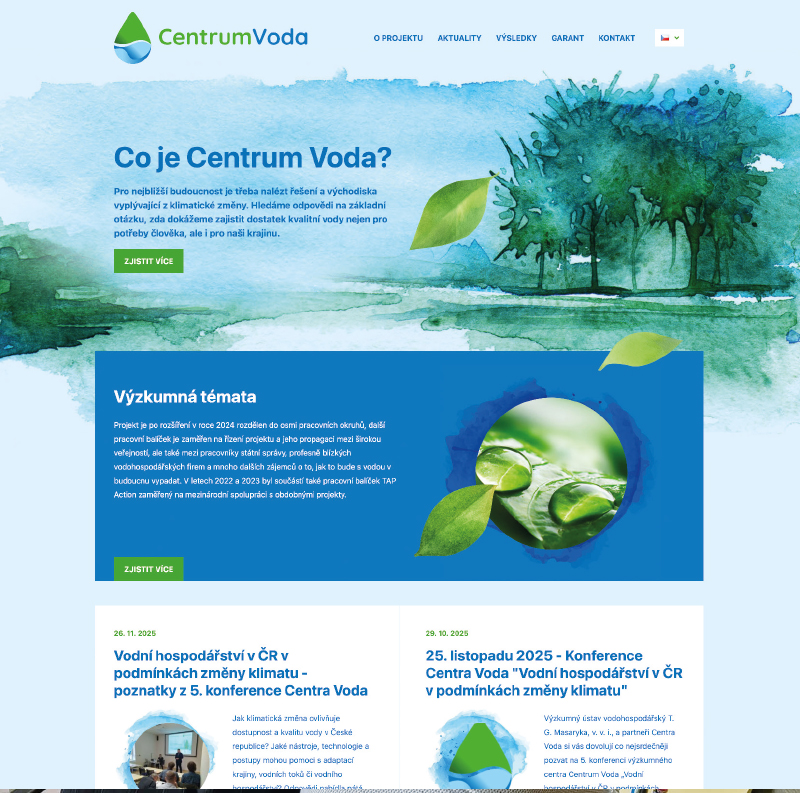
Fig. 3. Screenshot of the project website
Summary of Results and Conference Contributions
The discussions that followed the individual presentations confirmed that climate change is having a profound impact on the availability and quality of water resources in the Czech Republic. The results presented highlighted the need for an integrated approach that combines mo-delling, field research and practical water management. The conference also produced specific recommendations aimed at improving data support for decision-making processes, advancing landscape-based adaptation measures, and strengthening cooperation between research institutions and public authorities.
The fifth Water Centre conference once again confirmed the importance of long-term collaboration between research institutions, universi-ties and public authorities. The Water Centre, funded through the Technology Agency of the Czech Republic, continues to serve as a key plat-form for sharing scientific knowledge and advancing innovation in sustainable water management. At the conclusion of the conference, it was emphasised that adaptation to climate change must be based on a combination of scientific analysis, modern technologies and responsible landscape management – principles on which the Water Centre has built its long-term activities.
The conference results, including the individual presentations, can be found at: https://www.centrum-voda.cz/aktuality/vodni-hospodarstvi-v-cr-v-podminkach-zmeny-klimatu-poznatky-z-5-konference-centra-voda
An informative article that is not subject to peer review.
