

Six years ago, Assoc. Prof. David Stránský spoke in the Priorita journal about the fact that by linking rainwater with urban greenery, a city can obtain a form of cheap air conditioning. Since then, the topic of water management in cities has advanced not only in terms of legislation and technologies, but also in the approach of the public and local authorities. How does he view developments in this field today, where is research at the Department of Municipal Water Management at CTU heading, and what does he consider to be the key to a sustainable urban environment? These were the questions we addressed in the following interview.
Professor, could you please look back on your early professional beginnings? What led you to the field of water management, and why did you decide to devote yourself to this particular area?
Looking back, I can see that to a large extent it was a matter of family background. My father taught water-related subjects at the secondary technical school in Hradec Králové and later worked for the local water supply and sewerage utility. Water management was also the professional field of my uncle and two cousins.
For a short time I did consider a career in IT, but at CTU I was persuaded by teachers who showed me how diverse and meaningful work with water can be. They also demonstrated that in this field there is (and will be for a long time) a great deal of work to be done if we are to move closer to global standards.
What do you consider to be the greatest advance or achievement in research and teaching at your department?
In teaching, it is certainly the modernisation of the content of all courses. We strive to adapt them to current trends and to what students genuinely need for their future professional careers. We invite a wide range of practitioners to share their experience with students.
However, I consider the change in the approach to teaching to be fundamental. We teach students to perceive water not as an isolated technical discipline, but as an integral part of society, the landscape, and the urban environment. We want them to understand the interconnections and the responsibility that is associated with their decisions.
In research, we have been particularly successful in the areas of rainwater management, water recycling, optimisation of wastewater treatment plants, and the use of heat from wastewater. The outputs include methodologies, software, and patents – in short, results that are closely linked to practical application. This has been our long-term objective.
When you look back, how has student interest in water management topics developed over time? Do you observe a growing interest in sustainable solutions or in so-called blue–green infrastructure?
Overall, there are fewer students today; roughly one fifth of the number that used to be typical around the turn of the millennium now enrol in our field. However, I see a much stronger interest among those who do choose to study water management. They are often more motivated, ask more questions, and remain in the profession after graduation.
Interest in sustainability, including issues related to blue–green infrastructure, is growing strongly among students. Approximately one third of qualification theses at the department now focus on this topic. I am also very pleased that we teach blue–green infrastructure at the Faculty of Architecture of CTU as well, because cooperation between water management professionals and landscape architects is absolutely essential for achieving good results.
Which projects or initiatives have been the most professionally fulfilling for you in recent years?
Over the long term, I have found fulfilment in working on a wide range of documents related to rainwater management and blue–green infrastructure – from the initial amendments to legislation, through standards and methodologies, to today’s support for municipalities in setting their own standards and decision-making processes. All of this has been a fulfilling and at times even adventurous journey.
And then there are projects where it has been possible to combine my profession with a personal interest in history, such as a blue–green infrastructure study for the national cultural monument of Vyšehrad, filming videos about water at Strahov Monastery, and work for the Dejvice campus. I found these projects particularly enjoyable.
In 2019, in an interview for the Priorita journal, you spoke about “cheap air conditioning” for cities, meaning the use of rainwater and greenery to cool the urban environment. How has this topic developed since then?
In the field of urban planning, six years is a relatively short period of time. However, when I look at developments over a horizon of two decades, the direction of change is clear.
At the turn of the millennium, rainwater management began as a purely water management issue, which gradually started to become linked with greenery, the landscape, and adaptation measures. Today, this integration is already a standard part of both the debate and practical design.
What has been crucial is a change in the way of thinking. In the past, we had to spend a great deal of time explaining why it makes sense to retain and use water within a given area. Today, municipalities tend to ask instead how to do it in the best possible way. That represents an enormous shift.
And, in retrospect, it was perhaps around 2019 that we moved from a phase in which we were “pushing the cart uphill” to a phase in which it is already moving on its own. Our task now is mainly to ensure that it does not veer off course.
What is your view on the current situation in rainwater management in Czech towns? Have you observed any specific changes recently in the way municipalities think about this issue?
Very positive. Municipalities understand far more than in the past that working with rainwater is not merely an economic consideration, but a matter of future quality of life.
Larger towns and cities are already developing their own rainwater management standards and are seeking to better coordinate decision-making processes across departments and municipal organisations. Smaller municipalities, in turn, are more frequently requesting consultations and actively looking for solutions that are realistic for their specific conditions. This is a development I would not have expected ten years ago.
What do you think is holding back the wider implementation of blue–green measures in practice – legislation, finance, or rather a lack of courage?
It is certainly a combination of several factors.
A major legislative issue is the exemption from charges for rainwater discharged into sewer systems for public use. This applies to most producers and reduces the economic incentive to implement blue–green infrastructure.
There is also a widespread assumption that blue–green solutions are often more expensive than conventional ones, particularly if only the direct construction costs are considered. However, we should learn to take into account the associated benefits as well: reduced damage during extreme events, improved microclimate, and better public health. If the issue is viewed in a comprehensive manner, the economic balance may look entirely different.
At times, there is also a lack of willingness to step outside established procedures. It is easier to look for reasons why something cannot be done than to seek ways in which it could be achieved. Here too, however, the situation is gradually improving, thanks to interdisciplinary cooperation, which is becoming increasingly common.
In recent years, there has been a great deal of discussion about the climate resilience of cities. What role do you think water – and water management professionals – can play in this context?
A fundamental one. During periods of drought, the key issue is ensuring a sufficient supply of good-quality water; during periods of extreme rainfall, it is flood prevention, and the protection of water quality is also essential. Equally important is the microclimatic function – linking rainwater runoff with greenery can reduce temperatures in streets and make the urban environment more pleasant.
It is a highly complex matter, because all of these functions must be ensured for a city simultaneously, while we also know that building a climate-resilient city cannot be achieved all at once, but only through gradual steps linked to the natural renewal of urban areas. It is a long-distance endeavour, extending over many years or even decades, and all the more reason to start immediately, even with small but well-considered steps. There will therefore be more than enough work for water management professionals.
How do you view cooperation between academia and practice – are you successful in transferring research outputs into real-world projects?
To some extent, yes. Above all, this is achieved through methodologies, standards, and various calculation tools that help to establish effective approaches to design, construction, and operation. The problem is that these tools are sometimes perceived more as obstacles to established practices, and the introduction of new approaches requires a great deal of explanation and awareness-raising. Unfortunately, our capacity for this is limited, although we are greatly supported by the Czech Water Association and other professional organisations.
At the same time, we seek to implement these innovations in real construction projects, but this tends to happen mainly at the request of clients or designers.
And if we look at it the other way round – do practical issues inspire you in shaping teaching and research?
I see it as a never-ending cycle: research generates new knowledge, this is applied in real projects, feedback then comes back from practice, and this in turn influences further research and teaching. I do not think we could ever say that we have reached the goal. It is precisely the fact that our field evolves alongside the needs of society that makes it so rewarding.
How do you relax after demanding days spent dealing with such complex topics?
I walk to and from work every day. It is a simple way to organise my thoughts and both start and close the working day. And it is often while walking that the best ideas come.
At weekends, I try to escape outdoors, clear my head, and do a little quiet reflection. Silence and movement in the countryside are the most effective form of rest for me.
Do you have a personal motto or principle that guides you both in your work and in life?
I have four of them, and they come from the book The Four Agreements by Miguel Ángel Ruiz: be impeccable with your word, do not take anything personally, do not make assumptions, and always do your best. They are not easy to follow, but when one succeeds, one goes to sleep in the evening with a clear conscience – and that is an important life principle for me.
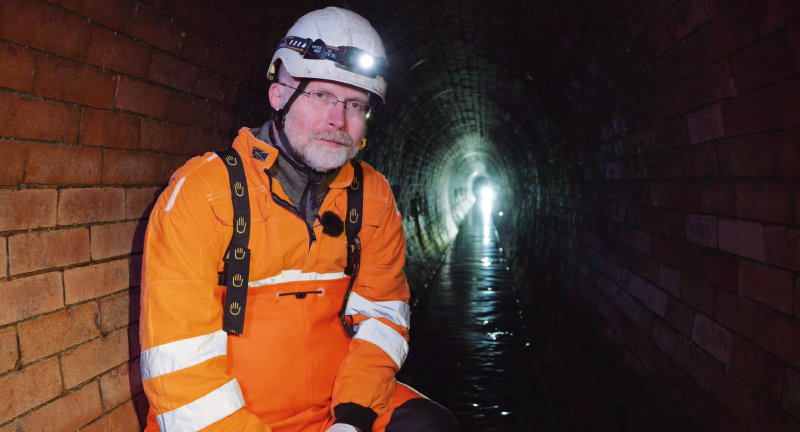
In a sewer beneath Kampa during the filming of educational videos, 2024
If you were to advise students or young professionals who wish to pursue a career in water management, what would you tell them?
They may earn more money elsewhere, but in water they will find a field that becomes part of their life. Water is a fascinating world and, at the same time, the foundation of our survival. When you look at it more closely, work turns into a hobby and, over time, perhaps even into a calling. And I would add a thought by Paulo Coelho: “an entire city can move, but a well cannot”.
What would you like to see changed in the relationship between Czech society and water and the landscape?
That we realise that the environment is not an abstract concept, but the space in which we live – not only we as humans, but all other living beings as well. We cannot do without it. This does not mean that we cannot make use of it, but we should do so with respect and with an awareness of the reversibility, or irreversibility, of our actions.
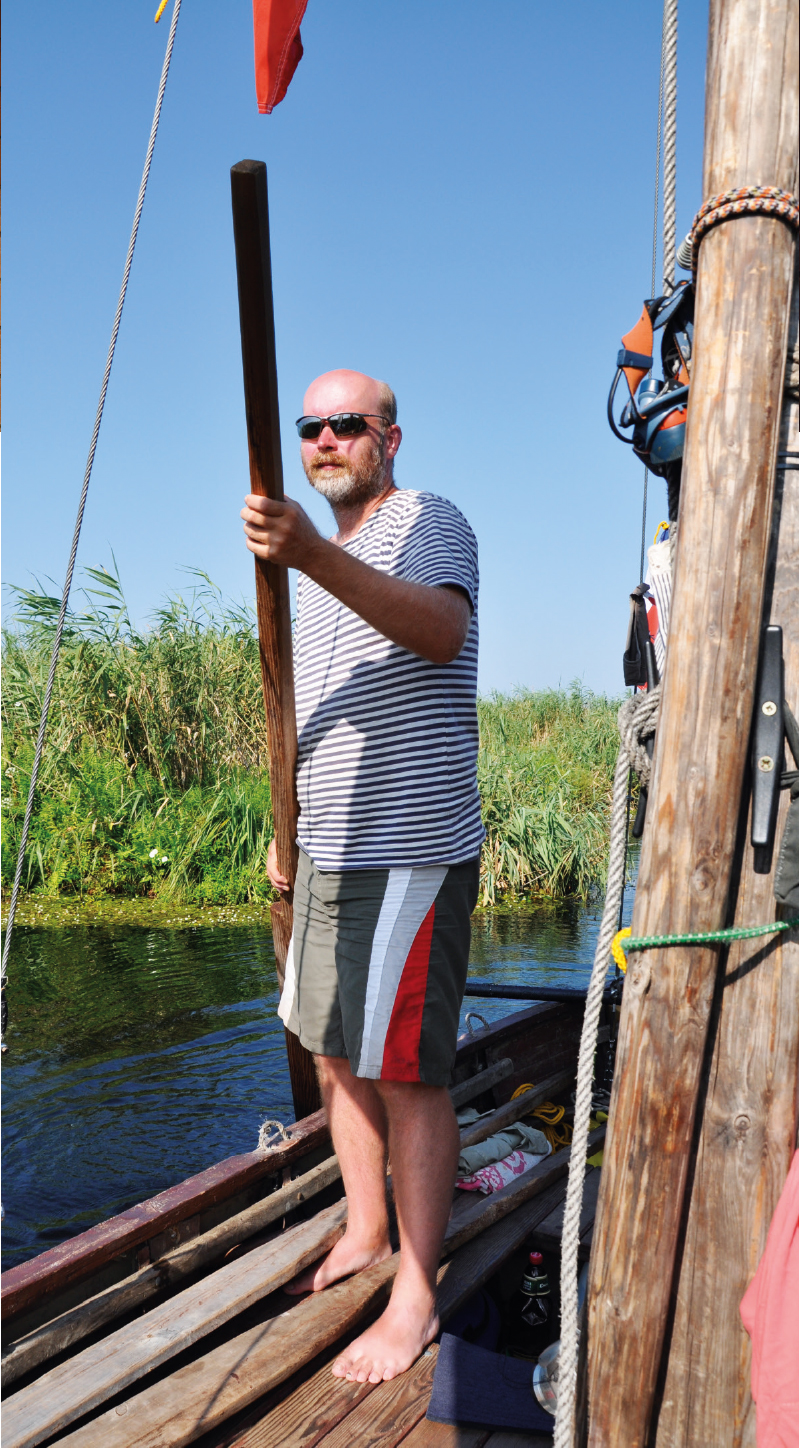
 Lost in the Danube Delta towards the end of the voyage from Komárno to the Black Sea, 2018
Finally, allow me a personal question. What is your dream or goal that you would like to fulfil professionally?
I see my professional path as a long-term process. I do not try to set myself grand goals; rather, I focus on doing what needs to be done each day. And I hope that our generation will leave behind something that others can build upon, rather than something they will have to fix.
However, I did in fact fulfil one long-held dream. When I first attended the largest conference in our field in Sydney in 1999, I thought how wonderful it would be if one day it could be held in Prague. And in 2017 we managed to achieve this, together with Ivana Kabelková and Vojta Bareš. When I recall the 700 participants and the excellent atmosphere, pleasant memories still come back to me to this day.
Today, this is being followed up by the biennial CzWA conference in Litomyšl, and that may well be the true goal for the future: to create a space where the professional community can meet, engage in open discussion, and continue to develop our field.
Professor, thank you for the interview and for providing the photographs.
The interview was conducted in the fall of 2025 as part of the preparation of the February issue of VTEI. Our aim was to follow up on the earlier discussion from 2019 and to map how the topic of water management in cities has evolved over time – in professional, academic, and human terms (editor’s note).
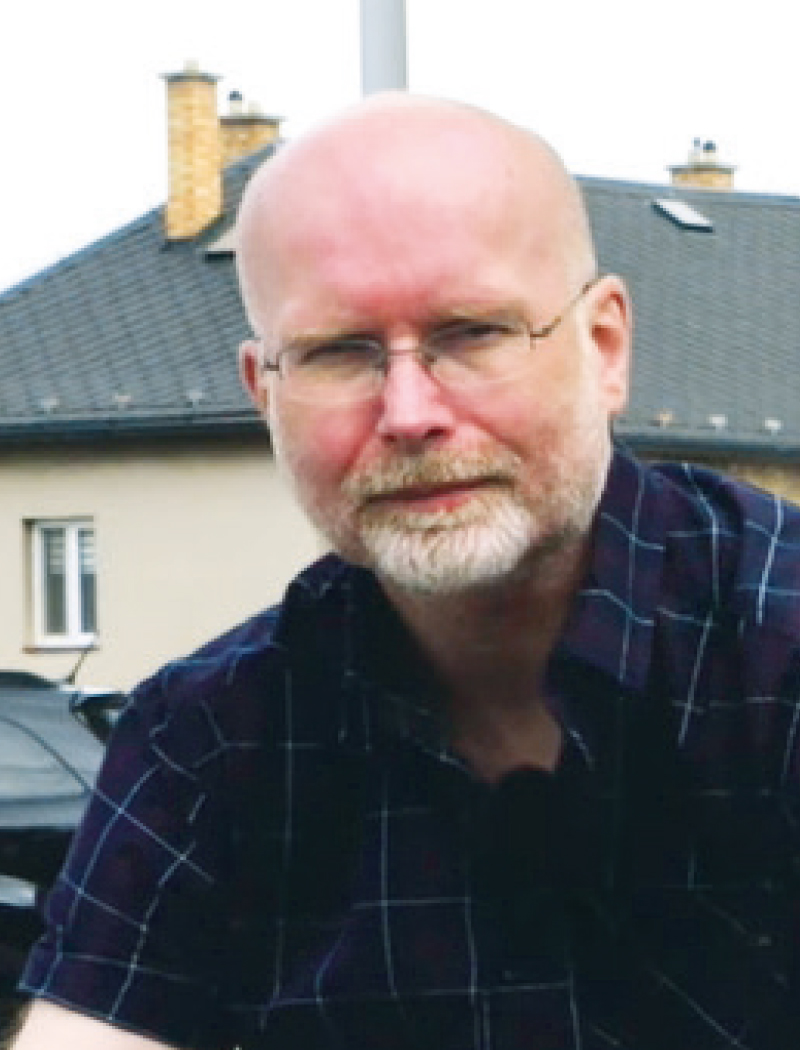
Assoc. Prof. Ing. David Stránský, Ph.D.
Assoc. Prof. Ing. David Stránský, Ph.D., was born in 1972 in Hradec Králové. He graduated from the Faculty of Civil Engineering at CTU, specialising in Water Structures and Water Management, with a focus on municipal water management. From 1998, he worked at the Laboratory of Ecological Risks of Urban Drainage, where his activities focused on the reliability of sewer networks, modelling rainfall–runoff processes in urbanised areas, and the impacts of urban drainage on the environment. Since 2005, he has been working at the Department of Municipal Water Management at the Faculty of Civil Engineering, CTU (formerly the Department of Sanitary and Environmental Engineering), specialising primarily in rainwater management and blue–green infrastructure. He has headed the department since 2016. He has been involved in the implementation of numerous grant projects funded by the Technology Agency of the Czech Republic, the Czech Science Foundation, the Ministry of Education, Youth and Sports, and the European Union. He collaborates with state administration and local authorities and publishes in both national and international professional journals. Since 2013, he has served as Chair of the Czech Water Association (CzWA).
