

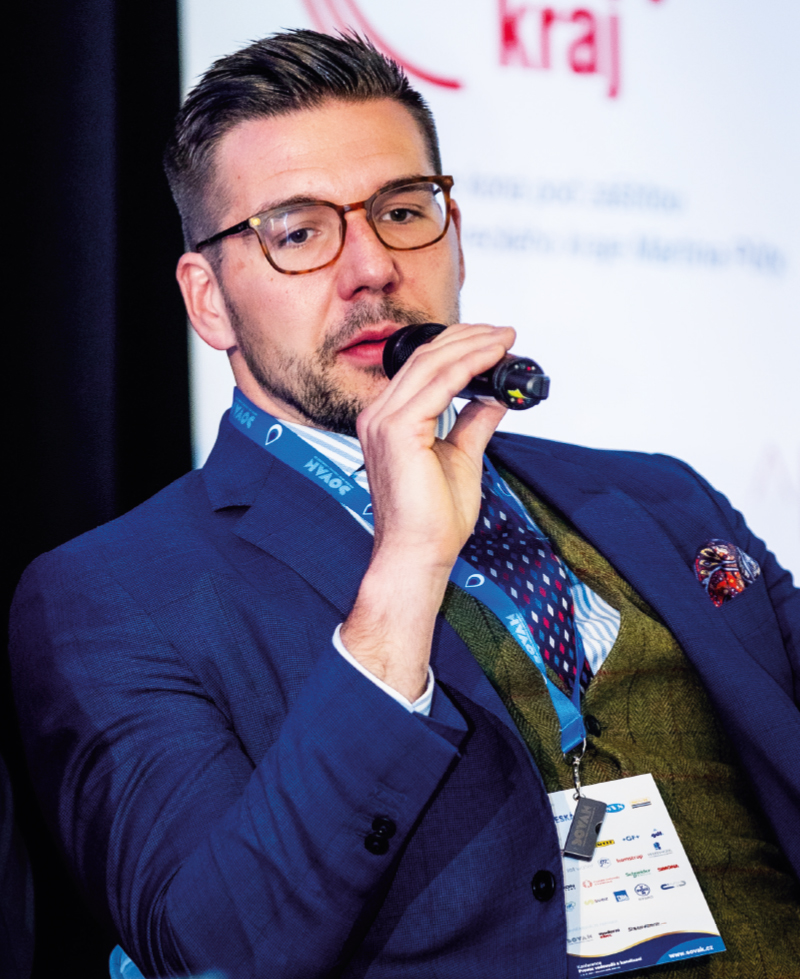
How is Czech water management coping with droughts, floods, and new legislative requirements? Mgr. Martin Pták, Director of the Water Protection Department at the Ministry of the Environment, discusses the Ministry’s current priorities, his professional journey, the challenges facing Czech water management, European legislation, and the need for long-term adaptation to climate change. “Our priorities are clear,” he says. “Adaptation, prevention, and cooperation.”
Mr. Director, you studied ecology at the Faculty of Science of Charles University. What led you to choose this particular field?
I have been fascinated by water since early childhood. At my grandmother’s cottage, there was a stream and a pond right next to the garden, where I spent countless hours building stone dams, wading in the water, and watching various animals; moreover, we were close to the Berounka River. My interest in biology was encouraged by a relative of mine, Tomáš Kučera, who devoted his professional life to botany and taught at the University of West Bohemia in Plzeň. I spent many weekends with him outdoors, particularly mapping habitats. Together with Jindra Duras, he also studied aquatic plants in the Bolevec Pond System in Plzeň, which gave me the opportunity to take part in field research outside my studies and experience practical, applied
science. Ecology, or more precisely hydrobiology (which I later chose as my master’s specialisation), is, in my view, a kind of ‘royal discipline’. It explores the relationships between organisms and their environment, as well as between the organisms themselves. It struck me as the right path to understanding how an ecosystem functions as a whole; thus, one can use knowledge from other branches of biology.
At the beginning of your career, you worked at the Hydrobiological Institute of the Czech Academy of Sciences, where you focused on balance models of phosphorus flow. What did that experience bring to your later professional work?
Yes, it was an excellent experience. As a recent graduate, fresh out of university, I suddenly found myself among colleagues whom I had regarded as prominent figures and leading experts in the field. I had previously known their names only from citations in scientific papers and publications I came across during my studies and while writing my thesis. I saw it as a unique opportunity to learn far more details about topics I had been studying for years. You quickly realise that many processes and phenomena are, in reality, far more complex than how they are presented in textbooks and lecture notes. On the other hand, it was actually very reassuring to realise that they are normal people, dealing with the same everyday concerns and problems, and who have their own hobbies. The greatest lesson, however, was more about discovering that
the academic environment was not really the right fit for me :-).
You have worked both at the Ministry of the Environment and at the Regional Authority of the Pilsen Region. How does this “dual perspective” – from both central and regional levels – help you in your current work?
I have to admit that I went to the Regional Authority in Plzeň more for pragmatic reasons – because of my family. We had a young son, and I was commuting daily from Plzeň to Prague. However, the experience itself was invaluable; it really opened my eyes to how much richer practical work can be. I began to understand much better the perspectives of representatives of public administration or local government, especially at the level of small towns and municipalities. Here, real problems are addressed from the perspective of how things actually work; the approach is more pragmatic, and they often have to deal with personal relationships and neighbour conflicts. From a central level, the view on many issues tends to be more generalised, often considerably simplified. Many times, it is hard to even imagine that some of the situations faced by colleagues at local or regional levels could actually arise in practice. It is definitely important to try to understand their point of view more fully. At the central level, we hope for this kind of mutual understanding as well. I would certainly recommend this experience to many of my colleagues.
Since last November, you have been the Head of the Water Protection Department at the Ministry of the Environment. How do you perceive this new responsibility, and what does it mean to you personally?
I approach this position with a great sense of responsibility and humility. Suddenly, you find yourself in a role where you have to advocate for and defend your own opinions not only with the Ministry’s leadership, but also with political representatives, other government departments, and professional organisations. It is not enough to have a good idea; everything must be thought through in detail, including potential impacts and long-term visions. On the other hand, someone in this role must be much more skilled at finding compromises. On a personal level, I also find it very rewarding to engage in much closer communication with the Ministry’s leadership, with representatives of other departments, and with political representatives.
What are the current main priorities of the Water Protection Department?
Personally, I consider one of the greatest shortcomings to be the almost unchanged state of wastewater treatment; over the past twenty years, the sector has largely stagnated, giving the impression that it was not necessary to treat wastewater to the highest possible standard in line with the development of the entire field. For a while, this may have been sufficient, but in combination with climate change, the inflow of nutrients into the aquatic environment has once again become an issue. Currently, the Czech Republic faces a major challenge: implementing Directive No. 2024/3019 concerning urban wastewater treatment.
What specific steps in the area of wastewater management do you consider to be a priority?
It would be desirable to once again address the impact of discharged untreated or partially treated wastewater, or to establish systematic support for measures to reduce their discharge, which is a long-term priority from the perspective of water protection. This also involves a broader change in the approach to stormwater management, including the removal of exemptions from charges for its discharge, and similar measures. In the long term, it would also be appropriate to restore the incentive function of pollution charges. And, since I have mentioned the area of charges, I would also point out the need to set a realistic price for groundwater, even though this is not directly related to wastewater issues. However, the matter of increasing charges is quite sensitive and requires consensus across the political spectrum, as we at the Ministry have experienced on several occasions.
What role do river basin plans and flood protection play in this effort?
A very significant one. I would really like to finally activate the role of river basin plans. These are strategic documents that have a strong foundation in the current Water Act, and many tools allow them to be used as a means for a targeted approach to individual water bodies or entire river basins. Fortunately, in practice, it is clear that in some areas, river basin managers and regional authorities, as co-authors of the sub-basin plans, are already using this tool effectively. From the perspective of flood protection, I feel that, in terms of operational management, everything functions basically well within the system. I was very impressed by how, in the period leading up to the floods last September, the cooperation and communication between the forecasting service, the leadership of the affected ministries, local governments, and the Fire and Rescue Service of the Czech Republic functioned. There was trust in the predictive models, which made it possible to issue timely warnings. A few days later, the floods demonstrated their full force. However, the major difference was that it was at least partially possible to prepare for this threat. Of course, I can also point out that it would be desirable to build flood protection measures for towns and municipalities more quickly and flexibly, but this should primarily be a shared goal of the local authorities. It also became clear that crisis communication among all involved parties needs further development. Currently, another major challenge for the Ministry of the Environment is the preparation of the new Flood Information System (POVIS2).
The amendment to the Urban Wastewater Treatment Directive has received a lot of attention. What are the most important changes it will bring, and how will it affect smaller municipalities in particular?
In this sense, the new Urban Wastewater Treatment Directive represents a significant step forward. Moreover, it introduces quite a number of changes, not only in terms of tightening existing requirements but also by introducing some entirely innovative tools. I am a little disappointed that we had to wait twenty years for this moment and were unable to tighten requirements at the national level earlier, but I know that the right conditions have finally emerged, where everyone perceives this change constructively and in unison. For context, the original Directive has been in force since 1991, yet many countries struggled to meet its objectives and requirements even after 2020. The European Commission presented the draft
of the new Directive to the Council of Europe at the end of 2022, during the Czech Presidency.
What specific innovations and requirements does the new Directive introduce?
The Directive not only tightens requirements for wastewater treatment and the sewerage of agglomerations, as one might expect, but also addresses and links many other areas that have previously received little attention at the European legislative level. In addition to the points mentioned, it introduces, in particular, a quaternary treatment stage for large wastewater treatment plants, including a new financing approach based on the so-called extended producer responsibility of the pharmaceutical and cosmetics industries. It also introduces objective wastewater monitoring to quantify treatment efficiency, aims to achieve energy neutrality for treatment plants, and establishes a registry for individual treatment systems to oversee their operation. Separately, I would highlight the Directive’s focus on addressing discharged untreated or partially treated wastewater, which now includes a requirement to develop so-called integrated plans.
How will the new requirements affect smaller municipalities, and what challenges do they pose?
From the perspective of smaller municipalities or agglomerations addressed by the Directive, the main issue is the already mentioned obligation to connect to a sewerage system. This obligation will now extend to many additional smaller municipalities, as the threshold for applicability has been lowered to half the size of an agglomeration compared to the original Directive. In practice, this means that all municipalities with more than one thousand population equivalents must now
be connected to the sewer system. In the Czech Republic, this will affect roughly seven hundred more municipalities, although many already have sewer networks in place. This area will therefore require substantial financial resources, and it will be necessary to seek adequate funding to support the construction of sewer infrastructure, primarily at the European level.
Drought is becoming an increasingly serious challenge. What measures is the Ministry preparing to strengthen the resilience of the landscape and water resources?
This question is rather for my colleagues in the Department for Climate Change Adaptation, but in general, I can say that the Ministry, in cooperation with the Nature Conservation Agency of the Czech Republic, is trying to do quite a lot in this area. I would particularly mention the implementation document known as the National Climate Change Adaptation Action Plan. It contains a list of adaptation measures and tasks, including deadlines, responsibilities for implementation, identification of relevant funding sources, and an estimate of the costs of carrying out the measures. It also includes measures related to wastewater treatment and the protection of both groundwater and surface water, in terms of both quality and quantity.
Personally, I believe that one of the major historical shortcomings has been the various modifications of river channels. It would therefore be desirable to accelerate efforts to facilitate river restorations or to allow smaller watercourses to follow natural processes. By this, I mean the process of natural restoration, without unnecessary human intervention, to slow the runoff of water from the landscape. The effects achieved then influence not only the self-purification processes in the watercourses but also flood protection.
From the perspective of our department, I can mention, for example, the commissioning of a research project aimed at assessing whether, in situations where a drought and water shortage are declared, stricter emission limits could be introduced (that is, more demanding wastewater treatment requirements). Basically, when significantly less water is flowing in a watercourse, and wastewater is discharged into it in unchanged volumes and composition, the concentrations of many substances entering the water naturally increase. In such periods, it would therefore make sense to treat wastewater more effectively to ensure that aquatic life can survive even during the summer months.
Floods represent the opposite extreme – how is the state administration preparing to manage and prevent them?
The topic of floods has been addressed very intensively over the past year. The Ministry of the Environment commissioned the Czech Hydrometeorological Institute to prepare a Report on the Evaluation of the September 2024 Flood, which involved several experts, including from T. G. Masaryk Water Research Institute (author’s note: available on the websites of the Ministry of the Environment and the CHMI). The floods also demonstrated the necessity of timely warnings, an active role for flood management authorities, and the need to improve communication with the public.
I would also add that, in response to the floods, we prepared an amendment to the Water Act aimed at accelerating the implementation of flood protection measures, including updating the Decree on the Designation of Floodplains. However, the law was not considered by the Chamber of Deputies.
How do you see the role of modern technologies, such as smart monitoring
systems and modelling, in the future of water management?
Definitely positively – any tool that can make work easier, faster, or more efficient should be quickly adopted in practice and used appropriately. I am particularly pleased, for example, that operators of water management infrastructure themselves are coming up with innovative and smart solutions in the operation of sewer networks, that various digital models are being used in flood forecasting services, in assessing the impact of individual pollution sources on entire river basins, and for simulating the effects of accidents on water reservoirs. I could talk at great length
about each of these. Overall, however, it is truly useful and desirable that these tools are now a standard part of water management.
To what extent does European legislation influence Czech water policy, and where do you see the greatest challenges in its implementation?
The answer is simple – fundamentally. All processes and our activities should aim to achieve a good status of water bodies. This principle is derived from the requirements of Directive 2000/60/EC of the European Parliament and of the Council of 23 October 2000, establishing a framework for Community action in the field of water policy aimed at achieving good status of water bodies, as well as from other subsidiary directives. To this end, river basin plans are developed at various levels; EU Member States are expected to achieve good status of water bodies by 2027.
Another area is flood protection, specifically the development of flood management plans, which define objectives for mitigating the impacts of floods and the methods to achieve them, including prevention, technical measures, and flood defence. These plans focus on areas at significant risk and aim to protect human health, the environment, cultural heritage, and economic activities. They also include proposals for technical measures and measures to modify the landscape and water regime.
As I have already mentioned, the area of wastewater treatment falls under the Urban Wastewater Treatment Directive, which presents several challenges. I would also highlight a European strategy currently being prepared, namely the Water Resilience Strategy, as well as the major challenge posed by the Nature Restoration Law, which will also have a very significant impact on the water sector.
The challenge for us is, of course, not only the requirements of the individual regulations I have mentioned, but, above all, discussion of their impacts with all the stakeholders involved. This is very demanding, both during the adoption and approval of proposals and, in particular, during implementation of the individual requirements.
Is the Czech Republic succeeding in meeting the objectives of the EU Water Framework Directive?
This is a fairly straightforward question, but it is difficult to answer. The principles of the Water Framework Directive are one of the main drivers of water management and have been applied in practice over a long period. The fundamental principle of the Directive is that if even one of a series of indicators fails to meet the good status threshold for a water body, it becomes impossible to classify the water body as achieving good status; this is known as the “one-out, all-out” principle. The impact of certain substances on the aquatic environment cannot even be controlled in some cases – for example, they may enter through atmospheric deposition. I would also note that the requirements of individual directives do not necessarily correspond with each other. For instance, even if a Member State meets the requirements of the Urban Wastewater Treatment Directive, this may not be sufficient to meet, for example, the phosphorus indicator needed to approach the limit for good status. At present, discussions are ongoing at the level
of Member States and the European Commission about what will follow after 2027, and whether, and how, the objectives of the Water Framework Directive might be
revised.
Do you draw inspiration from international examples of good practice in your work? If so, which ones have impressed you the most?
Yes, absolutely. In this context, it is probably not useful to talk about wastewater treatment or drinking water treatment, because in the Czech Republic this sector is very advanced, and as I mentioned earlier, modern approaches and technologies are already routinely applied in practice – for example, the new water line at the Central Wastewater Treatment Plant in Prague. Personally, however, I greatly appreciate the approaches seen abroad, particularly in Germany, Austria, and Switzerland, especially regarding stormwater management and, more generally, the promotion of so-called blue-green infrastructure in cities. In these countries, such measures have often been part of legislative requirements for construction for many years and are strictly enforced during the project planning phase.
What personally motivates and fulfils you most about your work?
I would probably say the opportunity to directly influence and change things. It is also the dedication and effort of my colleagues in the department, whom I can rely on in many ways and with whom I have built long-term and friendly relationships.
What message would you like to give to young professionals considering a career in water management?
By all means – go for it. As in any sector, it is essential to constantly bring new ideas and innovations, and without young experts, progress is simply not possible.
Thank you for your time, Director, and for sharing your insights with us.
Ing. Josef Nistler
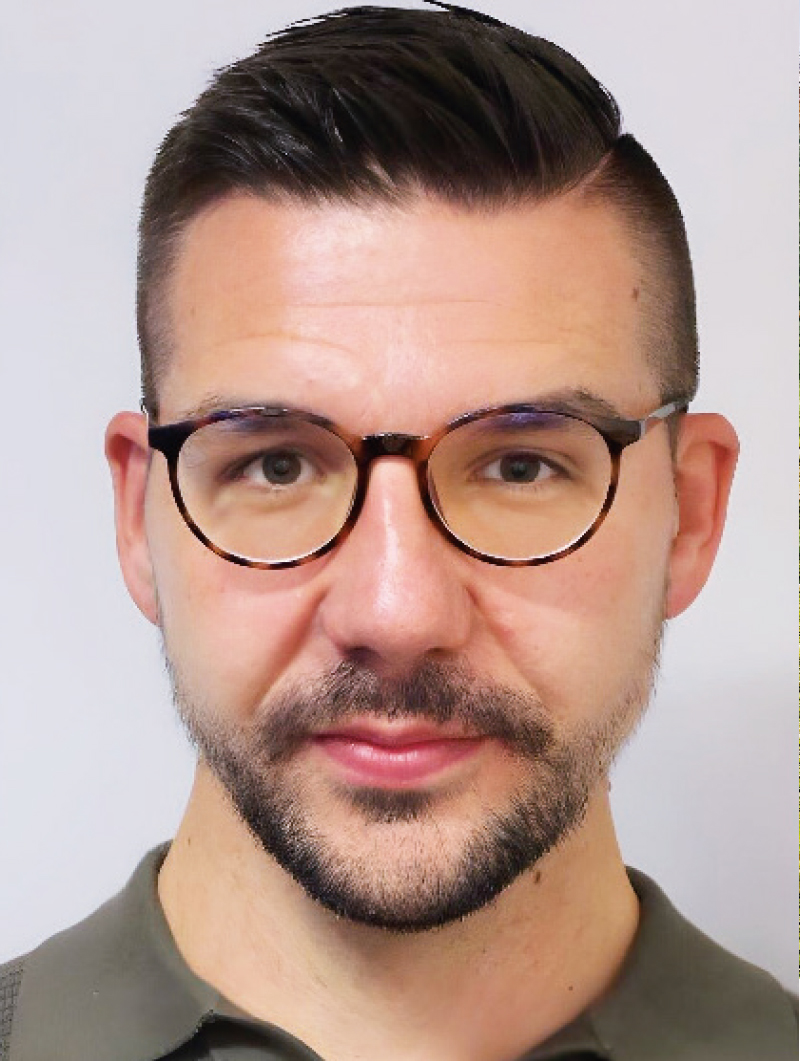
Mgr. Martin Pták
Mgr. Martin Pták was born on 16 November 1986 in Pilsen. After completing his secondary education at a grammar school, he studied ecology at the Faculty of Science, Charles University in Prague, focusing on hydrobiology, specifically the availability of nutrients in pond sediments and their impact on aquatic plant growth. He also gained professional experience in academia, working briefly at the Hydrobiological Institute of the Czech Academy of Sciences in České Budějovice. He then served at both regional and central levels of public administration – from 2013 to 2018, he held a specialist position in the Water Protection Department at the Ministry of the Environment, and from 2018 to 2022, he worked in the Water Management Department of Pilsen Regional Authority. In 2022, he returned to the Ministry of the Environment, serving as Head of the Water Protection Department from August 2022 to November 2024. Since November 2024, he has held the position of Director of the Water Protection Department. He is also a member of the Supervisory Board of T. G. Masaryk Water Research Institute. He lives in Pilsen, is married, and has three children.
