

ABSTRACT
This article presents a methodology for the adaptive management of water reservoirs designed to ensure a reliable water supply under conditions of hydrological drought and climate change. The proposed approach combines hydrological modelling, climate change scenarios, and the optimisation of rule curves with regulation levels. The management system allows for flexible restrictions on water abstractions and the adjustment of minimum residual flows depending on the current state of the reservoir. A pilot application of the methodology was carried out on selected Czech reservoirs (Švihov, Klíčava, Žlutice, Obecnice, Pilská, Láz, Vrchlice) under current climate conditions and future scenarios for 2050 and 2100. Hydrological inputs were modelled using the GR4J and CemaNeige models, calibrated on historical data and adjusted for future climate scenarios. The results show that adaptive management significantly increases the reliability of water supply and minimises the risk of severe supply disruptions, while also reducing water level fluctuations in reservoirs, with beneficial effects on water quality. Compared to conventional control based on constant abstractions, this approach enables timely and gradual regulation of abstractions, thereby distributing the effects of drought over time and increasing the robustness of reservoir operation. The proposed framework represents a universally applicable non-structural measure, fully compatible with existing legislation, supporting long-term sustainable water resources management and providing a practical tool for adjusting reservoir management rules.
INTRODUCTION
Hydrological drought represents one of the most significant challenges for water management under Central European conditions. Hydrological drought is characterised by a long-term decrease in streamflow, a reduction in groundwater storage, and limited replenishment of accumulated water resources. Its impacts are particularly pronounced in water supply reservoirs, whose operation is based on the assumption of a relatively stable hydrological regime and long-term statistical stationarity of input series. However, this assumption has been systematically disrupted in recent decades by ongoing climate change.
Projections from regional climate models indicate a gradual increase in air temperature over the Czech Republic, along with changes in the seasonal distribution of precipitation and increased evapotranspiration. These changes are reflected in a decline in average summer streamflow, a more frequent occurrence of multi-year drought episodes, and increased variability in runoff. The extreme period of 2014–2020 demonstrated that even in regions traditionally considered stable in terms of water management, significant declines in water levels in water supply reservoirs may occur, potentially threatening the reliability of water abstractions. From a legislative perspective, the issue of drought adaptation is emphasised, for example, through the implementation of the Water Framework Directive, which highlights the principles of sustainable water resource management and the need for integrated river basin management. At the same time, national climate change adaptation strategies emphasise the need to strengthen the resilience of water management infrastructure to extreme hydrological events. In this context, not only the construction of new water infrastructure but, above all, the optimisation of the operation of existing reservoirs is gaining importance. Traditional operating rules for water supply reservoirs are typically based on fixed abstractions and predefined rule curves, the parameters of which are derived from historical data. Such an approach is relatively robust under stationary climate conditions; however, under a systematic decline in inflows, it may lead to increasing deficit volumes, failure to meet the required reliability of water abstractions, and significant fluctuations in water levels. Pronounced drops in water levels have secondary impacts not only on water supply use but also on the morphology of the littoral zone, the thermal and oxygen regime of the reservoir, and eutrophication processes. Fluctuations in water levels may therefore adversely affect raw water quality and increase the demands placed on its treatment.
The motivation for the present research is the need to develop a methodological framework that enables a flexible response to changing hydrological conditions without the need for costly structural interventions. Adaptive reservoir management represents a promising non-structural measure based on the gradual regulation of abstractions and, where appropriate, the adjustment of minimum residual flows depending on the current state of storage and the expected development of inflows. In addition to increasing the reliability of water abstractions, this approach also has the potential to stabilise water level fluctuations in the reservoir. Gradual and timely restriction of abstractions can prevent deep declines in water levels towards the end of dry periods, thereby limiting the development of undesirable physico-chemical and biological processes affecting water quality. The aim of this research is to develop and validate a methodology for the adaptive management of water supply reservoirs during hydrological drought, based on a combination of hydrological modelling, climate change scenarios, and the optimisation of operating rules. The specific objectives are: (1) to quantify the impacts of future climate scenarios on the reliability of water abstractions; (2) to design a system of regulation levels and rule curves enabling the gradual restriction of abstractions; and (3) to compare the effectiveness of conventional and adaptive operational regimes in terms of both supply reliability and water level stability. The expected outcome is a methodological tool applicable to various types of water supply reservoirs, supporting long-term sustainable water resources management under conditions of intensifying hydrological drought and contributing to the stabilisation of the internal environment of reservoirs in terms of water quality.
CURRENT STATE OF KNOWLEDGE
Adaptive reservoir management is addressed in the scientific literature as a response to increasing hydrological uncertainty driven by climate change, variable streamflow, and the growing frequency of multi-year drought periods. Traditional approaches to reservoir operation, which maintain constant operating rules derived from historical hydrological series, provide good water management stability under conditions of a relatively stationary climate. However, as early as the 1980s and 1990s, the first methodological studies began to consider, in a water management context, greater operational flexibility and rules for restricting abstractions during drought periods in order to distribute water deficits more evenly over time. These concepts were derived from economic theories and subsequently applied to the evaluation of reservoir operation strategies under climatically variable conditions [1]. Management rules are often designed to optimise a loss function representing the total financial losses incurred by water users due to water supply deficits. As early as 1982, Hashimoto et al. [2] demonstrated that, with a non-linear loss function, early restriction of abstractions is advantageous, as a single severe water deficit causes greater damage than several smaller deficits distributed over time, even if they amount to the same total shortage [3]. In the Czech Republic, models of adaptive reservoir management and water management systems were first studied at the Faculty of Civil Engineering, Czech Technical University in Prague, through the work of Nacházel and Patera [4, 5].
The study by Ahmadi, Haddad, and Loáiciga [6] represents one of the first comprehensive models of adaptive reservoir operation rules with respect to the impacts of climate change. The authors used climate projections for the mid- and late 21st century and subsequently optimised rule curves to increase reliability and reduce the vulnerability of water supply reservoir operation during prolonged drought periods. The principle of adaptation was also applied to the strategic management of water management systems by Marton et al. [7, 8].
At present, adaptive management has attracted increasing attention, particularly in the context of combining climate scenarios, hydrological modelling, and optimisation methods. Research applies various approaches, including heuristic algorithms, model predictive control, and optimisation techniques aimed at ensuring the reliability of storage function performance under future hydrological conditions [9]. Studies show that adaptive operating rules can significantly improve the reliability of water supply during drought while simultaneously reducing extreme fluctuations in storage levels [10].
Another important direction is the research of optimisation strategies for the management of multi-purpose reservoirs. For example, study [11] demonstrates how operating rules can be modified using regulation levels in response to multi-year drought periods, thereby improving the operational efficiency of the system. Modern approaches are also increasingly turning to the use of machine learning models for reservoir management decision-making, reflecting the complex interactions between hydrological inputs and operational constraints [12].
In the Czech Republic, the implementation of adaptive reservoir management is supported by legislative and strategic documents. The legal framework is primarily based on the Water Act No. 254/2001 Coll., which sets out the principles of water management and the operating rules for water structures, including the requirement to minimise the adverse impacts of drought and water scarcity. In addition, Drought Management Plans are developed at both regional and national levels, complementing river basin management plans through operational measures in accordance with the requirements of the EU Water Framework Directive 2000/60/EC.
These regulations support adaptive approaches that can be implemented within operating rules and the planning of minimum residual flows, with an emphasis on drinking water supply as a priority function. Such approaches are already being tested or applied in practice by river basin authorities in the Czech Republic. An example is the adaptive reservoir management system in the Oder River Basin, based on study [13].
METHODOLOGY
The fundamental principle of adaptive reservoir management is the replacement of rigid operation with constant abstractions by a flexible management system that continuously responds to the development of hydrological conditions. A key element of this approach is the optimisation of rule curves, which define regulation levels of storage for individual calendar months. As storage volume decreases below defined thresholds, abstractions are gradually restricted according to predefined priorities of individual users, while minimum residual flows downstream of the reservoirs are adjusted in a controlled manner. This flexible regime enables a timely response to the onset of drought and distributes the impacts of water scarcity over time, thereby preventing sudden and severe disruptions in water supply.
As part of the research, a system of rule curves and regulation levels was developed to define optimal abstractions and minimum residual flows for individual months and climate conditions. The methodology was pilot-tested on selected water supply reservoirs in the Czech Republic, namely Švihov, Klíčava, Žlutice, Obecnice, Pilská, Láz, and Vrchlice.
Climatic conditions
The verification of the proposed adaptive reservoir management approach was carried out for current climatic conditions and for future conditions corresponding to time horizons around 2050 and 2100. For Švihov reservoir, optimisation of adaptive management was based on the so-called Medium Climate Change Scenario for Water Management in the Czech Republic, developed by the TGM WRI in 2019 [14]. For the other reservoirs, climate data are derived from the latest results of the “Water Centre” project. Within this project, the publicly available HYMOD database [15] was developed, providing detailed results of hydrological modelling and analyses of the hydrological balance of catchments (water bodies) under current and future climatic conditions. The database is available via a web application (https://shiny.vuv.cz/HYMOD-KZ/) and provides a comprehensive set of climatic and hydrological characteristics derived from multiple climate models. Based on a detailed analysis of the climate scenarios included in the HYMOD database, changes in key meteorological variables, particularly air temperature and precipitation totals, were determined for individual catchments of interest for future time horizons up to the end of the 21st century. The database includes results from a wide range of global and regional climate models, including MEAN (the average of all models), CMCC-ESM2, EC-EARTH3, GFDL-ESM4, MPI-ESM1-2-HR, MRI-ESM2-0, TAIESM1, and the regional climate model ALADIN-CLIMATE/CZ, representing a broad spectrum of possible future climate development.
For the purposes of verifying adaptive reservoir management, a single representative climate scenario was selected for methodological reasons. The regional climate model ALADIN-CLIMATE/CZ under the SSP5-8.5 scenario was chosen as the most suitable basis. For the Czech Republic, this scenario projects a gradual increase in mean annual air temperature of approximately 1.0 to 1.4 °C by 2050 and approximately 3.1 to 3.8 °C by 2085 (or 2100). These values are also broadly consistent with the long-term warming trend observed since the 1980s. In contrast, projected changes in annual precipitation totals remain within a relatively narrow range across most models and, compared to temperature changes, are not considered a dominant factor in terms of the overall water balance.
The selection of a single climate scenario was motivated by the fact that the aim of the research was not to project future climate or to assess uncertainties in climate models, but rather to test the robustness of the proposed adaptive reservoir management system under systematically worsening hydrological conditions. The selected scenario makes it possible to evaluate the effect of warming on the hydrological response of catchments, to ensure consistent inputs for water management simulations, and to clearly interpret the behaviour of reservoir operating and regulation rules. By contrast, the use of an ensemble of multiple global climate models would lead to a substantial increase in uncertainty and would complicate the evaluation of the effectiveness of specific measures in the management of reservoir storage functions.
The defined climate scenario was subsequently used to adjust input hydrological series and to simulate the operation of selected water supply reservoirs under both current and future climatic conditions. The results of these simulations provided a consistent basis for assessing the effectiveness of adaptive management as a non-structural measure for mitigating the impacts of climate change on the reliability of water resources.
Hydrological model
To simulate hydrological conditions in the catchments of the selected water supply reservoirs, a hydrological model capable of representing the key processes of runoff and water storage within the catchment, including the influence of snow cover, was used. The main tool was the application of the GR4J hydrological model [16], supplemented by the CemaNeige module [17], which enables the simulation of snow storage and its gradual melt. The GR4J model is a conceptual model of the hydrological cycle that transforms daily precipitation and potential evapotranspiration into catchment runoff using four main parameters. These parameters represent water retention within the catchment as well as both the fast and slow components of runoff, thereby enabling a realistic simulation of daily flows at the reservoir dam profile. The CemaNeige module is used to represent snow accumulation and melt, which significantly influences spring flows. The catchments were divided into five elevation zones according to altitude in order to account for differences in snow accumulation and melting conditions between higher and lower elevations. For each day, excess precipitation and snowmelt were calculated for individual zones, with the resulting inflow to the reservoir being the sum of contributions from the respective elevation zones.
Model calibration was carried out using natural flow series derived at a monthly time step from measured flows at the dam profile of each reservoir. These series were corrected for the effects of controlled abstractions, releases, and operational water management, using detailed operational records, primarily for the period 1981–2024. Daily precipitation and air temperature data were used as input meteorological variables, with runoff also simulated at a daily time step. For calibration purposes, daily runoff values were aggregated to a monthly time step in order to minimise daily variability and enable comparison with aggregated monthly flow series. The quality of calibration was evaluated using a combination of standard criteria, namely Kling–Gupta Efficiency (KGE), Nash–Sutcliffe Efficiency (NSE), and PBIAS, which assess the agreement between simulated and observed flow values, the variability of the time series, and systematic deviations. The values of these criteria for individual reservoirs are presented in Tab. 1 and confirm good agreement between simulated and reference flows.
Tab. 1. Performance criteria for hydrological model calibration for the catchments of the selected reservoirs
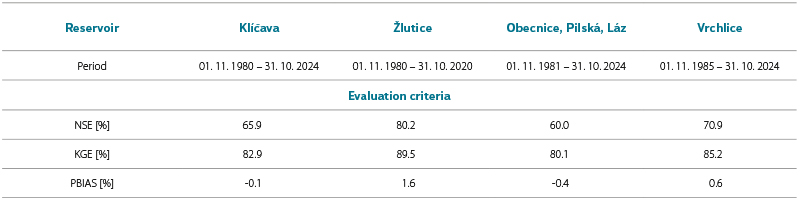
For calibration, the KGE criterion was used, confirming very good model performance with values ranging from 80.1 % to 89.5 %. NSE values range from 60.0 % to 80.2 %. The PBIAS criterion falls within the range of very good performance for all catchments. These values, specifically from -0.4 % to 1.6 %, indicate that the model does not exhibit a significant tendency to overestimate or underestimate the total flow volume. It can therefore be concluded that the optimised parameters are reliable and suitable for subsequent application.
After calibration, the simulated series for the 2050 and 2100 time horizons were corrected for systematic errors using a multiplicative method, which adjusts runoff series proportionally to reflect historical differences between modelled and observed flows. This approach ensures that the simulated series retain a realistic flow dynamics while enabling the testing of adaptive reservoir management under scenarios of progressively worsening hydrological conditions derived from the climate model. The resulting hydrological series form a consistent input for simulations of the operation of selected reservoirs with the application of adaptive management, enabling a comprehensive evaluation of the effectiveness of the proposed regulation rules under both current climatic conditions and future conditions corresponding to the years 2050 and 2100. This approach ensures that the testing of adaptive management is based on realistic, climate- and operation-informed scenarios, while maintaining a clear interpretation of the results and enabling unambiguous quantification of the benefits of individual regulatory measures.
Methodology of adaptive management
The first and fundamental step in adaptive management is the development of rule curves. A rule curve represents a key tool for controlling reservoir outflow, as it defines the relationship between regulated outflow and the current storage level of the reservoir over the course of the year. Within the storage zone of the selected reservoirs, three rule curves (DG1, DG2, and DG3) were defined, together with three regulation levels that vertically divide this zone, as shown in Fig. 1, into:
- regulation level RS1 – bounded above by the full storage capacity and below by the rule curve DG2,
- regulation level RS2 – bounded above by the rule curve DG2 and below by the rule curve DG3,
- regulation level RS3 – bounded above by the rule curve DG3 and below by the dead storage level.
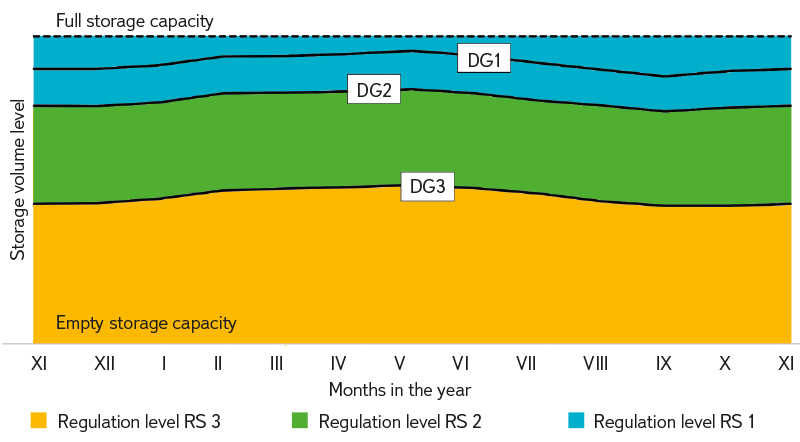
Fig. 1. Diagram of rule curves and operation levels for reducing water supply withdrawals and minimum residual flow
The rule curves were defined to ensure the required reliability of water supply abstractions (Op) and the minimum residual flow (MRF) downstream of the dam, under different climate change time horizons, as shown in Tab. 2.
Tab. 2. Conditions for defining rule curves
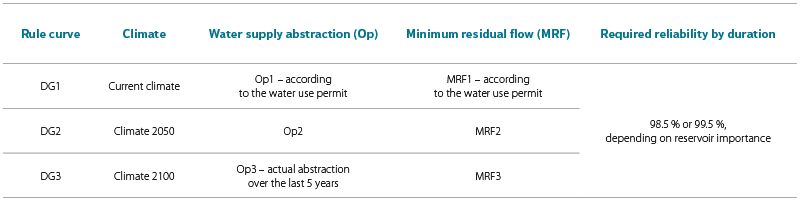
As follows from Fig. 1 and the description above, rule curve DG1 in this configuration does not serve as an active control element for transitions between individual regulation levels. In practice, when the reservoir level is above DG1, controlled pre-release of storage down to the DG1 level can be implemented without compromising the reliability of the storage function, for example to enhance flood protection or to optimise hydropower use.
To derive the rule curves, a function based on an iterative search for minimum reservoir levels was developed. Its objective is to determine the lowest safe reservoir level for each month of the year while ensuring that the required reliability is maintained. For each climate scenario, the algorithm generates a separate rule curve based on the specified target values for abstractions (Op) and minimum residual flow (MRF).
The essence of adaptive management in this algorithm lies in its dynamic response to the current reservoir storage level. Whereas conventional management assumes fixed abstractions, this model actively adjusts its targets according to the prevailing conditions. Based on a comparison of the current storage volume with the rule curves, the water supply abstraction (Op) is immediately switched between three operating modes:
- full operation – when sufficient water is available, i.e. when the current storage volume is within the first regulation level, the maximum abstraction Op1 and MRF1 are applied in accordance with the valid water use permit,
- restricted operation – when the storage level falls into the second regulation level, abstraction requirements are automatically reduced to Op2 and MRF2,
- minimum operation – when the storage level falls into the third regulation level, abstraction requirements are automatically reduced to Op3 and MRF3, ensuring that the reservoir is not completely depleted and can maintain at least a minimal supply over a longer period.
For each of the analysed reservoirs, the threshold values Op1 to Op3 were defined within a range from the permitted abstraction specified in the valid water use permit down to the level of the actual abstractions. This approach made it possible to test the adaptive response of the system across the realistic range of operational demands of the given hydraulic structure. A similar approach was applied to MRF values, with an effort to maintain the first and second levels at their full values. Reduction to lower values occurred only when the storage level fell into the third regulation level, thereby maximising the protection of the remaining water reserves in the reservoir under critical conditions.
Evaluation of the effectiveness of adaptive management
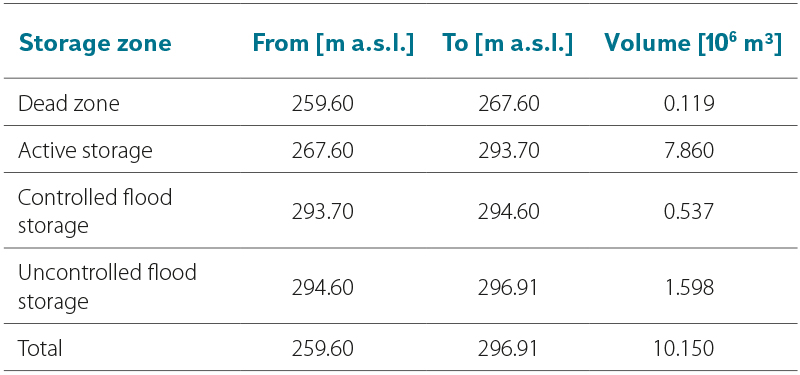
The proposed methodological approach is demonstrated in detail for the management of Klíčava reservoir. Klíčava reservoir is located in the Vltava River basin on the Klíčava stream, a left-bank tributary of the Berounka River. The dam of the hydraulic structure is situated at river kilometre 3.1 in the cadastral area of the municipality of Zbečno in the Central Bohemian Region. The division of storage zones of Klíčava reservoir is presented in Tab. 3.
Tab. 3. Division of storage zones in Klíčava reservoir
Klíčava reservoir serves the following functions, listed in order of priority:
- The primary purpose is the storage of water for the Klíčava water treatment plant, operated by Středočeské vodárny, a.s. The average permitted abstraction is 110 L ∙ s-1, with a maximum of 140 L ∙ s-1. Water abstraction is carried out using a multi-level intake structure, with flow regulated by a local valve within the water treatment plant.
- Provision of the MRF downstream of the dam, corresponding to Q₃₆₄d = 12 L ∙ s-1. According to long-term observations, tributaries in the Klíčava catchment frequently dry out completely, with dry periods lasting from several days to weeks, and exceptionally even months.
- Improvement of water quality conditions in the river downstream of the dam through operational measures.
- Reduction of flood flows using the retention storage. The non-damaging discharge downstream of the dam is set at 6 m³ s-1.
The reservoir supplies drinking water to fewer than 50,000 inhabitants and ensures the MRF downstream of the dam. According to ČSN 75 2405 [18], Klíčava reservoir is classified as category B in terms of importance, and the required reliability must be ensured with a duration of at least pt ≥ 98.5%.
For Klíčava reservoir, the rules for individual regulation levels were defined (Tab. 4) such that the first level ensures abstractions in accordance with the water use permit, while the third level limits abstraction for the water treatment plant to the actual average value over the last five years of operation. The second level is defined as a transitional stage. In the first and second levels, the MRF is maintained at its full value, while in the third regulation level it is reduced to half. The resulting configuration of rule curves and regulation levels is shown in Fig. 2.
Tab. 4. Operating levels with restrictions on water supply withdrawals (Op) and minimum residual flow (MZP)
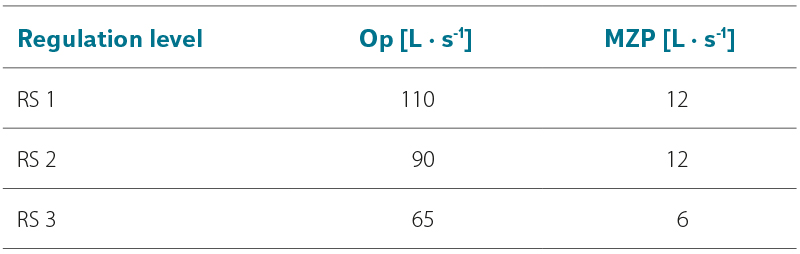
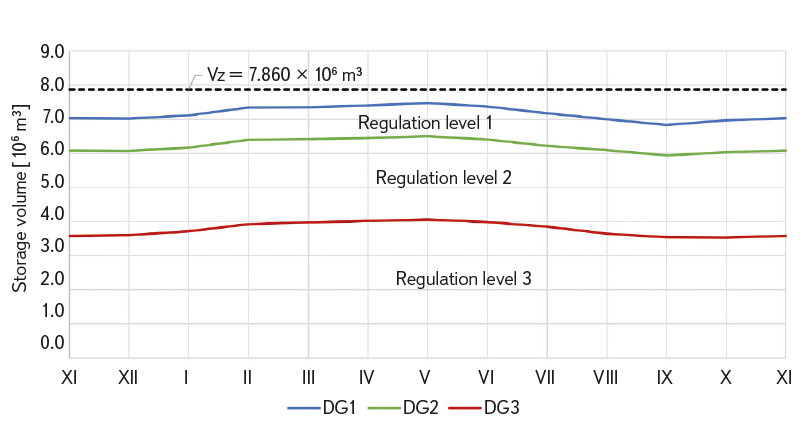
Fig. 2. Rule curves (DG) and operation levels for Klíčava reservoir
For clarity, graphs showing the variation of reservoir water levels and water supply abstractions were included for both constant abstraction and MRF without restriction (in accordance with the water use permit) and for adaptive management. The graphs are presented in Fig. 3 for current climatic conditions, in Fig. 4 for the 2050 time horizon, and in Fig. 5 for the 2100 time horizon. The water level and abstraction time series show that adaptive management significantly reduces water level fluctuations, while the actual abstraction for the water treatment plant (65 L ∙ s-1) remains secured up to 2100. By contrast, under conventional management, it can be observed that in several cases the water supply dropped well below current demand levels, particularly for more distant climate change time horizons.
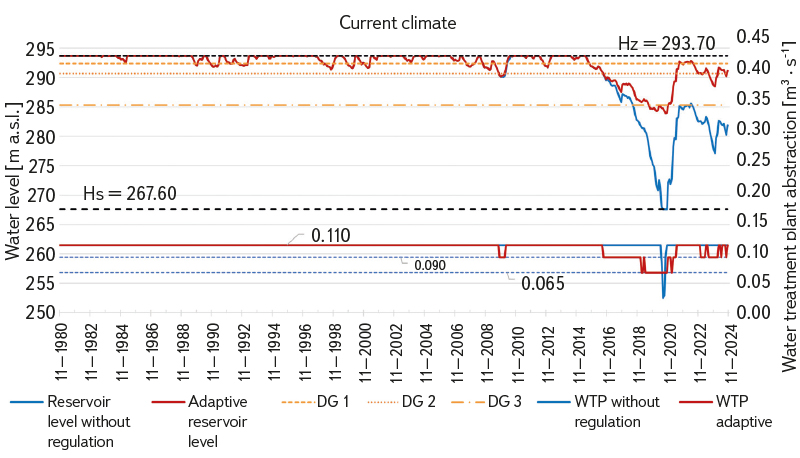
Fig. 3. Comparison of water levels and water supply to the treatment plant under constant withdrawal and adaptive reservoir management of Klíčava reservoir under current climate conditions
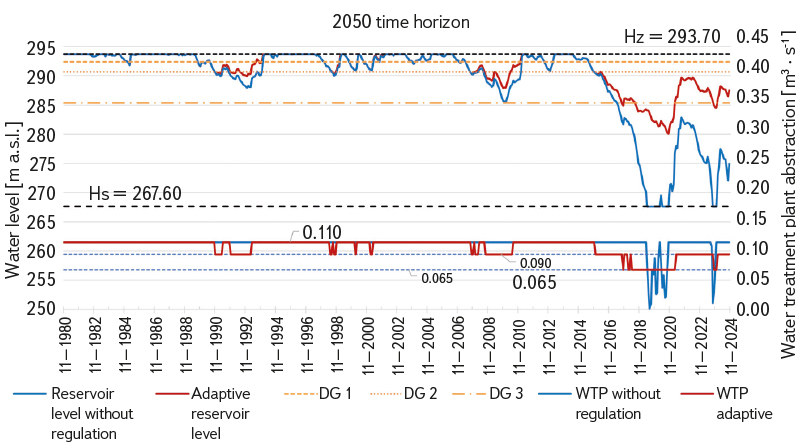
Fig. 4. Comparison of water levels and water supply to the treatment plant under constant withdrawal and adaptive reservoir management of Klíčava reservoir under 2050 climate conditions
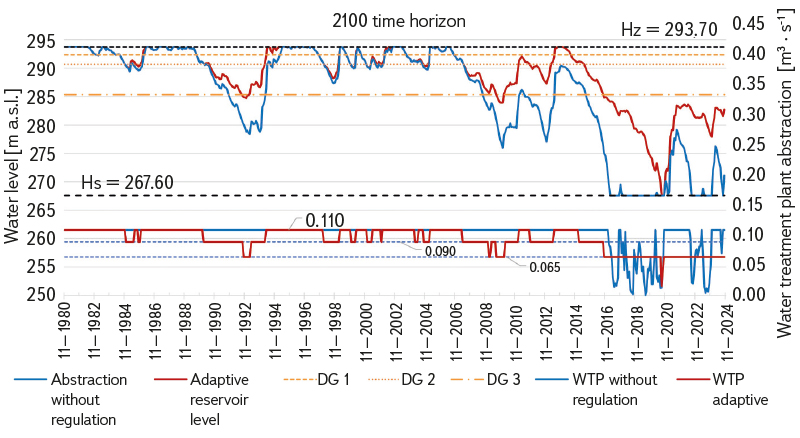
Fig. 5. Comparison of water levels and water supply to the treatment plant under constant withdrawal and adaptive reservoir management of Klíčava reservoir under 2100 climate conditions
The differences between management based on constant abstraction according to the water use permit and adaptive management are also quantified in Tab. 5. The table presents reliability values (pt) for Klíčava reservoir and for other analysed reservoirs: Obecnice, Láz, Pilská, Vrchlice, and Švihov. Cells in which the required reliability of abstraction is achieved are highlighted. In the case of Švihov reservoir, adaptive management was designed using two regulation levels based on the so-called Medium Climate Change Scenario for Water Management in the Czech Republic [14]. The management design was developed as part of study [19], and the derived rules for adaptive restriction of abstractions were incorporated into the reservoir operating rules. For the optimisation of rule curve storage levels, generated synthetic series with a length of 1,000 years were also used, derived for current climate conditions and for the 2041–2060 time horizon according to [14].
Tab. 5. Comparison of water supply reliability under constant withdrawal and minimum residual flow according to water use permits and under adaptive management for the studied reservoirs
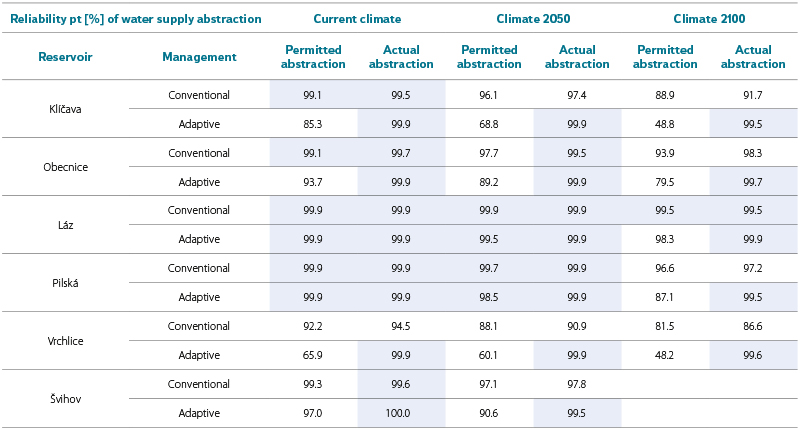
For the 2100 time horizon, adaptive management rules were not included in the analysis, as their future revision is anticipated.
The results summarised in Tab. 5 demonstrate the effectiveness of the proposed adaptive management, which was tested on a set of selected water supply reservoirs. In all cases, timely restriction of abstractions makes it possible to ensure the required reliability of water supply abstractions for all considered climate change horizons. The simulations further show that the benefits of adaptive management increase with longer climate change horizons. While differences between conventional and adaptive management are relatively small under current hydrological conditions, under scenarios for 2050 and especially 2100, the adaptive approach becomes a key tool for maintaining an acceptable level of reliability of water supply abstractions. This trend confirms that the importance of non-structural measures will likely increase in the future. It should be emphasised, however, that the simulation results are subject to certain uncertainties arising from the climate and hydrological models used. In this study, a single representative climate scenario was applied for methodological reasons, enabling a consistent interpretation of the behaviour of the proposed management system. In the future, it would be appropriate to consider a broader set of climate scenarios and to carry out a robustness analysis of the proposed rules with respect to uncertainties in future climate development.
CONCLUSION
The results obtained indicate that adaptive management represents a key and essential tool for the future operation of water supply reservoirs under climate change conditions. It enables the identification of an operationally acceptable compromise between user demands and the actual capacity of water resources, enhances the operational safety of hydraulic structures, and contributes to the long-term sustainability of water management. At the same time, adaptive management has a positive impact on water quality in reservoirs, as limiting deep and prolonged declines in water levels contributes to more stable thermal and quality conditions within the reservoir. This reduces the risk of eutrophication processes and deterioration of raw water quality, which are expected to occur more frequently under a warming climate. The proposed approach can also be regarded as an effective non-structural adaptation measure that is fully compatible with existing legislative frameworks and provides a practical basis for the modification of reservoir operating rules in the Czech Republic. At the same time, it is necessary to prepare new reservoirs and expand storage capacities, particularly in deficit areas, in order to ensure a sufficient long-term water supply for future abstractions and increased variability of hydrological conditions resulting from climate change.
Acknowledgements
The article was supported by the Technology Agency of the Czech Republic under research project No. SS02030027, “Water systems and water management in the Czech Republic under climate change conditions (Centre Water)”, carried out in the period 2020–2026.
The Czech version of this article was peer-reviewed, the English version was translated from the Czech original by Environmental Translation Ltd.
